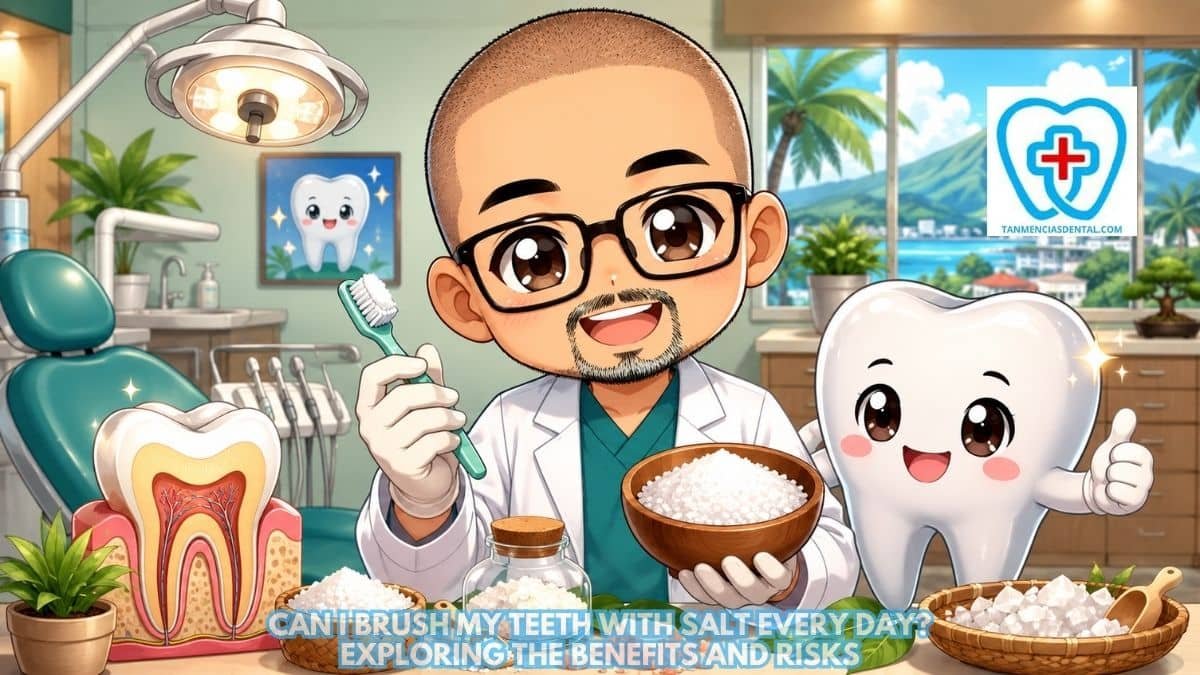
Many people ask, “Can I brush my teeth with salt every day?” especially when looking for natural ways to care for their teeth and gums.
Salt has been used for many years to help clean the mouth and reduce bacteria.
While it may remove surface stains and freshen breath, using it too often can also damage tooth enamel and irritate the gums.
Some people believe salt can fully replace toothpaste, but it does not provide the same level of protection as fluoride.
We’ll explain how salt affects your teeth, what benefits it may offer, and the possible risks of daily use.
We’ll also cover how to use salt safely and why balance is important for maintaining healthy teeth and gums.
1. What Makes Salt an Effective Abrasive for Teeth?
Salt’s rough texture helps scrub away plaque, surface stains, and food particles that may stick to the teeth throughout the day.
Many people try brushing their teeth with salt because it can help clean their teeth and leave the mouth feeling fresher.
The small grains of salt work like a mild scrub that removes buildup from the surface of the teeth and along the gumline.
In some instances, salt for your teeth may also help reduce bacteria that contribute to bad breath and plaque formation.
However, the same rough texture that makes salt effective can also become harmful when used too often or too aggressively.
Repeated scrubbing with salt may slowly wear down tooth enamel, which is the hard outer layer that protects the teeth from damage and sensitivity.
Once enamel becomes thin or damaged, the teeth may become more sensitive to hot, cold, or sweet foods and drinks.
For this reason, salt should only be used carefully and in moderation as part of a balanced oral care routine.
🦷 Restore Your Teeth With Dental Fillings in Marikina
2. The Antibacterial Benefits of Salt for Oral Hygiene
One of the most useful properties of salt is its ability to help reduce harmful bacteria inside the mouth.
Salt can help create a cleaner oral environment by lowering the amount of bacteria that may lead to plaque, bad breath, and minor gum irritation.
Many people use salt as part of cleaning their teeth and gums because it can help wash away food particles and surface buildup.
When mixed with water, salt may also soothe irritated gums and support healing after minor dental problems or procedures.
Although salt offers some antibacterial support, it cannot fully protect the teeth from cavities or serious gum disease on its own.
Regular brushing, flossing, and fluoride toothpaste are still important for maintaining strong teeth and healthy gums.
Using salt in moderation alongside a proper dental routine may improve overall oral hygiene without replacing professional dental care.
For the best results, salt should be viewed as a helpful addition to daily oral care rather than a complete solution for dental health.
🦷 Understanding Black Tartar Teeth: Causes, Effects, and Prevention
3. Essential Minerals in Salt and Their Role in Dental Health
Salt contains minerals such as sodium and chloride, which can contribute to oral health.
Sodium helps maintain the balance of fluids in the body and can aid in the reduction of acid levels in the mouth, protecting teeth from decay.
Chloride works alongside sodium to ensure the correct balance of fluids and electrolytes in the mouth.
Though these minerals offer some benefits, their impact on dental health is minimal compared to fluoride and other dental-specific treatments.
Therefore, relying solely on salt for minerals is not recommended.
🦷 Dental Implants vs. Dentures: Which is the Better Long-Term Solution for Missing Teeth
4. How Saltwater Rinses Can Improve Gum Health
Saltwater rinses are often used to help soothe irritated gums and support better oral hygiene.
One of the main benefits of salt water is its ability to help reduce bacteria and gently cleanse the mouth.
The warm saline solution may also help lower mild swelling and discomfort caused by gum irritation or minor dental problems.
Many dentists recommend saltwater rinses after certain dental procedures because they can help keep the area clean while the gums heal.
In cases of mild gingivitis, rinsing with salt water may help reduce redness and remove food particles trapped around the gums.
However, saltwater rinses should only be used as a supportive measure and not as a replacement for brushing, flossing, or professional dental care.
Using them in moderation alongside a regular oral care routine can help maintain healthier gums between dental visits.
🦷 Tooth Extraction in Marikina: Understanding Pain Management and Recovery

5. Understanding the Impact of Salt on Tooth Enamel
Salt can help remove plaque and surface stains, but its rough texture may slowly damage tooth enamel when used too often.
Enamel protects the teeth from cavities, decay, and discomfort caused by hot or cold foods and drinks.
When enamel becomes thin, many people begin to experience sensitive teeth and increased pain while eating or brushing.
Although there are benefits of brushing teeth with salt in small amounts, daily use may create more problems than benefits over time.
Unlike other parts of the body, tooth enamel cannot grow back once it is worn away.
Because of this, dentists often recommend using salt carefully and combining it with fluoride toothpaste to help protect the teeth.
Limiting salt use to occasional cleaning may help reduce the risk of enamel erosion while still supporting good oral hygiene.
🦷 Exploring the Benefits of Brushing Teeth With Baking Soda: A Natural Approach to Oral Hygiene
6. Why Fluoride Is Still Important for Protecting Your Teeth
Salt may help clean the teeth and reduce some bacteria in the mouth, but it cannot replace the protection that fluoride provides.
Fluoride helps strengthen and repair weak areas of tooth enamel through a process called remineralization.
This protection lowers the risk of cavities and helps keep teeth strong over time.
In contrast, salt mainly works as a mild abrasive that removes surface buildup from the teeth.
While salt can support oral hygiene in small amounts, it does not rebuild damaged enamel or prevent tooth decay on its own.
People who stop using fluoride toothpaste and rely only on salt may increase their chances of developing cavities and tooth sensitivity.
Due to this, dentists still recommend fluoride toothpaste as an important part of a healthy daily dental care routine.
🦷 Can Tooth Decay Cause Headaches? Uncovering the Surprising Connection!
7. How Often Should You Use Salt for Brushing?
Brushing with salt can be beneficial in moderation, but daily use is not recommended.
Experts suggest limiting salt brushing to once or twice a week to avoid damaging tooth enamel and irritating the gums.
This frequency allows for occasional deep cleaning without putting your teeth at risk of long-term harm.
Always follow up with a fluoride toothpaste, which can help strengthen enamel and provide additional protection.
Keeping salt as an occasional part of your oral care routine can strike a healthy balance.
🦷 What Are The Different Types Of Dental Restorations, And How Do I Know Which One I Need?
8. Exploring Alternatives to Salt for Dental Care
If you’re seeking natural alternatives to traditional toothpaste, there are several options besides salt.
Baking soda is another mild abrasive that can whiten teeth and neutralize acids, offering a less harsh alternative.
Fluoride-free toothpastes and natural herbal options also provide gentle cleaning without the risk of enamel erosion.
Some toothpastes even include calcium or hydroxyapatite to help strengthen enamel while providing a deep clean.
Exploring these alternatives can help you find a dental routine that supports your oral health without the risks associated with salt.
🦷 Are There Any Safe Home Remedies For A Broken Tooth Besides A Repair Kit?
9. Personal Experiences: The Good and Bad of Using Salt for Teeth
Many people who brush with salt report cleaner, whiter teeth due to its ability to remove surface stains.
Some appreciate the natural, chemical-free nature of salt and find it effective in freshening breath and reducing plaque.
However, not all experiences are positive; some users develop sensitivity in their teeth or notice discomfort in their gums due to the abrasive action of salt.
Additionally, overuse of salt can lead to enamel erosion, which causes long-term dental problems.
It’s important to weigh both the positive and negative experiences before adopting this practice regularly.
🦷 What to Expect During a Broken Tooth Root Canal: Understanding the Procedure
10. What Does the Research Say About Salt in Oral Care?
Scientific research on the use of salt in oral care is limited but highlights both benefits and risks.
Studies suggest that salt’s antibacterial properties may help reduce bacteria in the mouth and prevent minor infections.
However, excessive use of salt has been linked to enamel erosion, which increases the risk of cavities and tooth decay.
Most dental experts recommend using salt as a supplementary treatment rather than a primary method of oral hygiene.
While salt can contribute to good oral health in small amounts, relying on it exclusively can cause more harm than good.
🦷 Basic Dental Needs in Marikina
11. Why You Should Consult Your Dentist About Using Salt
Before deciding to brush with salt regularly, it is essential to speak with your dentist.
Your dentist can assess your teeth and gums to determine whether salt is safe and appropriate for your oral health needs.
They can also advise on the frequency of use and suggest alternatives if salt may be too harsh for your enamel.
Consulting a professional ensures that you are not unknowingly damaging your teeth while trying to improve your oral hygiene.
Their personalized advice can help you maintain a safe and effective dental care routine.
🦷 Reliable Dental Health Services in Marikina City
👨⚕️ Conclusion
Brushing your teeth with salt has both potential benefits and notable risks.
While it can effectively clean teeth and reduce bacteria, its abrasive nature can harm tooth enamel if used daily.
Limiting salt use to occasional brushing or rinsing and combining it with regular dental care products like fluoride toothpaste may offer the best approach.
Consulting a dentist will help you make an informed decision about using salt in your oral hygiene routine.
In the end, moderation is key to enjoying the benefits of salt without suffering from its potential drawbacks.
❔ FAQs
1. Can brushing with salt whiten your teeth?
Salt may help remove some surface stains because of its rough texture.
This can make teeth appear cleaner and slightly brighter over time.
However, salt does not bleach the teeth or change their natural color like professional whitening treatments.
Using too much salt may also damage enamel, which can make teeth look dull or yellow later on.
2. Is saltwater better than brushing with dry salt?
Saltwater is usually gentler on the teeth and gums than brushing with dry salt.
A saltwater rinse can help reduce bacteria and soothe mild gum irritation without causing as much abrasion.
Dry salt crystals are rougher and may wear down enamel if used too often.
As a result, many dentists consider saltwater rinses a safer option than brushing directly with salt.
3. Can children brush their teeth with salt?
Children should be careful when using salt for oral care because their teeth and enamel are still developing.
Frequent brushing with salt may increase the risk of enamel damage or gum irritation.
It is generally safer for children to use fluoride toothpaste designed for their age group.
Parents should speak with a dentist before allowing regular salt use in a child’s dental routine.
4. What are the signs that salt is damaging your teeth?
Some common signs include tooth sensitivity, gum soreness, and discomfort when eating hot or cold foods.
You may also notice rough spots on the teeth or increased pain while brushing.
In some cases, the gums may become irritated or bleed more easily.
If these problems appear after using salt, it is best to stop and consult a dentist.
5. Can I mix salt with toothpaste for brushing?
Some people mix a small amount of salt with toothpaste for occasional deep cleaning.
This may help remove surface buildup while still giving the teeth fluoride protection from the toothpaste.
However, the mixture should only be used in moderation because extra abrasion can still harm enamel.
Using a soft toothbrush and brushing gently can help lower the risk of damage.
😊 Self-Promotion
At Tan-Mencias Dental Clinic, located in Parang, Marikina City, we are dedicated to providing top-notch dental care with a friendly, personalized approach.
Whether you need a routine checkup or specialized treatment, our experienced team is here to help you achieve a healthy, confident smile.
Feel free to call us at 0917-145-1074, send us a message through our Facebook page, or reach out via our website’s contact form with any questions or concerns.
We’re always ready to assist you and make your dental visit as comfortable as possible.
Visit us today and experience the exceptional care you deserve!