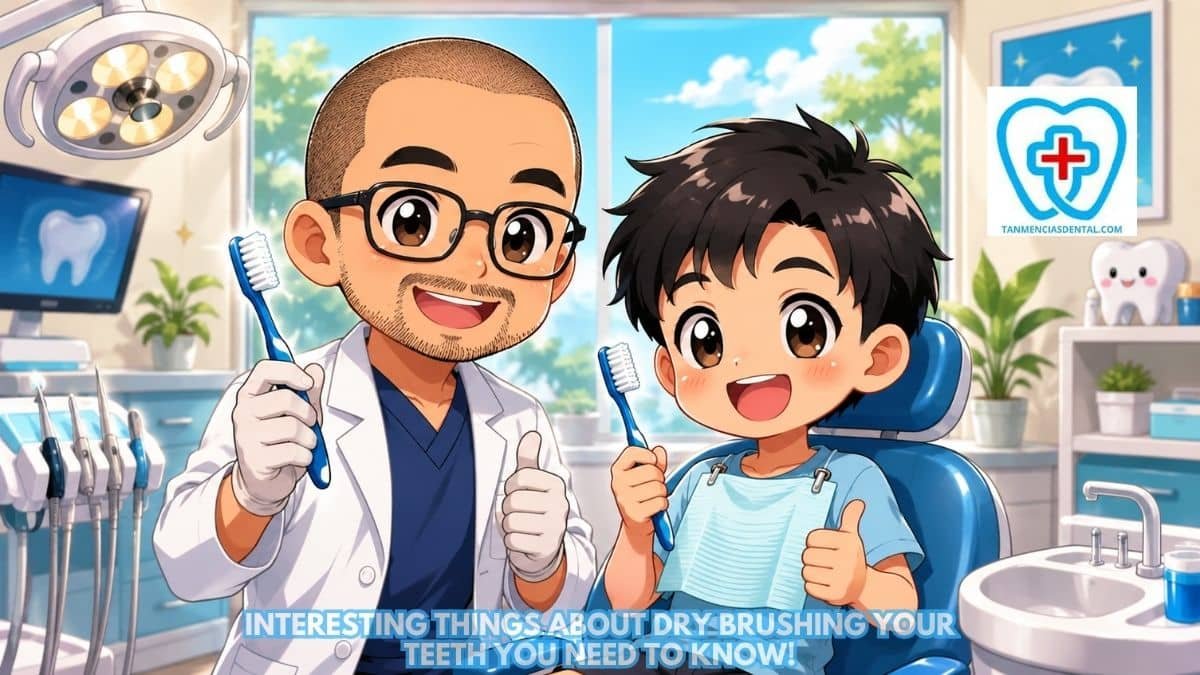
Dry brushing your teeth is a simple oral care method that uses only a toothbrush, without water or toothpaste.
Many people are interested in this practice because it encourages greater focus on the brushing process and plaque removal.
Some users find that they can more easily detect rough areas on their teeth and clean them with greater care.
While dry brushing may seem unusual compared to traditional brushing, it has been used in different forms for many years.
We’ll explore how this technique works, its potential benefits and risks, and the role fluoride still plays in protecting your teeth.
We’ll also cover practical tips to help you decide whether dry brushing can fit into your daily oral care routine.
1. Exploring the History and Origins of Dry Brushing
The practice of cleaning teeth without water or toothpaste dates back to ancient civilizations, when modern dental products did not exist.
People in early cultures often used dry materials like twigs, feathers, or animal bones to scrub their teeth and remove food debris.
These methods, while simple, were effective in keeping teeth feeling smoother and free of plaque.
As time passed, the development of the toothbrush in the 19th century provided a more standardized approach to oral hygiene.
However, some people continued using dry brushing as a supplement to their routine, appreciating its simplicity.
This historical background highlights how dry brushing has persisted alongside modern methods, showing similarities to professional dental cleaning techniques focused on plaque removal.
Understanding these origins sheds light on how ancient practices have influenced today’s oral care habits.
🦷 Can You Brush Your Teeth 3 Times A Day? What Dentists Wish You Knew
2. A Closer Look at the Technique of Dry Brushing
Using the proper technique is important for getting the most benefit from dry brushing.
The process begins with choosing a toothbrush that has soft toothbrush bristles, which can help clean the teeth while reducing the risk of gum irritation.
Gentle circular motions along the gum line and careful strokes across each tooth surface help remove plaque and food particles more effectively.
It is also important to brush the outer, inner, and chewing surfaces of every tooth to ensure complete coverage.
Because there is no toothpaste foam to guide the process, dry brushing often requires greater attention to detail and a slower approach.
With regular practice, many people develop better brushing habits and improve their overall brushing technique.
🦷 Can Tooth Decay Kill You? Dangers of Neglected Dental Health
3. The Benefits of Dry Brushing Your Teeth
One of the main benefits of dry brushing teeth is the increased awareness of plaque and rough spots on the teeth.
Because there is no toothpaste foam covering the teeth, it can be easier to feel areas that may need more attention while brushing.
This often encourages a slower and more careful brushing technique, helping you focus on each tooth individually.
As a result, many people find that they brush more thoroughly and pay closer attention to hard-to-reach areas.
Dry brushing may also help reduce the tendency to brush too hard, which can support the health of both tooth enamel and gums.
In addition, it can be a practical oral care option in situations where water is limited, since it does not require water or toothpaste to perform.
🦷 How Does Restoring My Teeth Affect My Overall Physical Health
4. How Dry Brushing Can Improve Oral Health
Dry brushing promotes the removal of plaque through direct and focused brushing, which can lead to healthier gums and teeth.
By eliminating soft plaque before it hardens into tartar, this technique can prevent the onset of gingivitis and periodontal diseases.
The stimulation of the gums during dry brushing increases blood circulation, which is beneficial for gum health and healing.
Furthermore, regular dry brushing can reduce bad breath as it effectively removes food particles and bacteria lodged between teeth and along the gumline.
This proactive approach to oral hygiene ensures a cleaner mouth and may decrease the likelihood of cavities and infections.
🦷 Can You Get Gingivitis From Kissing? The Truth Behind Oral Hygiene and Romance
5. The Science Behind Why Dry Brushing Works
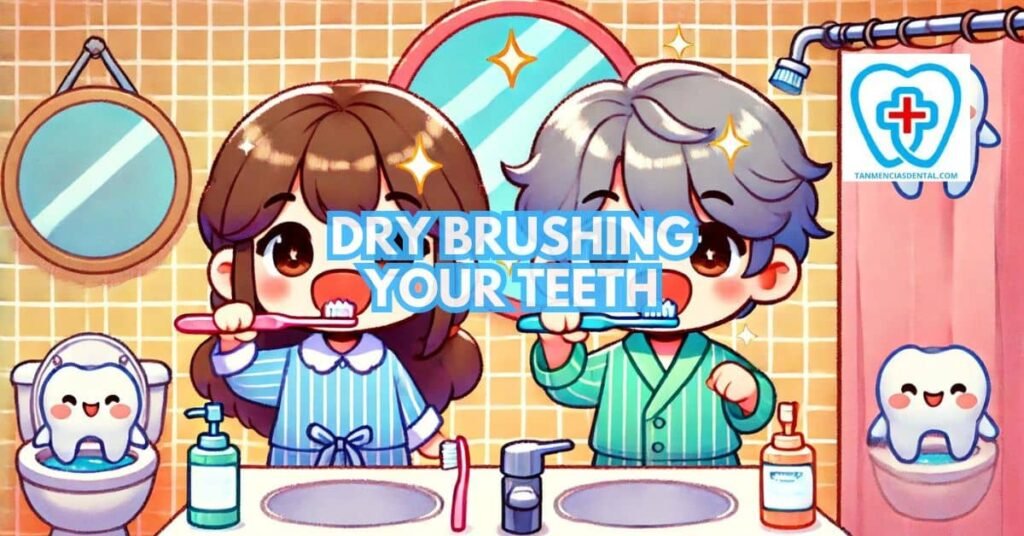
Dry brushing works by relying on the physical action of the toothbrush to remove plaque from the teeth and along the gumline.
This mechanical cleaning process is effective for removing plaque because it helps break up the sticky bacterial film that forms on tooth surfaces.
Without toothpaste foam or strong flavors, many people can focus more closely on their brushing technique and the areas they are cleaning.
The direct contact between the toothbrush bristles and the teeth also provides better tactile feedback, making it easier to adjust brushing pressure when needed.
Consequently, people may develop better brushing habits and avoid using excessive force that could irritate the gums.
This combination of focused brushing and improved awareness helps explain why some individuals find dry brushing to be a useful addition to their oral care routine.
🦷 Heartburn After Brushing Teeth: Unraveling the Mystery Behind Oral Discomfort
6. Potential Risks and Safety Precautions
While dry brushing can be beneficial, it’s important to use the correct technique to prevent potential harm.
Applying excessive force or using a toothbrush with hard bristles may lead to enamel erosion, gradually wearing down the protective outer layer of your teeth.
Improper brushing techniques or overbrushing can irritate the gums, causing sensitivity or even gum recession over time.
To avoid these issues, choose a toothbrush with soft bristles and apply minimal pressure during brushing to protect both your teeth and gums.
Additionally, regularly monitor your oral health for any signs of irritation and consult with your dentist if you experience any discomfort or adverse effects from dry brushing.
🦷 Can I Brush My Teeth With Salt Every Day? Exploring the Benefits and Risks
7. Comparing Traditional Toothbrushes to Dry Brushing
Traditional brushing and dry brushing both aim to keep the teeth clean, but they work in slightly different ways.
Traditional brushing uses toothpaste to help clean the teeth and deliver fluoride, which helps strengthen enamel and protect against cavities.
In contrast, brushing without toothpaste relies entirely on the movement of the toothbrush to remove plaque and food particles from the teeth.
Some people find that brushing without toothpaste helps them focus more closely on areas that may need extra attention because there is no foam covering the teeth.
Although dry brushing can support effective plaque removal, it does not provide the protective benefits of fluoride.
For this reason, many people choose to combine both methods to support thorough cleaning while also helping to protect their teeth from decay.
🦷 Restore Your Teeth With Dental Fillings in Marikina
8. Why Fluoride Is Still Important When Dry Brushing Your Teeth
Dry brushing can help remove plaque by using the toothbrush to clean the surfaces of the teeth and gums.
While this cleaning action is important, maintaining good oral health involves more than simply removing plaque.
Fluoride serves a different purpose because it helps strengthen tooth enamel through a natural process called remineralization.
This process can help repair early enamel damage and make teeth more resistant to cavities.
When brushing your teeth without toothpaste, you do not receive the fluoride that helps protect against tooth decay.
Therefore, dry brushing alone cannot provide all the benefits associated with fluoride toothpaste.
Because of this, many people use dry brushing as a supplement to their regular brushing routine rather than a replacement for it.
Combining dry brushing with fluoride toothpaste can support effective plaque removal while also helping to protect and strengthen your teeth over time.
🦷 Understanding Black Tartar Teeth: Causes, Effects, and Prevention
9. Common Misconceptions about Dry Brushing Your Teeth
One common misconception is that dry brushing can completely replace traditional toothbrushing with toothpaste.
While dry brushing is effective for plaque removal, it does not provide the fluoride needed to strengthen tooth enamel against decay.
Some people also mistakenly believe that dry brushing is more abrasive to the dental surfaces and gums, but with the correct technique, it is quite gentle.
Another misunderstanding is that dry brushing is time-consuming; however, it generally takes no more time than regular brushing once the technique is mastered.
There is a belief that dry brushing is sufficient for complete oral hygiene, but it should be viewed as a complementary practice rather than a standalone method.
🦷 Dental Implants vs. Dentures: Which is the Better Long-Term Solution for Missing Teeth
10. Tips for Incorporating Dry Brushing into Your Dental Routine
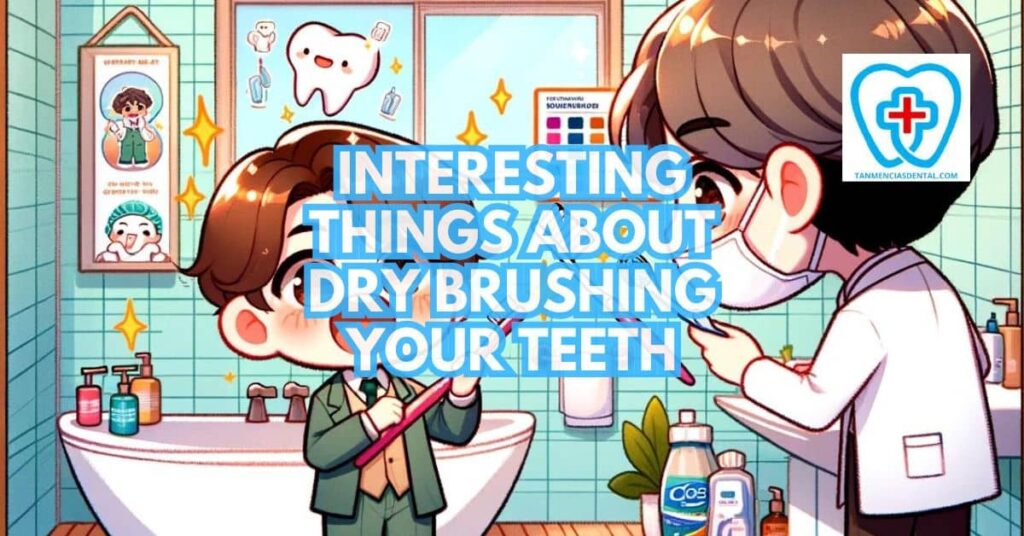
To start incorporating dry brushing, choose a specific time of day to replace your regular brushing with this method, such as your morning routine.
Gradually, you can introduce dry brushing more frequently, observing how your teeth and gums respond.
It is important to continue using toothpaste with fluoride at least once a day to maintain dental health benefits that dry brushing alone cannot provide.
Consider using dry brushing as a preliminary step before brushing with toothpaste, especially in the evening, to ensure maximum cleanliness before bedtime.
Keeping an extra toothbrush just for dry brushing can help establish this habit without disrupting your normal toothpaste routine.
🦷 Tooth Extraction in Marikina: Understanding Pain Management and Recovery
11. Expert Opinions on the Effectiveness of Dry Brushing
Dental professionals acknowledge the benefits of dry brushing, particularly in enhancing the mechanical cleaning of teeth and gums.
Experts suggest that while it should not replace brushing with toothpaste, it is an effective supplementary technique for those looking to improve their oral hygiene.
Dentists often recommend dry brushing to patients who struggle with gum disease, as it can help reduce plaque buildup in a gentle manner.
However, they caution against overuse or incorrect technique, which can lead to gum damage and enamel wear.
Overall, the consensus among dental experts is that, when done correctly, dry brushing can be a valuable addition to oral health practices.
🦷 Oral Prophylaxis in Marikina
12. The Surprising Results of Regularly Dry Brushing Your Teeth
Many individuals who regularly use dry brushing techniques report a noticeable decrease in plaque and an overall improvement in gum health.
Users often experience fresher breath and a cleaner feeling throughout the day due to the thorough removal of food particles and bacteria.
Over time, some people observe that their teeth appear brighter and their gums less inflamed.
An unexpected benefit that some report is a greater awareness of their dental health and more precise control over their brushing techniques.
These positive outcomes encourage continued use and integration of dry brushing into daily oral care routines.
🦷 Your Local Family Dental Clinic in Marikina
👨⚕️ Conclusion
Incorporating dry brushing into your dental routine can provide a fresh perspective on how you care for your teeth and gums.
It emphasizes the importance of technique and thoroughness in oral hygiene, which can lead to better overall dental health.
While it’s not a replacement for traditional brushing with toothpaste, it serves as an excellent adjunct that complements and enhances the benefits of your regular dental care practices.
As with any new dental technique, it’s advisable to consult with your dentist to tailor the best approach for your individual needs.
Re-evaluating and updating your dental routine to include dry brushing might just be the step needed to achieve optimal oral health.
❔ FAQs
1. Should I dry brush before or after using toothpaste?
Many people choose to dry brush before using toothpaste because it allows them to focus on removing plaque and cleaning every tooth surface.
After dry brushing, they can brush again with fluoride toothpaste to help protect and strengthen their enamel.
This approach combines the benefits of mechanical cleaning and fluoride protection.
However, it is best to follow the routine that works well for your needs and your dentist’s advice.
2. Can dry brushing help prevent cavities?
Dry brushing can help remove plaque, which plays a role in the development of cavities.
However, it does not provide fluoride, which helps strengthen enamel and protect teeth from decay.
With that in mind, dry brushing alone should not be relied on for cavity prevention.
Using fluoride toothpaste remains an important part of maintaining good oral health.
3. What type of toothbrush is best for dry brushing?
A toothbrush with soft bristles is generally the best choice for dry brushing.
Soft bristles can clean the teeth effectively while reducing the risk of irritating the gums or wearing down enamel.
It is also important to use gentle pressure when brushing.
Replacing your toothbrush regularly helps maintain effective cleaning.
4. Can children practice dry brushing their teeth?
Children can practice dry brushing as long as they use proper brushing techniques and are supervised when needed.
It may help them become more aware of how they brush and where plaque collects on their teeth.
However, children should still use fluoride toothpaste as recommended for their age.
Parents should follow guidance from their child’s dentist regarding oral care habits.
5. Do I still need to floss if I dry brush my teeth?
Yes, flossing is still important even if you dry-brush your teeth regularly.
Dry brushing mainly cleans the surfaces of the teeth that the toothbrush cannot reach.
Floss helps remove plaque and food particles from between the teeth and along areas that bristles may miss.
Using both methods together can support a more complete oral hygiene routine.
😊 Self-Promotion
Visit us at Tan-Mencias Dental Clinic in Parang, Marikina City, for expert dental care in a friendly and welcoming environment!
Whether you need a routine checkup, cleaning, or more specialized services, our team is here to ensure you receive top-quality care.
You can easily reach out with any questions or to schedule an appointment by calling us at 0917-145-1074, sending a message through our Facebook page, or using the contact form on our website.
We’re dedicated to making your dental health our priority with personalized and attentive care.
Let us help you achieve and maintain a bright, healthy smile.
Contact us today!