
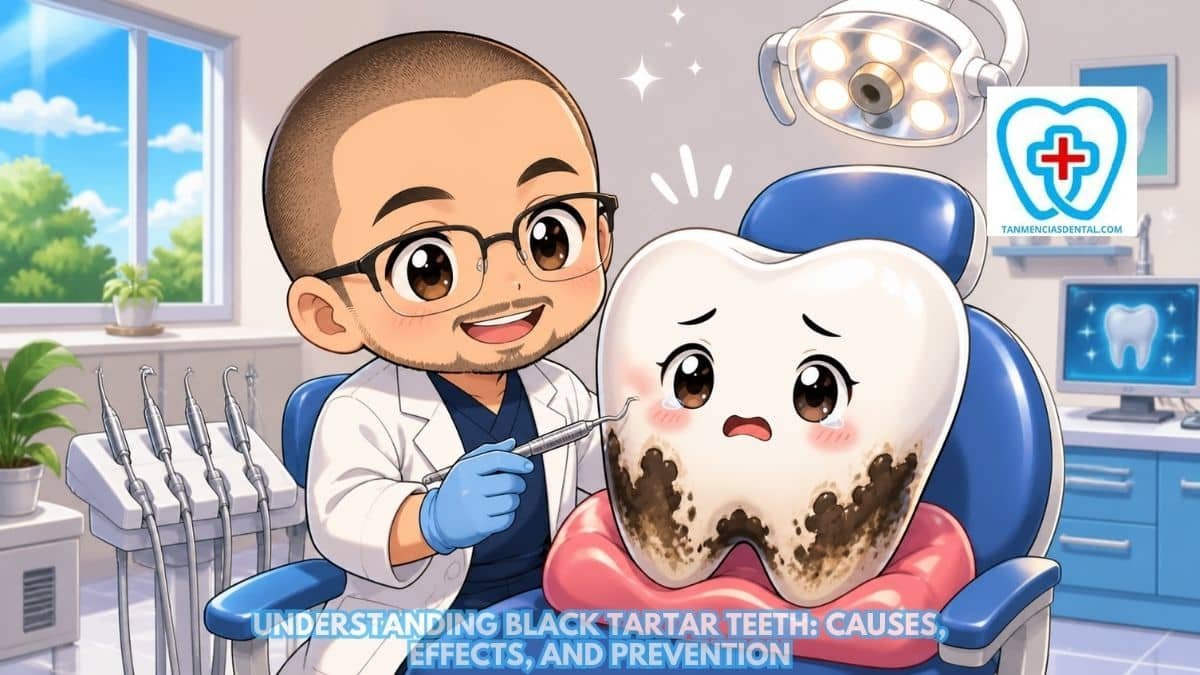
Black tartar teeth form when plaque hardens on the surface of the teeth and turns dark over time.
This buildup develops as bacteria, food particles, and minerals in the mouth collect and stick together.
It often appears along the gum line and can be hard to remove without professional care.
Beyond staining, it can also harm the gums and teeth by holding harmful bacteria.
We’ll explain what causes this problem and how to recognize the signs early.
We’ll also cover simple ways to prevent buildup and protect your oral health.
1. What Causes Black Tartar Formation? Key Factors to Know
Several factors contribute to the formation of black tartar on teeth, and poor oral hygiene is one of the main causes.
When brushing and flossing are not done regularly, dental plaque builds up on the teeth as a soft and sticky layer of bacteria.
Over time, this plaque can harden and turn into tartar on your teeth, which is much harder to remove.
The link between plaque and tartar is important because plaque is the early stage that leads to this hardened buildup.
Drinking dark liquids like coffee, tea, or soda, as well as smoking, can stain the tartar and give it a black or dark color.
Saliva also plays a role because the minerals it contains can cause plaque to harden faster.
In addition, some medications and health conditions can reduce saliva flow, which makes it easier for plaque to stay on the teeth.
When these factors combine, they increase the chance of developing black tartar over time.
🦷 Dental Implants vs. Dentures: Which is the Better Long-Term Solution for Missing Teeth
2. Identifying Black Tartar Teeth: Symptoms and Signs
Black tartar is often easy to notice because of its dark color along the gum line or on the surface of the teeth.
When you have black tartar on your teeth, it may feel rough compared to the smooth surface of clean enamel.
You might also see visible stains that do not go away even after brushing.
Bad breath that lasts throughout the day can be another sign, since bacteria collect in the hardened buildup.
Furthermore, gums may become swollen, red, or bleed easily because the tartar irritates the tissue.
Tooth sensitivity can also develop if the gums start to pull back and expose more of the tooth.
🦷 Tooth Extraction in Marikina: Understanding Pain Management and Recovery
3. How Black Tartar Differs from Other Types of Tooth Discoloration
Not all dark spots on teeth mean the same thing, so it is important to know the difference.
Surface stains usually form from food, drinks, or smoking and sit on the outer layer of the teeth.
These stains can often be reduced or removed with regular brushing and good oral care.
Black tartar, however, is hardened plaque that has built up over time and cannot be removed at home.
It often appears along the gum line and feels rough compared to smooth tooth enamel.
Yellow tartar is similar in texture but has not been deeply stained, which is why it looks lighter in color.
Intrinsic discoloration is different because it comes from inside the tooth and does not change with brushing or cleaning.
Understanding these differences helps you know when simple care is enough and when it is best to visit a dentist.
🦷 Exploring the Benefits of Brushing Teeth With Baking Soda: A Natural Approach to Oral Hygiene
4. Health Risks of Black Tartar: Why It Matters
Black tartar affects more than how your teeth look, and it can lead to serious oral health problems if ignored.
The bacteria trapped in this buildup can irritate the gums and cause gingivitis, which may progress into more severe gum disease over time.
As tartar thickens, it becomes harder to clean your teeth properly, which increases the risk of tooth decay and cavities.
This happens because bacteria stay on the teeth longer and produce acids that damage the enamel.
In some cases, the infection can spread deeper into the gums and affect the support of the teeth.
Taking action early can help stop these problems and protect both your teeth and overall health.
🦷 Can Tooth Decay Cause Headaches? Uncovering the Surprising Connection!

5. The Importance of Oral Hygiene in Preventing Black Tartar
Practicing good oral hygiene is the most effective way to prevent black tartar from forming on your teeth.
Brushing at least twice a day helps remove plaque before it has time to harden, which is key to keeping your teeth clean.
Daily flossing is also important because it helps clean between your teeth, where a toothbrush may not reach.
When you take time to clean between your teeth, you remove trapped food and bacteria that can lead to buildup.
Using an antibacterial mouthwash can further reduce bacteria and support your daily routine.
Choosing a soft-bristled toothbrush helps protect your gums, since healthy gums make it easier to prevent tartar build-up.
By following these simple steps every day, you can lower your risk of black tartar and keep your teeth and gums in better condition.
🦷 What Are The Different Types Of Dental Restorations, And How Do I Know Which One I Need?
6. Diet and Black Tartar: Foods to Avoid for Healthier Teeth
Certain foods and drinks are more likely to contribute to plaque buildup and black tartar development.
Sugary snacks, such as candy and soda, feed the bacteria in your mouth, accelerating plaque formation.
Acidic foods and beverages like citrus fruits, coffee, and wine can erode enamel, making it easier for tartar to cling to teeth.
Sticky foods, such as caramel and dried fruits, are also problematic because they can stay on teeth longer, promoting bacterial growth.
Limiting these foods can help you keep your teeth clean and reduce the risk of black tartar.
🦷 Are There Any Safe Home Remedies For A Broken Tooth Besides A Repair Kit?
7. The Role of Professional Dental Cleanings in Tartar Removal
Even with good daily care, professional dental cleanings are needed to remove hardened black tartar that sticks to the teeth.
During the visit, a dentist or hygienist uses special tools to carefully clean areas above and below the gum line.
This process helps remove buildup that brushing and flossing cannot reach once it has hardened.
Regular dental cleanings also help check for early signs of gum problems or other oral issues.
The dentist may give advice based on your needs to help you improve your routine at home.
By keeping up with these visits, you can better control tartar and maintain healthier teeth and gums.
🦷 What to Expect During a Broken Tooth Root Canal: Understanding the Procedure
8. Home Remedies and Tips for Preventing Black Tartar
There are several simple methods you can adopt at home to prevent the formation of black tartar.
Brushing with toothpaste that contains fluoride or tartar control ingredients can help reduce plaque buildup.
Using a water flosser or interdental brush can reach areas between teeth that regular floss might miss.
Rinsing with a mouthwash designed to fight bacteria can provide additional protection against plaque.
Additionally, chewing sugarless gum after meals can stimulate saliva production, which naturally helps wash away food particles and bacteria.
🦷 What Should I Do In The First 48 Hours After Breaking A Tooth?
9. Lifestyle Choices That Contribute to Black Tartar Teeth
Certain lifestyle choices can significantly increase the risk of black tartar forming on your teeth.
Smoking is one of the biggest contributors, as it not only stains teeth but also encourages plaque buildup and weakens gum health.
Frequent consumption of coffee, tea, or red wine can also lead to tartar discoloration, making it appear darker and more noticeable.
A sedentary lifestyle and a poor diet filled with sugary or processed foods can further exacerbate plaque formation.
Being mindful of these choices can help you avoid the conditions that lead to black tartar.
🦷 What You Need to Know About Drinking Orange Juice After Brushing Teeth
10. When to Visit the Dentist: Signs You Need Professional Help
Recognizing early warning signs can help you deal with black tartar before it leads to bigger problems.
If you have bad breath that does not go away, dark stains on your teeth, or gums that bleed easily, you should see your dentist as soon as possible.
These signs often mean that tartar has built up and is affecting your gum health.
You may also notice gum recession, which can make your teeth look longer and feel more sensitive.
Pain while chewing or soreness in the gums can also show that the problem is getting worse.
Regular checkups help catch these issues early and allow your dentist to treat them before they become more serious.
🦷 Dental Diagnostics In Marikina
11. Can Black Tartar Be Reversed? Treatment Options Explained
Once black tartar has formed, brushing and home care alone cannot remove the tartar because it is already hardened.
A dentist must clean it using special tools that safely break and lift the buildup from the teeth and gums.
One common method is scaling, which focuses on removing tartar from the tooth surface and along the gum line.
For deeper buildup, dentists may perform scaling and root planing to clean below the gums and smooth the roots of the teeth.
This process helps remove the tartar completely and makes it harder for bacteria to stick again.
After treatment, keeping a strong daily routine with brushing and flossing helps stop new buildup from forming.
In some situations, added care like fluoride treatment can protect the teeth and support long-term oral health.
🦷 Dependable Dental Services in Marikina City
👨⚕️ Conclusion
Preventing black tartar is possible through a combination of good oral hygiene, regular dental checkups, and mindful lifestyle choices.
Brushing and flossing daily, along with professional cleanings, can stop plaque from hardening into tartar.
Avoiding habits like smoking and limiting dark-colored beverages will help keep your teeth healthier and free from stains.
Eating a balanced diet and staying hydrated can further support your efforts to maintain a clean and healthy mouth.
By staying proactive, you can significantly reduce the chances of black tartar affecting your oral health.
❔ FAQs
1. How long does it take for plaque to turn into black tartar?
Plaque can start to harden into tartar within a few days if it is not removed.
With time, this tartar can become darker due to stains from food, drinks, or smoking.
The longer it stays on the teeth, the harder and darker it becomes.
This is why daily brushing and flossing are important to stop buildup early.
2. Can black tartar fall off on its own?
Black tartar does not usually fall off on its own because it is firmly attached to the teeth.
It forms a hard layer that sticks to the surface and along the gum line.
Trying to remove it at home can damage your teeth or gums.
A dentist needs to use special tools to remove it safely.
3. Is black tartar more dangerous than yellow tartar?
Both black and yellow tartar can harm your teeth and gums if left untreated.
The main difference is that black tartar has been stained over time, often from smoking or dark drinks.
This may mean it has been on the teeth longer.
In both cases, the bacteria inside the tartar can lead to gum disease and other oral problems.
4. Can mouthwash remove black tartar?
Mouthwash cannot remove black tartar once it has formed.
It can help reduce bacteria and slow down plaque buildup before it hardens.
However, tartar is already hardened and needs professional cleaning.
Using mouthwash daily can still support overall oral health and help prevent future buildup.
5. Why does black tartar often form near the gum line?
Black tartar often forms near the gum line because this area is harder to clean thoroughly.
Plaque can build up there if brushing and flossing are not done carefully.
Saliva and bacteria also collect around the gums, which can speed up tartar formation.
In time, this buildup hardens and may become dark in color.
😊 Self-Promotion
At Tan-Mencias Dental Clinic in Parang, Marikina City, we are dedicated to providing top-notch dental care in a welcoming and comfortable environment.
Whether you’re looking for routine checkups, tartar removal, or more specialized treatments, our experienced team is here to help you achieve a healthy, confident smile.
You can reach us easily by calling 0917-145-1074, sending a message through our Facebook page, or filling out the contact form on our website.
We’re always ready to answer any questions or concerns you may have.
Visit us today and experience the personalized care you deserve!