
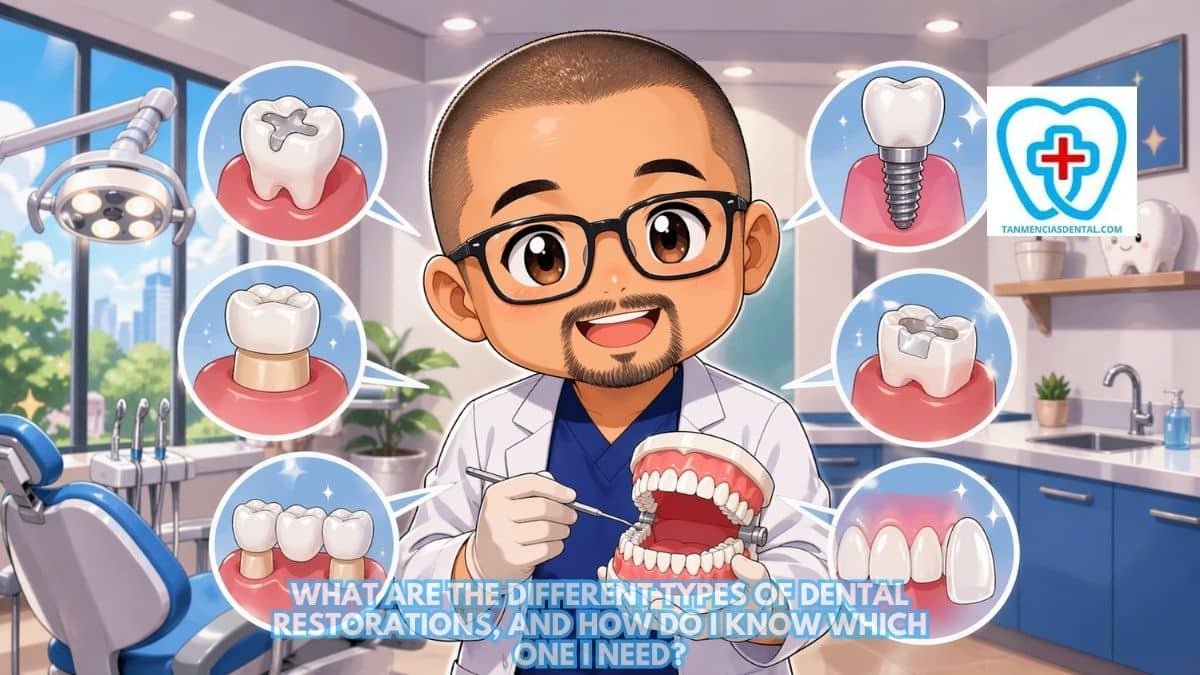
What are the different types of dental restorations?
Understanding helps you make informed choices about your oral care.
Teeth can break down over time due to decay, injury, or wear from daily use.
Different treatments exist to repair this damage and restore both function and appearance.
Each option works best for a specific level of damage or need.
Learning the differences can help you avoid unnecessary procedures and costs.
With the right knowledge, you can approach your dental visits with more confidence and clarity.
1. The Basics of Restoring Your Smile
Dental restorations aim to repair or replace parts of teeth that no longer work as they should.
These treatments help repair damaged teeth so you can chew food properly and speak clearly without discomfort.
Dentists focus on keeping as much of the natural tooth structure as possible during the process.
A strong and healthy tooth structure protects the nerves inside your teeth from pain or infection.
Before starting, the dentist checks the level of damage and decides which option will work best.
Materials are chosen based on strength, safety, and how well they match your teeth.
Some restorations blend with your natural tooth structure, while others are designed for areas that need extra support.
The final choice depends on your dental condition, daily habits, and what you want for your smile.
🦷 Are There Any Safe Home Remedies For A Broken Tooth Besides A Repair Kit?
2. On-the-Spot Fixes vs. Lab-Made Solutions
Some dental treatments can be completed in one visit, making them quick and convenient for patients with simple needs.
Fillings are a common example, as they can be placed right after removing decay in the same appointment.
These on-the-spot dental restoration options are often used for small repairs that do not need complex design.
Other restorations require careful planning and are made in a dental lab to ensure accuracy.
Crowns, bridges, and some inlays or onlays fall into this category and are created based on detailed impressions of your teeth.
These options often need at least two visits, one for preparation and one for final placement.
Lab-made restorations tend to offer a better fit and can last longer because they are made with more precise methods.
🦷 What to Expect During a Broken Tooth Root Canal: Understanding the Procedure
3. Fillings: Quick Repairs for Small Cavities
Fillings are used when tooth decay affects a small part of the tooth and has not reached deeper layers.
During the procedure, the dentist removes the damaged area and cleans the space to stop the spread of bacteria.
A dental filling is then placed using materials such as composite resin or amalgam to seal the tooth.
Composite fillings are often chosen because they match the color of your natural teeth and blend in well.
This treatment helps stop tooth decay from spreading deeper into the tooth and causing more serious problems.
It also restores the tooth’s normal shape, so you can bite and chew without discomfort.
After the procedure, proper brushing and flossing help protect the filled tooth from further damage.
Regular checkups allow the dentist to monitor the dental filling and make sure it remains strong and secure over time.
🦷 What Should I Do In The First 48 Hours After Breaking A Tooth?
4. Crowns: Complete Protection for Weak Teeth
Crowns cover the entire surface of a damaged tooth to protect it from further harm.
A dental crown is often recommended when a tooth is cracked, weakened, or has a large filling that can no longer support it.
The dentist first shapes the tooth so the crown can fit securely on top.
An impression is then taken to create a custom fit that matches your bite and nearby teeth.
Materials for a dental crown can include porcelain, metal, or a combination, depending on the location and function of the tooth.
This restoration helps bring back strength, so you can bite and chew without pain or risk of further damage.
With good oral hygiene and regular dental visits, a dental crown can last for many years and still look natural.
🦷 What You Need to Know About Drinking Orange Juice After Brushing Teeth
5. Inlays and Onlays: The Mid-Sized Solution
Inlays and onlays are used when damage is moderate and does not require a full crown.
An inlay fits within the grooves of a tooth, while an onlay extends over one or more cusps to cover a larger area.
Dentists often recommend these options when a filling is too small, but a crown is not yet needed.
The materials used for inlays and onlays are usually porcelain or composite, chosen for their strength and natural look.
These restorations are carefully shaped in a lab to match the exact form of your tooth for a secure fit.
Because they are custom-made, they help restore function while keeping more of your natural tooth structure.
This option provides both durability and a clean appearance that blends well with your smile.
🦷 What to Do About a Broken Tooth Molar: Understanding Your Pain
6. Bridges: Closing the Gap of Missing Teeth
A dental bridge is used to replace missing teeth by using nearby teeth as support.
The surrounding teeth are carefully shaped so they can hold crowns that anchor the bridge in place.
Between these crowns, a false tooth is placed to fill the gap and restore your smile.
This setup helps you chew food properly and speak more clearly without difficulty.
It also keeps nearby teeth from shifting into the empty space, which can affect your bite over time.
A dental bridge can help replace missing teeth in a stable and fixed way without removing it daily.
Good oral hygiene, such as brushing and flossing around the bridge, is important for long-term success.
Regular dental visits also help ensure the bridge stays secure and in good condition.
🦷 The Ultimate Guide to Dental Cleaning in Marikina: What to Expect and How to Prepare
7. Implants: A Permanent Root Replacement
Dental implants provide a stable and long-lasting solution for missing teeth.
A small metal post is placed into the jawbone, where it acts like a natural root.
Over time, the bone bonds with the implant, creating a strong base.
A crown is then attached to complete the restoration.
This option helps maintain bone health and prevents bone loss.
Implants feel natural and allow you to eat and speak with confidence.
🦷 Understanding Preventive Dental Care Solutions for Families
8. Veneers: Restoring Shape and Appearance
Veneers are thin shells that cover the front surface of teeth to improve how they look.
Dental veneers are often used to fix issues like stains, uneven edges, or small gaps between teeth.
Before placing them, the dentist removes a small amount of enamel to make space for a proper fit.
This step helps the veneers sit naturally and blend well with your smile.
Materials like porcelain are commonly used because they reflect light in a way that looks similar to natural teeth.
Dental veneers can quickly improve the overall shape and color of your teeth without major procedures.
With good oral care and regular dental visits, they can last for many years while keeping a clean and natural appearance.
🦷 Things to Consider Before Getting a Prosthodontic Procedure
9. Choosing Between Durability and Aesthetics
Different materials offer different benefits depending on your needs.
Metal restorations tend to be very strong and long-lasting.
Tooth colored materials, such as composite or porcelain, blend in better with natural teeth.
Some people prefer strength for back teeth and appearance for front teeth.
Budget can also influence your decision, as some materials cost more than others.
A balanced choice considers function, appearance, and long-term value.
🦷 Orthodontic Treatment in Marikina
10. Signs It Is Time to See Your Dentist
Certain symptoms can signal that a restoration may be needed.
Pain when biting or sensitivity to hot and cold can indicate damage.
Visible cracks, holes, or dark spots on teeth should not be ignored.
Missing teeth or changes in how your bite feels also require attention.
Early treatment can prevent more serious problems and reduce costs.
Regular dental visits help catch these issues before they worsen.
🦷 Your Go-To Dentists in Marikina
👨⚕️ Conclusion
Knowing what the different types of dental restorations are helps you take control of your oral health decisions.
Each option is designed to solve a specific problem, from small cavities to missing teeth.
The right choice depends on the condition of your teeth and your personal priorities.
Dentists can guide you through the options and recommend what suits your needs best.
Taking action early often leads to better outcomes and less discomfort.
A healthy smile supports both your confidence and your overall well-being.
❔ FAQs
1. How do I know which dental restoration I need?
A dentist checks your teeth and looks at the level of damage.
Small cavities may only need fillings, while larger damage may need crowns or inlays.
Missing teeth may require bridges or implants.
Your dentist will also consider your budget, health, and personal goals before recommending a treatment.
2. Are dental restorations painful?
Most dental restorations are not painful because dentists use local anesthesia.
You may feel slight pressure during the procedure, but not sharp pain.
After the treatment, mild soreness can happen, but it usually goes away in a few days.
Dentists may also give advice or medicine to help manage any discomfort.
3. How long do dental restorations last?
The lifespan depends on the type of restoration and how well you care for your teeth.
Fillings may last several years, while crowns and implants can last much longer.
Good oral hygiene and regular dental visits help extend their life.
Avoiding hard foods and bad habits like teeth grinding also helps protect them.
4. Can dental restorations look natural?
Many modern materials are made to match the color of natural teeth.
Options like composite fillings, porcelain crowns, and veneers blend well with your smile.
Dentists carefully shape and polish these restorations for a natural look.
This makes it hard for others to notice any dental work.
5. What happens if I delay getting a dental restoration?
Delaying treatment can make the problem worse over time.
A small cavity can grow deeper and may lead to infection or tooth loss.
More damage often means more complex and costly treatment later.
Early care helps keep your teeth strong and prevents bigger problems.
😊 Self-Promotion
If you are looking for trusted dental care, visit Tan-Mencias Dental Clinic at 44 G. Del Pilar Street, Parang, Marikina City for friendly and professional service.
Our team is ready to help you keep your teeth healthy and your smile strong.
You can call us at 0917-145-1074 if you have questions or want to book a visit.
You may also send us a message through our Facebook page or through our website’s contact form for quick support.
We look forward to welcoming you and helping you feel comfortable during your dental care.