A broken tooth can feel painful and stressful, especially when care is not available right away.
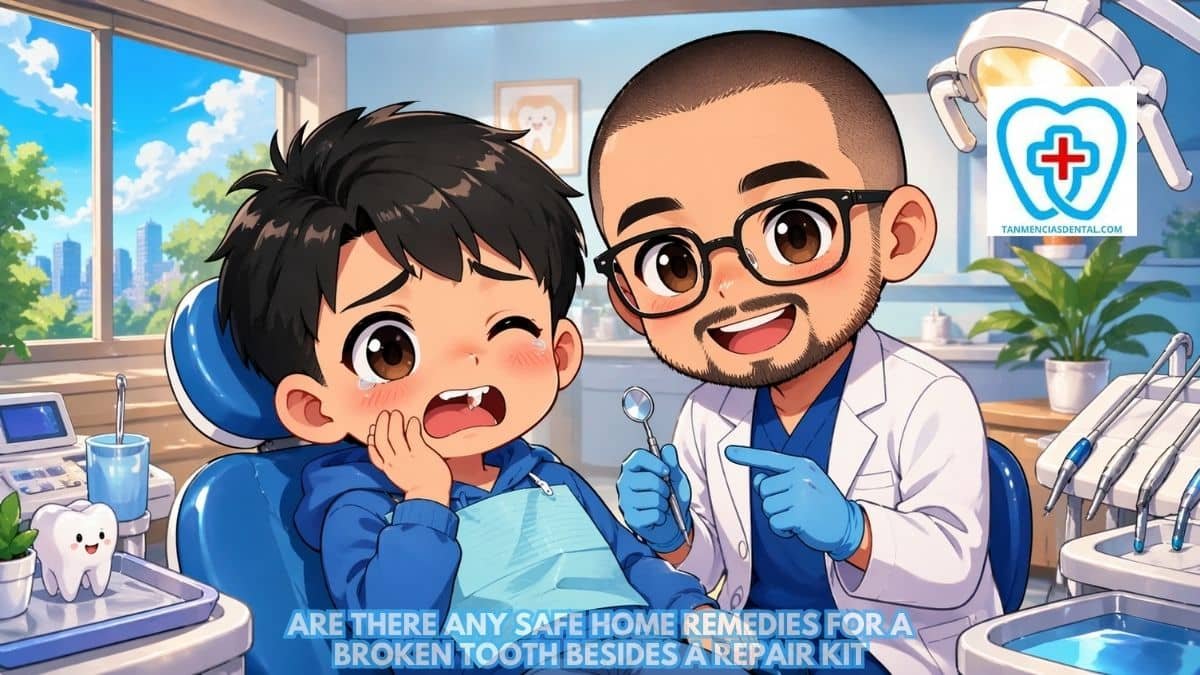
Many people ask, are there any safe home remedies for a broken tooth besides a repair kit?
While home care cannot fix the damage, it can help reduce pain and protect the area.
Acting quickly lowers the chance of infection and prevents the break from getting worse.
Simple actions can also make it easier to eat, speak, and rest.
These steps work best as short-term support until you see a dentist.
1. Rinse With Warm Salt Water
Warm salt water helps clean the mouth and lower the risk of infection after a tooth breaks.
Salt acts as a mild disinfectant that can wash away food particles and bacteria.
To prepare it, mix about half a teaspoon of salt into a glass of warm water until it dissolves.
Swish the solution gently around your mouth for several seconds, focusing on the affected area.
Spit it out and repeat this process two to three times a day.
Regular rinsing keeps the area cleaner and can also soothe irritated gums.
🦷 What to Expect During a Broken Tooth Root Canal: Understanding the Procedure
2. Cover Jagged Edges With Dental Wax
Sharp edges from a broken tooth can easily cut your tongue, cheeks, or lips, which can lead to more discomfort.
Using dental wax to cover these rough areas helps protect the soft tissues in your mouth.
Before applying it, make sure your hands are clean to avoid bringing bacteria into the area.
Take a small piece of wax and soften it by rolling it between your fingers until it becomes easy to shape.
Press it gently over the jagged part of the tooth, so it stays in place and forms a smooth surface.
This simple barrier makes it easier to eat and speak without causing new injuries.
Replace the wax as needed, especially after meals or brushing, to keep the area protected.
🦷 What Should I Do In The First 48 Hours After Breaking A Tooth?
3. Use Cold Packs To Reduce Swelling
Swelling often develops around the cheek or jaw after a tooth breaks, especially when there is injury to the surrounding tissues.
This swelling is a common response to tooth damage and can make the area feel tender and tight.
Applying a cold pack to the outside of the face can help reduce swelling and numb the area at the same time.
Always wrap the cold pack in a clean cloth to protect your skin from direct cold exposure.
Hold it gently against your cheek for about 10 to 15 minutes, then allow your skin to rest before applying it again.
This method also helps ease throbbing pain by slowing blood flow to the affected area.
You can repeat this several times a day to manage discomfort until you receive proper dental care.
🦷 What You Need to Know About Drinking Orange Juice After Brushing Teeth
4. Manage Pain With Over-The-Counter Relief
Pain from a broken tooth can lead to a strong toothache that affects eating, sleeping, and even speaking.
This type of pain may come and go, or it may feel constant and sharp.
Over-the-counter pain relievers such as ibuprofen or acetaminophen can help reduce this discomfort.
These medicines work by lowering inflammation or blocking pain signals in the body.
It is important to follow the correct dosage on the label to avoid unwanted side effects.
Never place aspirin directly on the tooth, since it can irritate or burn the gums.
Using these medicines the right way can help control the toothache until you receive proper dental care.
🦷 What to Do About a Broken Tooth Molar: Understanding Your Pain
5. Apply Clove Oil For Natural Numbing
Clove oil contains a natural compound called eugenol, which has numbing and soothing effects on the tooth and gums.
Because of this, it is often used as a temporary fix for a broken tooth when pain becomes hard to manage.
It can help calm a sharp or sudden ache for a short period.
Place a small drop of clove oil on a clean cotton ball or swab before applying it.
Gently dab it onto the broken tooth or the nearby gum area without pressing too hard.
The numbing effect may make it easier to eat or rest for a while.
Use it in small amounts only, since too much can irritate the soft tissues in your mouth.
🦷 The Ultimate Guide to Dental Cleaning in Marikina: What to Expect and How to Prepare
6. Stick To Soft Foods To Prevent Further Damage
Eating hard or crunchy foods can worsen a broken tooth or cause more pieces to break off.
This can make the pain stronger and increase the risk of infection.
While you may want to fix a broken tooth at home, choosing the right foods is one of the safest ways to protect it.
Soft foods like mashed potatoes, scrambled eggs, yogurt, and soup are easier to chew and place less pressure on the damaged area.
Try to chew on the opposite side of your mouth to avoid direct contact with the broken tooth.
Taking small bites and eating slowly can also help prevent sudden pain.
Keeping your diet gentle supports temporary protection until you receive proper dental care.
🦷 Understanding Preventive Dental Care Solutions for Families
7. Avoid Extremely Hot Or Cold Drinks
A broken tooth often exposes inner layers that are sensitive to temperature.
Very hot or very cold drinks can trigger sharp, sudden pain.
Choosing drinks that are closer to room temperature can help prevent discomfort.
Using a straw may also reduce contact with the damaged tooth.
This small adjustment can make a big difference in daily comfort.
Protecting the tooth from extreme temperatures helps avoid added irritation.
🦷 Things to Consider Before Getting a Prosthodontic Procedure
8. Keep Your Head Elevated While Resting
Tooth pain can feel worse when lying flat because of increased blood flow to the head.
Keeping your head elevated can reduce pressure and throbbing sensations.
Use an extra pillow or adjust your sleeping position slightly upward.
This can help you rest more comfortably, especially at night.
Better rest also supports your body’s ability to cope with pain.
Simple positioning changes can improve how you feel during recovery.
🦷 What Can A Dental Repair Kit Actually Fix?
9. Utilize Garlic For Its Antibacterial Properties
Garlic contains natural antibacterial compounds that may help control bacteria in the mouth.
Crushing a small clove releases these helpful substances.
You can place the crushed garlic near the broken tooth for a short time.
Some people mix it with a bit of salt to enhance the effect.
The strong taste and smell can be unpleasant, but they may provide mild relief.
This method should be used carefully and not too often to avoid irritation.
🦷 Understanding Black Plaque On Teeth: Causes and Prevention Tips
10. Protect The Tooth From Further Injury
A broken tooth is more fragile and needs careful handling to prevent more damage.
Avoid touching it with your fingers or tongue, as this can irritate the area.
Stay away from sticky or hard foods that could pull or crack the tooth further.
If a piece of the tooth has broken off, store it in clean water or milk if possible.
Bringing it to the dentist may help with treatment options.
Taking these precautions can help preserve the tooth until care is available.
11. Schedule A Professional Evaluation Immediately
Home remedies can only provide temporary relief and do not repair the broken structure of the tooth.
A dentist must examine the tooth closely to check how deep the damage goes and if the inner parts are affected.
This step is very important in dental emergencies because hidden cracks or exposed nerves can lead to serious problems.
Based on the findings, treatment may include bonding, crowns, or other procedures that restore strength and function.
Early care helps prevent infection and lowers the risk of losing the tooth.
Waiting too long can make the pain worse and may lead to more complex and costly treatment later.
Getting professional dental care right away ensures that the problem is handled safely and correctly.
Taking quick action gives you the best chance to protect your tooth and overall oral health.
🦷 Reliable Dentists in Marikina
👨⚕️ Conclusion
Safe home steps can ease pain and protect a broken tooth for a short time.
If you are wondering, are there any safe home remedies for a broken tooth besides a repair kit?
The answer is yes, but they are only temporary solutions.
These methods help manage symptoms and prevent further harm while you wait for care.
However, they cannot fix the tooth or stop deeper problems from developing.
Acting quickly and following safe practices can make a big difference.
Professional dental treatment remains the best way to restore your oral health.
❔ FAQs
1. Can a broken tooth heal on its own without treatment?
A broken tooth cannot heal by itself because tooth enamel does not grow back.
The damage will stay the same or get worse over time.
You may feel less pain for a while, but the problem is still there.
A dentist needs to repair the tooth to restore its strength and function.
2. How long can I wait before seeing a dentist for a broken tooth?
It is best to see a dentist as soon as possible after the tooth breaks.
Waiting too long can increase the risk of infection or further damage.
Even if the pain is mild, the inside of the tooth may still be affected.
Early care helps prevent more serious problems later.
3. What should I do if my broken tooth starts bleeding?
If your tooth or gums are bleeding, rinse your mouth gently with clean water.
Apply light pressure with clean gauze or cloth to help stop the bleeding.
Avoid poking or touching the area too much.
If bleeding does not stop or is heavy, seek dental care right away.
4. Is it safe to brush my teeth if I have a broken tooth?
You can still brush your teeth, but you need to be very gentle around the broken area.
Use a soft-bristle toothbrush and avoid putting pressure on the damaged tooth.
Keeping your mouth clean helps prevent infection.
Just take care not to cause more pain or irritation.
5. Can a small crack in a tooth become worse over time?
Yes, even a small crack can grow larger if it is not treated.
Chewing, biting, or grinding can put stress on the weakened tooth.
Over time, this can lead to more pain or a bigger break.
Seeing a dentist early can help stop the problem from getting worse.
😊 Self-Promotion
If you need dental care, we invite you to visit Tan-Mencias Dental Clinic at 44 G. Del Pilar Street, Parang, Marikina City.
Our team is ready to help you with your dental needs in a friendly and caring way.
You can call us at 0917-145-1074 if you have questions or want to book an appointment.
You may also send us a message through our Facebook page or through the contact form on our website.
We look forward to helping you keep your smile healthy and strong.