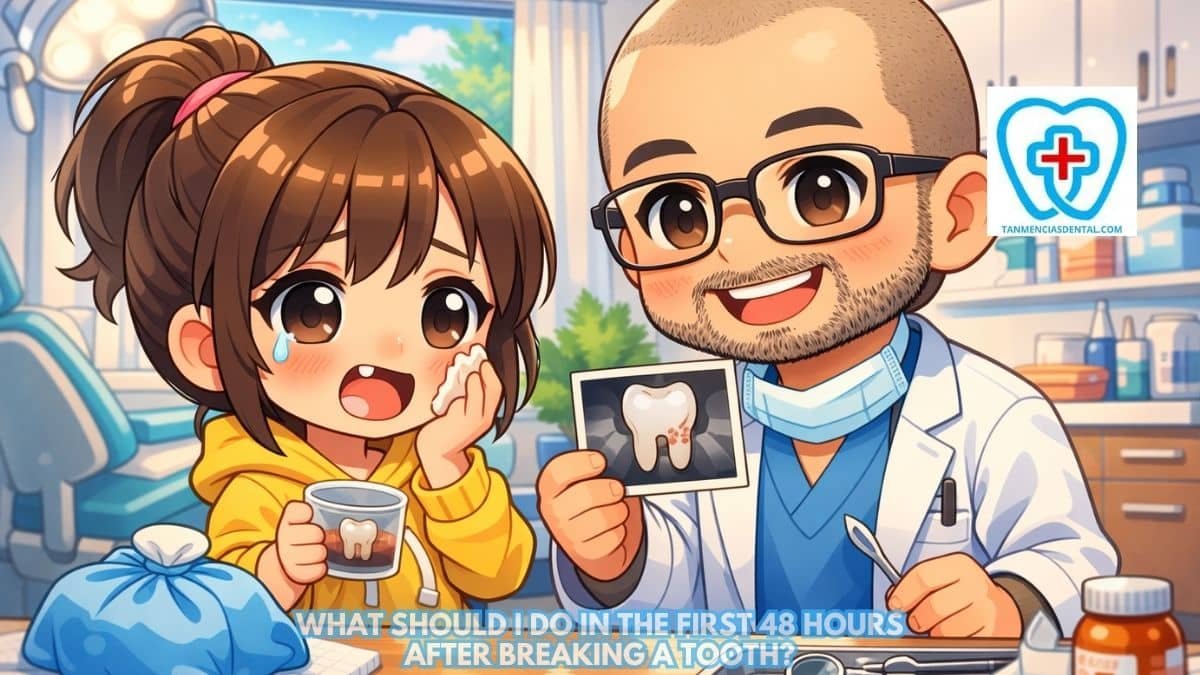
Breaking a tooth can feel scary, but quick action helps protect your mouth and reduce long-term damage.
The first 48 hours after breaking a tooth are especially important because this is when you can prevent infection and save as much of the tooth as possible.
Acting early also helps control pain and swelling before they get worse.
A clear plan allows us to stay calm and avoid mistakes that could make the injury worse.
Simple steps done at the right time can make dental treatment easier later.
Knowing what to do right away gives you a better chance of a smooth recovery.
1. Find and Save the Tooth Fragment
If a piece of your tooth breaks off, try to find it as soon as you can after the fracture.
Acting quickly can help preserve the tooth and improve the chances of repair.
Pick up the fragment carefully by the outer surface and avoid touching the inner part, since this area is more delicate.
If the piece is dirty, rinse it gently with clean water, but do not scrub or use soap because this can damage the surface.
After rinsing, place the fragment in milk, saliva, or a tooth preservation solution to keep it moist.
Keeping it wet is important because drying out can make it harder for the dentist to reattach it.
Handle the piece with care and store it safely while preparing to visit the dentist.
Bringing the fragment with you gives your dentist a better chance to restore the tooth properly.
🦷 What You Need to Know About Drinking Orange Juice After Brushing Teeth
2. Rinse Gently with Salt Water
After a tooth breaks, your mouth may have small debris and bacteria that need to be cleared away.
Mix a small amount of salt with warm water and rinse gently to clean the area.
Swish slowly so you do not disturb the injured tooth or cause more pain.
This rinse helps reduce bacteria and lowers the risk of infection.
Repeat this process a few times a day, especially after eating.
Keeping the area clean is one of the most important steps during the first 48 hours after breaking a tooth.
🦷 What to Do About a Broken Tooth Molar: Understanding Your Pain
3. Control Bleeding with Firm Pressure
Bleeding is common after a tooth injury, especially if the break reaches deeper layers of the tooth or gum.
Place a piece of clean gauze over the area and press down gently but firmly to help stop the bleeding.
Keep steady pressure for about 10 minutes and avoid checking too often, since lifting the gauze can restart the flow.
If the gauze becomes soaked, replace it with another piece of clean gauze and continue applying pressure.
Try to stay seated upright because this position can help reduce blood flow to the injured area.
Avoid rinsing your mouth too often at this stage, since this may disturb clot formation.
If the bleeding does not slow down or stop after repeated attempts, seek urgent dental or medical care right away.
🦷 The Ultimate Guide to Dental Cleaning in Marikina: What to Expect and How to Prepare
4. Manage Pain with Over-the-Counter Medication
Pain can start soon after a tooth breaks, so early care helps you stay comfortable.
Using over-the-counter pain relief like ibuprofen or acetaminophen can help reduce both pain and swelling.
Always read and follow the directions on the label to avoid taking too much.
It is best to take the medicine with food to help protect your stomach.
Do not place aspirin directly on your gums because it can irritate the tissue and cause more harm.
Try to avoid chewing on the injured side while the pain is present.
Proper pain control makes it easier to rest, eat, and follow the other steps needed for recovery.
🦷 Understanding Preventive Dental Care Solutions for Families
5. Shield Sharp Edges with Dental Wax
A broken tooth often leaves behind sharp edges that can cut the inside of your mouth.
Cover these edges with dental wax, which you can find at most pharmacies.
If wax is not available, sugar-free gum can be used as a temporary option.
Press the material gently over the sharp area to create a smooth surface.
This helps protect your tongue, cheeks, and lips from injury.
Keeping the area covered also makes it easier to talk and eat without discomfort.
🦷 Things to Consider Before Getting a Prosthodontic Procedure
6. Reduce Swelling with a Cold Compress
Swelling can develop around the cheek or jaw soon after a tooth injury.
To help manage this, you can use a cold compress on the outside of your face near the affected area.
Wrap ice in a clean cloth or use a cold pack to avoid direct contact with your skin.
Hold it gently against your cheek for about 10 to 15 minutes at a time.
After each session, take a short break to prevent skin irritation or discomfort.
This method helps reduce swelling and can also numb the area to ease pain.
Using a cold compress several times a day can help keep the swelling under control during recovery.
🦷 What Can A Dental Repair Kit Actually Fix?
7. Eat Only Soft and Easy Foods
Eating the wrong foods can make a broken tooth worse, so it is important to choose soft foods during recovery.
Options like yogurt, mashed potatoes, scrambled eggs, soup, and soft fruits are gentle on your teeth.
These foods are easier to chew and less likely to cause pain or further damage.
Take small bites and chew slowly to avoid putting pressure on the injured area.
It is also important to chew on the opposite side of your mouth to protect the broken tooth.
Avoid hard, crunchy, or sticky foods because they can worsen the damage or dislodge a loose fragment.
Drinking plenty of water helps rinse away food particles and keeps your mouth clean.
Careful eating habits support healing and reduce the risk of more problems.
🦷 Understanding Black Plaque On Teeth: Causes and Prevention Tips
8. Keep the Area Clean and Protected
Maintaining good oral hygiene is still important after a tooth breaks.
Brush your teeth gently with a soft-bristled toothbrush, being careful around the injured spot.
Avoid aggressive brushing that could cause more pain or damage.
You can also use an alcohol-free mouthwash to help reduce bacteria.
Keeping the area clean lowers the chance of infection and supports healing.
Protecting the tooth from further harm is just as important as cleaning it.
🦷 Why Dental Cleanings Are Important
9. Avoid Hot and Cold Temperatures
A broken tooth can become very sensitive to temperature changes.
Hot drinks like coffee or soup can cause sharp pain, while cold foods like ice cream can do the same.
Choosing lukewarm foods and drinks helps reduce discomfort.
Sudden temperature changes can also irritate the nerve inside the tooth.
Try to test foods carefully before eating or drinking.
Avoiding extremes helps keep pain under control while you wait for treatment.
🦷 Why is Dental Care More Important Than Ever During Pregnancy?
10. Visit Your Dentist Within 48 Hours
Seeing a dentist quickly is one of the most important steps you can take after breaking a tooth.
During the first 48 hours, early care can help prevent infection and reduce further damage.
If you have severe pain or heavy bleeding, you may need to see an emergency dentist right away.
The dentist will check the tooth carefully and may take X-rays to look at the inside and surrounding area.
Based on the findings, treatment may include bonding, a crown, or other repairs to restore the tooth.
Bringing the broken fragment with you can help improve the chances of saving it.
Prompt care gives you a better chance of protecting your tooth and avoiding more serious problems.
🦷 Basic Dental Needs in Marikina
11. Stay Calm and Monitor Symptoms
It is important to stay calm and pay close attention to how your mouth feels after the injury.
Some problems may not be easy to see, especially with cracked teeth that can worsen over time.
Watch for signs like increasing pain, swelling, fever, or a bad taste in your mouth.
These symptoms may point to infection or more serious damage that needs quick care.
Notice if the pain gets worse when you bite or chew, as this can also signal hidden cracks.
Keeping track of these changes helps you explain your condition clearly to the dentist.
Staying aware and acting quickly can help prevent more serious problems from developing.
🦷 Family-Friendly Dental Services in Marikina
👨⚕️ Conclusion
Taking the right steps in the first 48 hours after breaking a tooth can protect your oral health and reduce complications.
Quick actions like cleaning the area, managing pain, and protecting the tooth make a big difference.
Following these steps also helps your dentist provide better treatment.
Small efforts during this time can lead to better long-term results.
With proper care and attention, recovery becomes smoother and less stressful.
Acting early gives you the best chance to keep your tooth healthy.
❔ FAQs
1. Can a broken tooth heal on its own?
A broken tooth cannot heal on its own because enamel does not grow back.
The damage may stay the same or get worse if not treated.
You may feel less pain over time, but the problem is still there.
A dentist needs to repair the tooth to protect it from further damage.
2. What should I do if the broken tooth is very painful?
Rinse your mouth gently with warm salt water to keep it clean.
You can take over-the-counter pain medicine like ibuprofen or acetaminophen if needed.
Avoid chewing on the affected side and stay away from very hot or cold foods.
If the pain is severe or does not improve, contact your dentist right away.
3. Is a broken tooth always a dental emergency?
Not all broken teeth are emergencies, but some need urgent care.
If there is heavy bleeding, severe pain, or a large part of the tooth is missing, you should seek help right away.
Small chips may not feel serious, but they still need a dental check.
It is always safer to have a dentist examine the damage.
4. Can I brush my teeth after breaking a tooth?
Yes, you should still brush your teeth to keep your mouth clean.
Use a soft toothbrush and be very gentle around the broken tooth.
Avoid putting too much pressure on the injured area.
Keeping your mouth clean helps prevent infection and supports healing.
5. What happens if I delay seeing a dentist?
Delaying treatment can lead to more pain and possible infection.
The broken tooth may become weaker and harder to repair.
In some cases, the damage can reach the inner part of the tooth, which may need more complex treatment.
Seeing a dentist early gives you the best chance to save the tooth.
😊 Self-Promotion
If you need help after a broken tooth, visit Tan-Mencias Dental Clinic at 44 G. Del Pilar Street, Parang, Marikina City.
Our team is ready to give safe and gentle care to help protect your smile.
You can call us at 0917-145-1074 if you have questions or need to book a visit.
You may also send us a message through our Facebook page or through the contact form on our website.
We are here to guide you and make your dental visit easy and comfortable.