
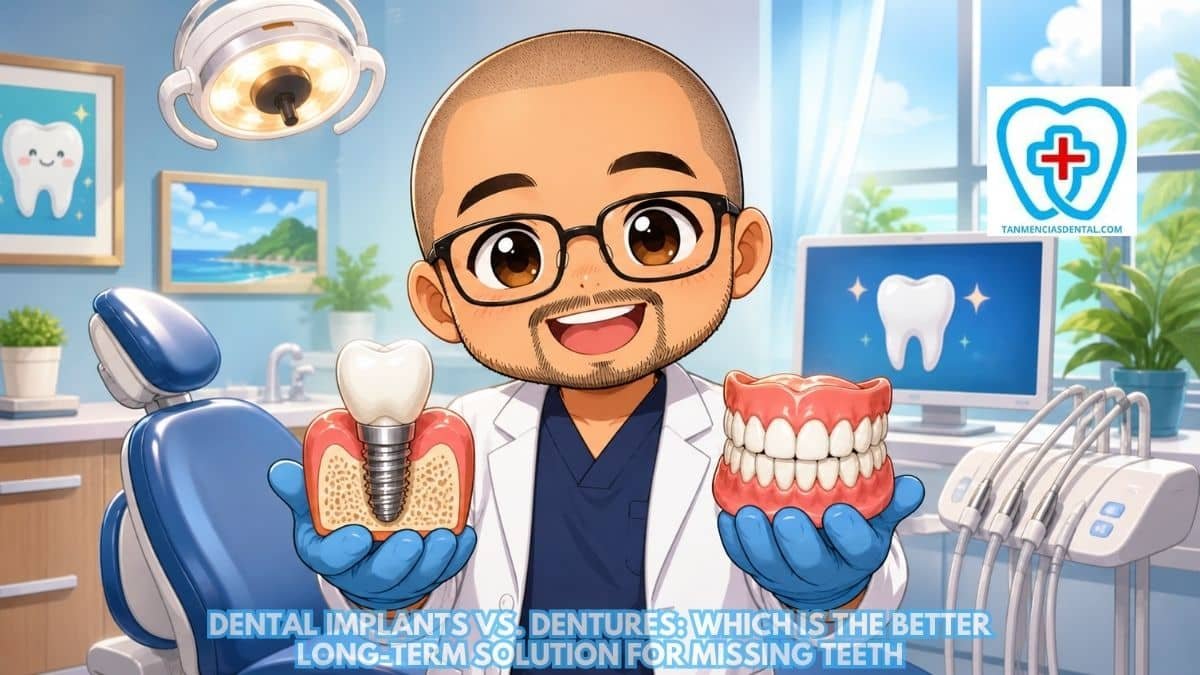
Choosing between dental implants vs. dentures can shape your daily comfort, health, and confidence for many years.
Both options replace missing teeth, but they work in very different ways inside the mouth.
Some people want a fixed solution that feels close to natural teeth, while others prefer a removable option that avoids surgery.
Cost, healing time, and lifestyle all play a role in the decision.
It helps to look beyond the short term and think about how each option performs over time.
With clear information, we can make a choice that supports both function and long-term well-being.
1. Understanding the Basics of Dental Implants vs. Dentures
Understanding the basics helps us compare dentures vs. dental implants in a clear way.
Dental implants are a type of tooth replacement option where small titanium posts are inserted into the jawbone.
These posts act like artificial roots and provide a strong base for new teeth.
After healing, a crown is placed on top, creating a tooth that looks and feels natural.
Dentures are another tooth replacement option, but they rest on the gums instead of being fixed in place.
They are usually made from acrylic and can replace several or all missing teeth.
Some dentures are full, while others are partial and attach to nearby teeth for support.
Unlike implants, dentures can be removed for cleaning and while sleeping.
Understanding these key differences helps us choose the option that fits our needs and daily life.
🦷 Tooth Extraction in Marikina: Understanding Pain Management and Recovery
2. Preserving Your Natural Jawbone and Facial Structure
Dental implants help keep the jawbone strong by providing steady support during chewing.
This pressure acts like natural tooth roots and helps the bone stay active and healthy.
One of the key benefits of implants is their ability to prevent bone loss, which often happens after teeth are missing for a long time.
When the bone begins to shrink, the face can lose its natural shape and may look sunken around the cheeks and lips.
Dentures do not give the same level of support, so the bone under them can slowly weaken.
As a result, dentures may become loose and need to be adjusted or replaced more often.
Choosing implants can help protect both the jawbone and the natural shape of the face over time.
🦷 Exploring the Benefits of Brushing Teeth With Baking Soda: A Natural Approach to Oral Hygiene
3. The Lifetime Durability of Implants vs. Replacing Dentures
Implants are made to last for many years and can stay stable for decades when cared for properly.
They are built from strong materials that can handle daily biting and chewing without wearing down easily.
When we look at the pros and cons, implants offer long-term durability but require more time and cost at the start.
Dentures, in contrast, often need to be replaced every five to ten years because the mouth changes over time.
As the gums and bone shift, dentures may feel loose and less secure.
Repairs or relining may be needed to improve how they fit and function.
Thinking about durability helps us understand the long-term effort and value of each option.
🦷 Can Tooth Decay Cause Headaches? Uncovering the Surprising Connection!
4. Eating and Speaking with Total Stability
Implants stay firmly anchored in the jaw, allowing us to bite and chew with confidence.
Hard foods like apples or nuts are easier to handle with a stable base.
Speech also feels more natural because the teeth do not move during talking.
Dentures can sometimes slip, especially when eating sticky or tough foods.
This movement can make chewing less efficient and speaking less clear.
A stable solution can improve both nutrition and communication in daily life.
🦷 What Are The Different Types Of Dental Restorations, And How Do I Know Which One I Need?
5. Surgical Precision vs. Fast Non-Invasive Results
Implants require careful planning and a procedure known as implant surgery, where a post is placed into the jawbone.
Dentists use precise methods to make sure the implant is placed in the right position for strength and comfort.
After the procedure, healing takes time as the bone bonds with the implant in a process called osseointegration.
This step is important because it creates a strong base that can support a crown for many years.
In contrast, dentures do not require surgery and can be made and fitted in a shorter time.
This makes them a good option for people who want faster results or want to avoid a surgical procedure.
However, the quicker process may come with less stability compared to implants over the long term.
🦷 Are There Any Safe Home Remedies For A Broken Tooth Besides A Repair Kit?
6. Daily Care: Brushing Normally vs. Overnight Soaking
Implants can be cared for much like natural teeth with daily brushing and flossing.
This simple routine helps remove food and plaque that can build up around the gums.
Regular dental visits are also important to check the health of the implant and surrounding tissue.
Dentures, on the other hand, require a different type of care each day.
They need to be removed at night and soaked in a cleaning solution to stay clean and keep their shape.
This process helps prevent bacteria from growing and reduces the risk of odor or irritation.
Choosing between these options often depends on which care routine fits better into your daily habits and comfort level.
🦷 What to Expect During a Broken Tooth Root Canal: Understanding the Procedure
7. Achieving a Natural-Looking Smile That Stays Put
Implants are designed to match the color and shape of natural teeth, creating a seamless look.
Because they are fixed in place, they do not shift when we smile, talk, or eat.
This stability helps maintain a consistent appearance throughout the day.
Dentures can also look natural, especially with modern materials and careful design.
However, slight movement may occur, which some people notice in social situations.
A secure smile often feels more natural and less distracting.
🦷 What Should I Do In The First 48 Hours After Breaking A Tooth?
8. Higher Initial Cost vs. Long-Term Value and Savings
Implants usually come with a higher upfront cost because they involve surgery, strong materials, and several dental visits.
This higher starting price can make them harder to choose at first, especially for those on a budget.
In comparison, the cost of dentures is lower in the beginning, which makes them more affordable for many people.
However, dentures often need to be adjusted, relined, or replaced over time as the mouth changes.
These added costs can build up over the years and affect the total expense.
Implants, on the other hand, tend to need fewer repairs and replacements once they are stable.
Looking at both short-term and long-term costs helps us understand which option offers better overall value.
🦷 What You Need to Know About Drinking Orange Juice After Brushing Teeth
9. Checking Your Bone Health and Candidacy
Not everyone can get implants right away because enough healthy bone is needed to support them.
A dentist will check the jaw using scans to measure bone density and structure before making a plan.
If the bone is too thin or weak, a bone graft may be needed to build it up.
This process adds more time to treatment, but it can help more people qualify for implants.
When choosing between dentures and implants, bone health is an important factor to consider.
Dentures do not need strong bone support, so they can work for people who are not ready for implant treatment.
Understanding these points helps us set clear and realistic expectations before moving forward.
🦷 What to Do About a Broken Tooth Molar: Understanding Your Pain
10. Protecting the Health of Your Remaining Teeth
Implants do not rely on nearby teeth, which helps preserve their natural structure.
Each implant stands on its own, reducing the risk of damage to surrounding teeth.
Dentures, especially partial ones, may use clasps that attach to existing teeth.
Over time, this can place extra pressure on those teeth and affect their health.
Proper fit and care can reduce these risks, but they still exist.
Protecting remaining teeth is an important part of long-term oral health.
🦷 Orthodontic Treatment in Marikina
11. The Boost in Confidence From a Permanent Smile
A secure and stable set of teeth can greatly improve how we feel in social and work settings.
Implants often give a strong sense of permanence, which helps reduce worry about slipping or movement.
This makes it easier to speak clearly, laugh freely, and eat in public without feeling self-conscious.
Dentures can also improve appearance and function, which helps build confidence over time.
However, some people may still notice slight movement, especially during eating or speaking.
Understanding these differences helps us make an informed decision based on comfort and lifestyle.
Feeling confident in our smile can improve both daily interactions and overall quality of life.
🦷 Expert Dental Services in Marikina City
👨⚕️ Conclusion
Dental implants vs. dentures each offer clear benefits depending on personal needs, health, and goals.
Implants provide strong support, long-term durability, and a natural feel that closely matches real teeth.
Dentures offer a quicker and more affordable option that works for many situations.
The right choice depends on factors like bone health, budget, and daily habits.
Taking time to weigh these details leads to a more informed decision.
A well-chosen solution can restore both function and confidence for years to come.
❔ FAQs
1. Which lasts longer, dental implants or dentures?
Dental implants can last many years, often decades, when cared for properly.
They are made from strong materials and are fixed in the jawbone.
Dentures usually need to be replaced every five to ten years because the mouth changes over time.
This makes implants a more long-term option for many people.
2. Are dental implants painful to get?
Dental implants involve a surgical procedure, so some discomfort can occur after the treatment.
Dentists use anesthesia during the procedure to keep you comfortable.
Afterward, mild pain or swelling may occur, but it often improves within a few days.
Most people find the discomfort manageable with proper care and guidance.
3. Can I eat normally with dentures?
Dentures allow you to eat many types of food, but some adjustments are needed.
Soft foods are easier at first while you get used to them.
Sticky or hard foods can be more difficult and may cause dentures to move.
With practice, eating becomes easier, but it may not feel as natural as with implants.
4. Who is a good candidate for dental implants?
A good candidate for implants usually has healthy gums and enough jawbone to support them.
A dentist will check your bone level using scans before treatment.
Some people may need extra procedures like bone grafting to qualify.
Overall health and habits, like smoking, can also affect eligibility.
5. How do I choose between dental implants and dentures?
Choosing between dental implants vs.
dentures depend on your needs, budget, and health condition.
Implants are more stable and long-lasting but require surgery and a higher cost.
Dentures are more affordable and faster to get, but they may need more maintenance over time.
A dentist can help guide you based on your specific situation.
😊 Self-Promotion
Visit Tan-Mencias Dental Clinic at 44 G. Del Pilar Street, Parang, Marikina City for friendly and reliable dental care.
Our team is ready to help you keep your smile healthy and strong.
You can call us at 0917-145-1074 if you have any questions or want to book a visit.
You may also send us a message through our Facebook page or our website’s contact form.
We look forward to caring for your smile soon.