
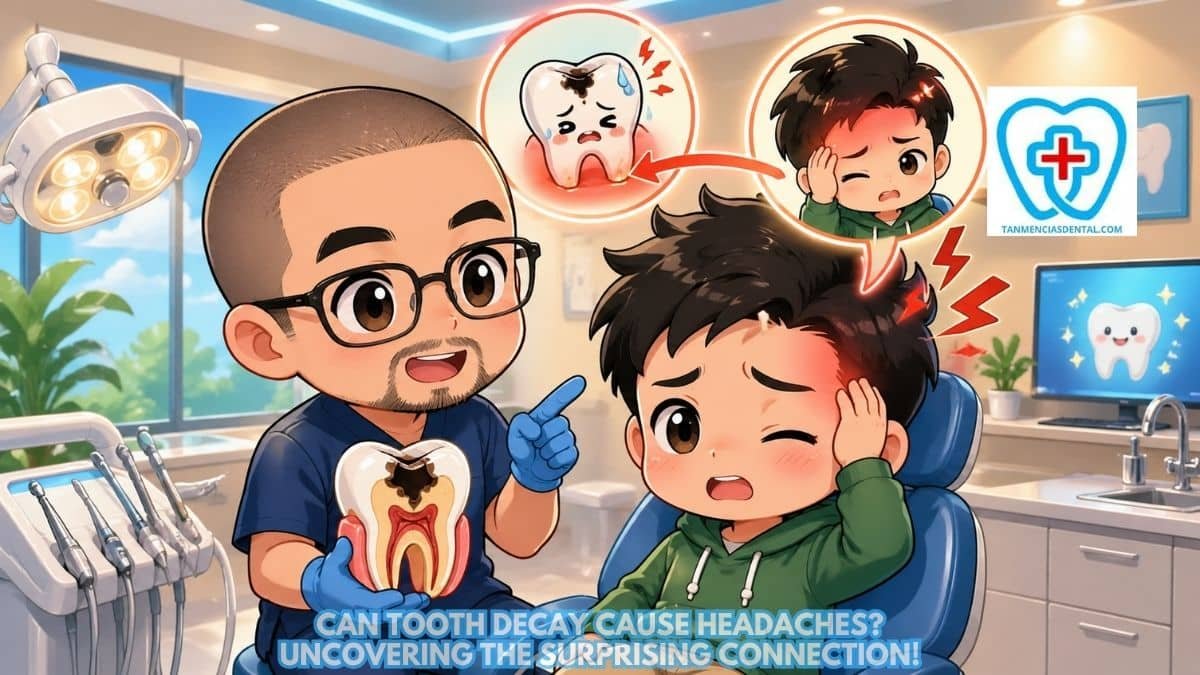
Tooth decay is a common problem, yet many people do not realize it can affect more than just the teeth.
Pain from cavities can spread beyond the mouth and may lead to headaches that are easy to overlook.
This raises an important question: can tooth decay cause headaches, and how are the two connected?
We’ll explain how untreated decay, nerve irritation, and jaw strain can trigger different types of head pain.
Along the way, we’ll cover how to recognize dental-related headaches and what signs to watch for.
Understanding this link can help you take early action and protect both your oral health and overall comfort.
1. Understanding Tooth Decay and Its Impact on Health
Tooth decay begins with small, demineralized areas on the enamel, but when ignored, these spots can grow into deeper cavities that reach the sensitive inner layers of the tooth.
As the decay progresses, it often causes severe pain and infections, sometimes leading to tooth loss if untreated.
However, the effects of tooth decay are not limited to dental issues; it can also trigger frequent headaches and even migraines.
This happens because the nerves in our teeth are closely linked to the central nervous system, allowing dental pain to radiate to the head.
In some cases, chronic inflammation from tooth decay can exacerbate this pain, contributing to the development of frequent headaches.
Additionally, infections caused by advanced tooth decay can spread, affecting other areas of the body and worsening the overall discomfort.
Understanding the connection between tooth decay and headaches highlights the importance of timely dental interventions to prevent these systemic effects.
🦷 What Are The Different Types Of Dental Restorations, And How Do I Know Which One I Need?
2. Can Cavities Cause Headaches?
Cavities, which form when tooth decay damages the enamel, can lead to both cavities and headaches.
As the decay moves deeper into the tooth, it can irritate the nerves inside, making the tooth very sensitive and painful.
This nerve irritation sends signals to the brain, which can cause a headache, especially when the affected tooth is close to major nerve pathways.
The pain may not stay in one place and can spread from the tooth to the jaw, temples, and even the neck.
When a cavity affects how your teeth come together, it can create uneven pressure while chewing.
This imbalance can strain the jaw muscles and lead to tension that builds over time.
As the muscles tighten, they can add more stress to the head, which may lead to ongoing headaches.
In some instances, the body reacts to this discomfort by increasing muscle tension, which makes the pain feel worse.
This connection between cavities and headaches shows how dental problems can affect more than just the mouth.
When the nerves are irritated and the jaw is under strain, the result can be pain that reaches the head.
Treating cavities early can help stop this process and reduce the risk of headaches.
Proper dental care plays an important role in preventing both tooth pain and related head discomfort.
🦷 Are There Any Safe Home Remedies For A Broken Tooth Besides A Repair Kit?
3. The Role of Poor Dental Health in Triggering Headaches
Poor dental health includes problems like cavities, gum disease, and infections that can affect more than just the mouth.
These issues create ongoing irritation that puts stress on the body’s pain response system.
Over time, this stress can build up and lead to headaches that may become more frequent.
People who have untreated dental problems may find themselves experiencing frequent headaches without knowing the cause.
Gum disease can also lead to inflammation that releases chemicals into the bloodstream, which may increase pain and trigger headaches.
When the body stays in this inflamed state, it becomes harder to manage discomfort.
Keeping up with good oral hygiene can help reduce this risk.
Healthy teeth and gums play an important role in preventing both dental pain and related headaches.
🦷 What to Expect During a Broken Tooth Root Canal: Understanding the Procedure
4. How Dentists Can Help Identify the Cause of Your Headaches
Dentists are trained to recognize when headaches may be linked to dental problems.
They can identify tooth-related headaches by checking for signs of decay, infection, or damage in the teeth and gums.
Using tools like dental X-rays, they look for hidden cavities or issues that may not be visible during a simple exam.
A bite analysis also helps them find uneven pressure in the jaw that can lead to tension and pain.
They may also examine the temporomandibular joint to see if there are problems with jaw movement or alignment.
These checks help dentists understand how dental issues may be connected to head pain.
When needed, they can work with other healthcare providers to confirm the cause.
This team approach helps ensure that the right treatment is given to reduce both dental pain and headaches.
🦷 What Should I Do In The First 48 Hours After Breaking A Tooth?
5. How Dental Headaches Manifest
Dental headaches often appear as tension-type pain, with a dull ache around the forehead, temples, or back of the neck.
At first, the discomfort may seem mild, but it can grow stronger and last longer if the dental issue is not treated.
These headaches often get worse when you chew, bite, or clench your teeth, which puts extra pressure on the affected area.
In many cases, people experience both tooth and head pain at the same time, but may not realize they are connected.
This overlap can make the condition harder to identify and may lead to the wrong diagnosis.
Paying attention to when the pain starts and what makes it worse can help reveal the link to dental problems.
Recognizing these patterns is important for getting the right treatment and relief.
🦷 What You Need to Know About Drinking Orange Juice After Brushing Teeth
6. How to Tell if Your Headache Is Caused by Tooth Decay
Not all headaches come from the same source, so it is important to know when dental problems may be the cause.
A headache linked to tooth decay often comes with tooth pain that gets worse when you chew or bite.
You may also notice sensitivity when eating hot or cold foods, which can point to a problem inside the tooth.
In many cases, the pain feels focused around the jaw, teeth, or temples rather than the whole head.
Other types of headaches have different patterns.
Tension headaches usually feel like a tight band around the head, while migraines can cause throbbing pain along with light sensitivity or nausea.
Sinus headaches often come with pressure around the eyes, nose, and forehead, especially during a cold or allergy.
By paying attention to these signs, you can better understand whether your headache may be linked to tooth decay or another cause.
🦷 What to Do About a Broken Tooth Molar: Understanding Your Pain
7. Pain: The Common Denominator Between Tooth Decay and Headaches
Pain is the body’s way of warning that something is wrong, and it links tooth decay to headaches.
As decay worsens, it can irritate the nerves inside the tooth, leading to a strong and persistent toothache.
This pain can travel from the tooth to nearby areas, including the jaw and head, where it may contribute to headaches.
When the body reacts to this discomfort, it may cause muscle tension from clenching or adjusting the jaw.
These reactions can add more pressure and make the headache feel worse over time.
The longer the dental problem remains, the more the pain can build and spread.
This chain reaction shows how untreated tooth decay can lead to both ongoing tooth pain and repeated headaches.
🦷 The Ultimate Guide to Dental Cleaning in Marikina: What to Expect and How to Prepare
8. The Connection Between Rotting Teeth and Headaches
Rotting teeth, or severe tooth decay, can lead to infections that not only cause intense pain but can also trigger headaches.
As the decay moves deeper, it reaches the pulp where the nerves and blood vessels become inflamed or infected.
This irritation increases pressure inside the tooth, which can send pain signals to the head and cause headaches.
In many cases, the pain does not stay in one place and may spread to other parts of the face, jaw, and temples.
If the infection is not treated, it can continue to spread to other parts of the surrounding tissues and worsen the discomfort.
The body may respond to this ongoing infection with more inflammation, which can make headaches more frequent or more severe.
These symptoms show how closely dental health is linked to overall head pain.
Taking care of rotting teeth early can help stop the infection and reduce the risk of headaches.
🦷 Understanding Preventive Dental Care Solutions for Families
9. Teeth Grinding, TMJ, and Headaches: A Painful Trio
Teeth grinding (bruxism) and TMJ (temporomandibular joint disorders) form a troubling combination that often results in headaches.
Bruxism, particularly when it occurs during sleep, can put excessive stress on the teeth and jaw, leading to TMJ disorders.
These disorders are characterized by pain and dysfunction in the jaw joint and muscles controlling jaw movement, which can cause a type of headache known as a TMJ headache.
These headaches are usually felt in the temples, jaw, or ear area.
They can also be accompanied by a clicking or popping sound in the jaw when opening or closing the mouth.
Managing these conditions often requires a multidisciplinary approach, including dental and medical interventions, to alleviate the pain and prevent further headaches.
🦷 Things to Consider Before Getting a Prosthodontic Procedure
10. Toothache: A Precursor to Headaches
A toothache often serves as an early warning sign of potential headaches.
Pain from a toothache caused by decay or infection can radiate from the affected tooth to other parts of the head, leading to or exacerbating headaches.
The intensity of a toothache can vary, but even minor tooth pain can escalate into significant headaches if the underlying issue is not addressed.
This direct relationship underscores the importance of not ignoring toothaches, as they can be indicators of more serious dental health problems that might lead to headaches.
Prompt treatment of a toothache can prevent it from becoming a source of chronic headaches, highlighting the interconnectedness of oral and overall head health.
🦷 What Can A Dental Repair Kit Actually Fix?
11. Preventing Dental Health Problems to Avoid Headaches
Preventing dental health problems plays a key role in reducing headaches linked to tooth decay.
Regular dental checkups help detect early signs of damage so treatment can begin before pain worsens.
Good daily habits, such as brushing and flossing, help remove plaque and prevent cavities from forming.
Limiting sugary foods and drinks also lowers the risk of decay that can lead to nerve irritation and headaches.
For people who grind their teeth, wearing a mouthguard can protect the teeth and reduce pressure on the jaw.
This helps lower the chance of tension and pain that may lead to headaches.
Taking these simple steps supports both oral health and overall comfort.
Consistent care can make a clear difference in preventing dental issues and related head pain.
🦷 Basic Dental Needs in Marikina
12. Treating Tooth Decay to Alleviate Headaches
When tooth decay is identified as a cause of headaches, proper treatment can bring clear relief.
Dentists offer several treatment options based on how severe the damage is and which part of the tooth is affected.
Fillings are used for small cavities, while root canal treatment helps when the inner nerve is damaged or infected.
In more serious cases, removing the tooth may be needed to stop the spread of infection and pain.
These treatments focus on fixing the source of the problem, which helps reduce both tooth pain and headaches.
Modern dental care makes these procedures safer and more comfortable for patients.
After treatment, many people notice fewer headaches and less discomfort.
Taking action early can improve both oral health and overall well-being.
🦷 Friendly Dentists in Marikina
👨⚕️ Conclusion
The connection between dental health and headaches is clear and significant.
By understanding how tooth decay and other dental problems can lead to headaches, individuals can take proactive steps to maintain their oral health and, by extension, reduce their headache risk.
Regular dental care, coupled with good oral hygiene practices, plays a critical role in preventing tooth decay and the associated discomfort and headaches.
Addressing dental health problems promptly not only alleviates pain but also enhances overall quality of life.
Ultimately, taking care of one’s dental health is a vital step in preventing headaches, illustrating the inseparable link between oral health and general well-being.
❔ FAQs
1. Can a tooth infection cause constant headaches?
Yes, a tooth infection can lead to constant headaches if it is not treated.
The infection can irritate nerves and create pressure that spreads pain to the head.
This can result in ongoing discomfort that does not go away easily.
Treating the infection usually helps reduce both the tooth pain and the headaches.
2. Which teeth are most likely to cause headaches?
Back teeth, especially molars, are more likely to cause headaches.
These teeth are close to major nerves and the jaw muscles, which can affect the head when irritated.
Problems in these areas can also change how you bite, adding more strain.
This strain can lead to tension and headaches over time.
3. Can fixing a cavity stop headaches?
Yes, fixing a cavity can help stop headaches if the cavity is the main cause.
Repairing the tooth removes the source of nerve irritation and pain.
This often reduces the signals that trigger headaches.
Many people notice relief after proper dental treatment.
4. How long can dental-related headaches last?
Dental-related headaches can last as long as the dental problem remains untreated.
The pain may come and go at first, but it can become more frequent over time.
If the decay or infection worsens, the headaches may also become stronger.
Early treatment can help shorten how long the headaches last.
5. Can brushing and flossing help prevent headaches?
Good oral hygiene can help prevent headaches linked to tooth decay.
Brushing and flossing remove plaque that can lead to cavities and infections.
By keeping your teeth healthy, you reduce the chance of nerve pain and inflammation.
This lowers the risk of dental-related headaches.
6. When should I see a dentist for headaches?
You should see a dentist if your headaches come with tooth pain or sensitivity.
It is also important to seek help if the pain gets worse when chewing or biting.
Frequent headaches without a clear cause may also need a dental check.
A dentist can help find out if your teeth are part of the problem.
😊 Self-Promotion
Discover a brighter, healthier smile at Tan-Mencias Dental Clinic, nestled in the heart of Parang, Marikina City!
Our friendly team is dedicated to providing you with the utmost care and personalized dental services in a welcoming environment.
Have questions or concerns?
Feel free to reach out to us in the way that suits you best: give us a call at 0917-145-1074, send us a message through our Facebook page, or use the contact form on our website.
Let us be your partners in achieving optimal dental health and a dazzling smile, we’re just a message or call away!