
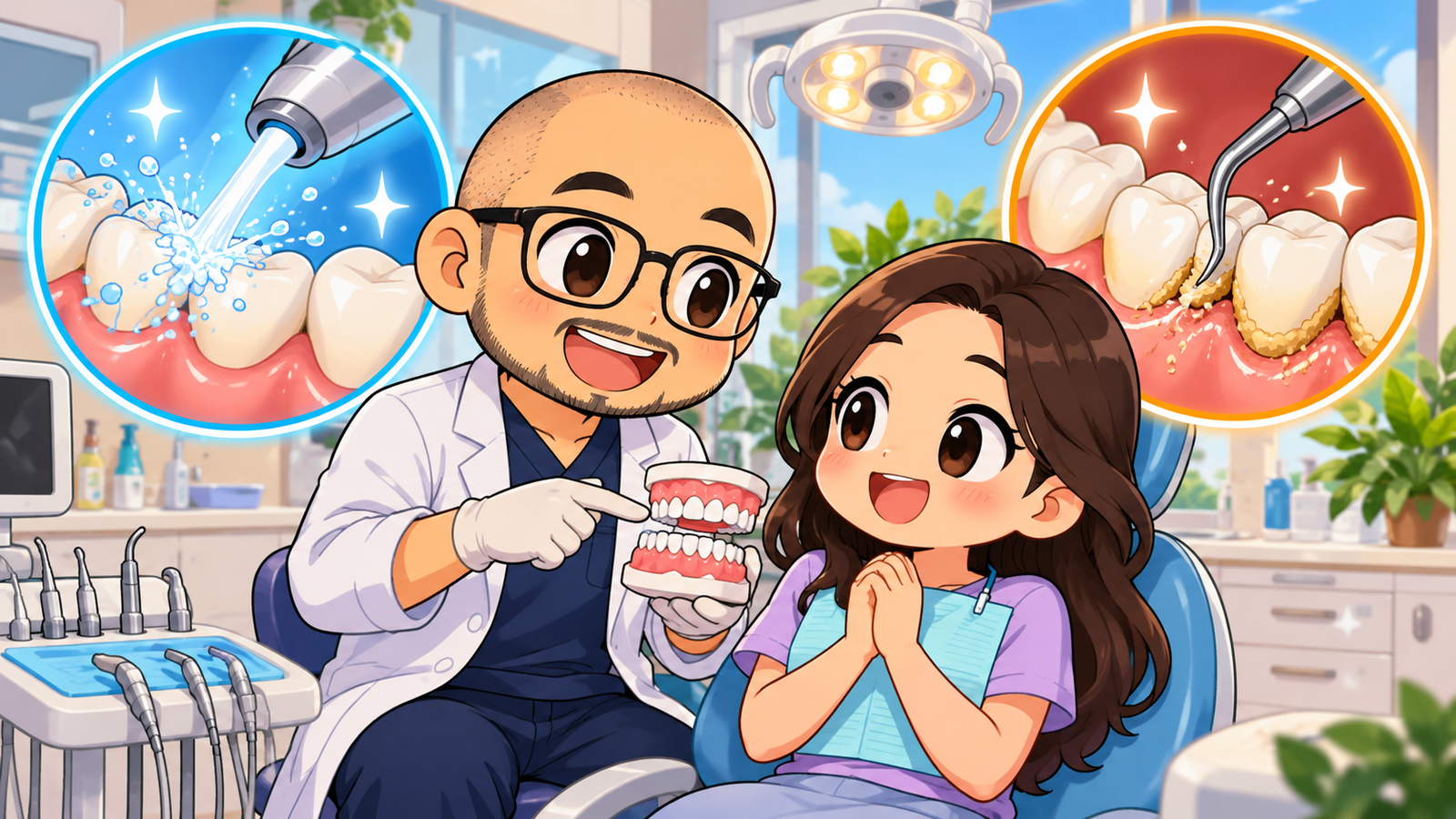
Regular dental cleaning is one of the simplest ways to protect your teeth and gums. If you’ve visited a dental clinic in the Philippines, you’re probably familiar with oral prophylaxis, commonly called dental cleaning. This procedure removes plaque, tartar, and surface stains that regular brushing cannot completely eliminate.
But there’s another approach to professional teeth cleaning that’s worth knowing about: Guided Biofilm Therapy (GBT).
GBT is a modern dental cleaning protocol that uses plaque-disclosing solutions, specialized air-polishing technology, and targeted scaling to remove bacterial biofilm and hardened deposits.
Both methods aim to improve oral hygiene and support gum health, but they differ in their techniques, equipment, and patient experience.
So, is Guided Biofilm Therapy better than traditional oral prophylaxis? Is it more comfortable? And which option should you consider?
Let’s explore how these dental cleaning methods compare, their advantages and limitations, and what you should know before your next dental appointment.
Key Takeaways
- Guided Biofilm Therapy (GBT) is a structured dental cleaning protocol that uses plaque-disclosing dye, air polishing, and targeted scaling to remove bacterial biofilm and tartar.
- Traditional dental cleaning, or oral prophylaxis, generally uses manual or ultrasonic scaling and polishing to remove plaque, tartar, and surface stains.
- GBT may offer greater comfort for some patients, particularly those who find conventional scaling uncomfortable.
- Both approaches are effective for professional plaque and tartar management when performed appropriately.
- GBT isn’t necessarily superior to traditional cleaning in terms of long-term gum health outcomes.
- The best choice depends on your oral health, dental sensitivity, treatment needs, personal preferences, and budget.
What Is Guided Biofilm Therapy (GBT)?
Guided Biofilm Therapy is a professional dental cleaning protocol developed by EMS, a Swiss dental equipment manufacturer. It focuses on identifying and removing dental biofilm using a systematic, minimally invasive approach.
But what exactly is dental biofilm?
Dental biofilm is a sticky layer of microorganisms, including bacteria, that continuously forms on your teeth and other surfaces inside your mouth. It’s commonly referred to as dental plaque.
When plaque isn’t removed properly, it can contribute to tooth decay, gum inflammation, and periodontal disease. Over time, plaque can also harden into tartar, also called dental calculus, which cannot be removed through regular brushing alone.
GBT addresses this buildup by first making dental biofilm visible using a special disclosing solution. This helps the dental professional identify areas that require cleaning.
The procedure then uses specialized air-polishing equipment to remove biofilm and surface stains, followed by scaling instruments to remove remaining hardened deposits.
How Does Guided Biofilm Therapy Work?
The complete GBT protocol consists of eight steps:
- Assessment: The dentist evaluates your teeth, gums, and overall oral health to determine your cleaning needs.
- Disclosure: A special dye highlights dental biofilm, revealing areas where plaque has accumulated.
- Motivation: The dental professional explains the findings and provides personalized oral hygiene advice.
- AIRFLOW® Cleaning: A controlled combination of air, water, and fine powder removes biofilm and certain surface stains.
- PERIOFLOW® Cleaning: When clinically indicated, specialized equipment removes biofilm from deeper periodontal pockets.
- PIEZON® Scaling: Ultrasonic instruments remove remaining tartar deposits.
- Quality Check: The dental professional checks for remaining deposits and evaluates the cleaning results.
- Recall: A follow-up schedule is recommended based on your oral health and individual risk factors.
Not every patient requires every procedure within the protocol. For example, patients with healthy gums generally won’t need specialized deep-pocket cleaning.
🦷 Can You Die From Cavities? Understanding the Risks of Untreated Tooth Decay
What Is Traditional Dental Cleaning (Oral Prophylaxis)?
Traditional dental cleaning, commonly known as oral prophylaxis in the Philippines, is a preventive dental procedure that removes plaque, tartar, and surface stains from your teeth.
It’s one of the most common services offered by dental clinics throughout the country.
During conventional oral prophylaxis, the dentist uses manual instruments, ultrasonic scalers, or both to remove deposits from the tooth surfaces and around the gumline.
The teeth are then commonly polished using a rotating rubber cup or brush and polishing paste.
How Does Traditional Oral Prophylaxis Work?
A typical procedure involves:
- Oral examination: The dentist checks your teeth and gums for plaque buildup, tartar, inflammation, and other dental concerns.
- Scaling: Manual or ultrasonic instruments remove plaque and hardened tartar.
- Polishing: A polishing instrument and paste remove certain surface stains and help smooth accessible tooth surfaces.
- Rinsing: Water and suction remove loosened debris and polishing materials.
- Oral hygiene advice: The dentist may provide recommendations for brushing, flossing, and future dental visits.
The exact steps may vary depending on your oral health and the clinic’s approach.
It’s important to understand that routine oral prophylaxis is different from deep cleaning or periodontal treatment.
If you have periodontitis, your dentist may recommend scaling and root planing or other periodontal procedures to address deposits and inflammation below the gumline.
🦷 What Is Guided Biofilm Therapy? A Patient’s Guide to Modern Teeth Cleaning
Guided Biofilm Therapy vs. Traditional Dental Cleaning: Key Differences
Although both approaches help maintain oral health, they differ in how dental biofilm and tartar are identified and removed.
| Feature | Guided Biofilm Therapy | Traditional Oral Prophylaxis |
| Main approach | Biofilm-guided cleaning protocol | Conventional scaling and polishing |
| Plaque identification | Uses disclosing dye as a standard step | Uses clinical examination; disclosing dye may also be used |
| Main equipment | Air-polishing and ultrasonic instruments | Manual and/or ultrasonic scalers and polishing tools |
| Biofilm removal | Primarily air polishing | Scaling and conventional polishing |
| Tartar removal | Targeted scaling | Manual or ultrasonic scaling |
| Comfort | May be more comfortable for some patients | Generally well tolerated, but scaling may cause discomfort |
| Surface stain removal | Uses fine-powder air polishing | Uses polishing paste and mechanical instruments |
| Patient education | Plaque visualization is built into the protocol | Depends on the clinic and dental professional |
| Cost | May be more expensive | Generally more affordable |
| Availability | Requires specialized equipment and training | Commonly available in Philippine dental clinics |
The most important difference is that GBT uses a structured, biofilm-guided sequence, while conventional oral prophylaxis generally focuses on scaling and polishing.
However, both methods can effectively remove deposits and support oral health when performed properly.
🦷 Seeing Your Smile in 3D: How Digital Oral Scans Help You Understand Your Treatment
What Are the Benefits of Guided Biofilm Therapy?
GBT offers several potential advantages, particularly for patients who prefer a more targeted approach to professional cleaning.
1. It May Be More Comfortable
One of GBT’s most appealing features is its potential to improve patient comfort.
Instead of relying primarily on manual scraping to remove soft deposits, GBT uses a controlled stream of air, water, and fine powder.
This can reduce the need for direct instrument contact during biofilm removal.
Some clinical studies have reported less discomfort and better patient satisfaction with GBT compared with conventional periodontal instrumentation.
However, GBT isn’t guaranteed to be painless. Patients with exposed tooth roots, inflamed gums, or substantial tartar buildup may still experience sensitivity.
2. It Helps Identify Areas You’re Missing When Brushing
Even if you brush twice daily, you may still miss plaque around your gumline, between your teeth, or near dental appliances.
GBT’s disclosing solution makes these areas visible.
This gives you a clearer understanding of where plaque accumulates and which areas need more attention during your daily oral hygiene routine.
3. It Offers Targeted Biofilm Removal
Because plaque is highlighted before cleaning, the dental professional can identify and focus on affected areas.
Air polishing removes soft biofilm and certain external stains, while scaling instruments address remaining hardened deposits.
This approach may help reduce unnecessary instrumentation of surfaces that are already clean.
4. It May Be Suitable for Patients With Braces or Dental Implants
Braces, dental implants, crowns, and other restorations can create areas where plaque accumulates.
GBT may be useful for cleaning around these structures when the dentist selects appropriate equipment and techniques.
However, specialized care is important. Not all powders or instruments are suitable for every implant or restoration.
5. It Encourages Better Oral Hygiene
GBT includes patient education as a core part of the procedure.
Seeing exactly where plaque accumulates can help you improve your brushing and interdental cleaning habits.
Over time, better home care may help reduce plaque buildup and support healthier gums.
🦷 From Scan to Crown: How Digital Impressions Help Create Dental Restorations
What Are the Benefits of Traditional Dental Cleaning?
Although GBT uses newer technology, traditional oral prophylaxis remains an effective and practical option for many patients.
1. It Effectively Removes Hardened Tartar
Once plaque mineralizes into tartar, it cannot be removed with ordinary brushing or flossing.
Conventional scaling uses specialized instruments to remove these hardened deposits.
This makes it an important preventive procedure, particularly for patients who develop tartar regularly.
2. It’s Widely Available in the Philippines
Traditional oral prophylaxis is offered by many dental clinics across the Philippines.
You generally won’t need to search for a clinic with specialized equipment to receive routine professional cleaning.
3. It’s Generally More Affordable
Traditional cleaning is often less expensive than GBT because it doesn’t necessarily require the same specialized air-polishing equipment and consumable materials.
However, dental cleaning fees vary depending on the clinic, the amount of tartar present, and whether additional treatment is needed.
Before booking, it’s worth asking what the quoted cleaning fee includes.
4. It Has an Established Clinical Track Record
Conventional scaling and polishing have been used in preventive dentistry for decades.
When performed appropriately, these techniques effectively remove plaque and tartar and help patients maintain healthy teeth and gums.
Traditional cleaning also isn’t necessarily painful or aggressive. Dentists can adjust their instruments and techniques according to your sensitivity and clinical needs.
🦷 How Digital Oral Scans Help Plan Clear Aligner Treatment
Is Guided Biofilm Therapy Better Than Traditional Oral Prophylaxis?
Guided Biofilm Therapy may provide a more comfortable cleaning experience for some patients, but it hasn’t been proven consistently superior to conventional treatment in terms of clinical gum health outcomes.
A 2026 systematic review published in BMC Oral Health examined five studies involving 231 participants.
The researchers found that GBT showed potential advantages in patient comfort, satisfaction, and treatment time.
However, results involving periodontal measurements, such as gum bleeding, pocket depth, and clinical attachment levels, were inconsistent.
The review concluded that the available evidence does not establish GBT’s overall clinical superiority.
This is an important distinction.
GBT may improve how patients experience dental cleaning, but that doesn’t automatically mean it prevents more cavities or provides better long-term protection against gum disease.
Also, much of the comparative research involves periodontal treatment or maintenance rather than routine oral prophylaxis in patients with healthy gums.
For most patients, the effectiveness of professional cleaning depends on several factors, including the dentist’s expertise, the condition of the teeth and gums, and daily oral hygiene habits.
🦷 Digital Oral Scans vs. Traditional Dental Impressions: What’s the Difference?
Who Should Consider Guided Biofilm Therapy?
GBT may be worth discussing with your dentist if you:
- Experience discomfort during conventional dental cleaning.
- Have sensitive teeth or exposed tooth roots.
- Wear braces or have restorations that make plaque removal challenging.
- Have dental implants requiring professional maintenance.
- Want to see which areas you’re missing when brushing.
- Prefer a biofilm-guided cleaning approach.
Patients with a history of periodontal disease may also benefit from certain GBT techniques as part of an appropriate maintenance program.
However, patients with active gum disease may require additional periodontal treatment beyond routine biofilm removal.
🦷 What Is a Digital Oral Scan? A Patient’s Guide to Your Appointment
Who Might Prefer Traditional Oral Prophylaxis?
Conventional dental cleaning may be a practical option if you:
- Have generally healthy teeth and gums.
- Are comfortable with standard scaling and polishing.
- Want a more affordable preventive dental cleaning option.
- Have substantial tartar deposits requiring scaling.
- Don’t have access to a clinic offering GBT.
If your dentist determines that routine oral prophylaxis is appropriate and you’re satisfied with your cleaning experience, switching to GBT isn’t necessarily required.
🦷 Can You Brush Your Teeth After a Filling? What You Need to Know
Are There Any Risks or Side Effects?
Both GBT and traditional dental cleaning are generally safe when performed by appropriately qualified dental professionals.
However, temporary side effects can occur.
Possible side effects of GBT include:
- Temporary tooth or gum sensitivity.
- Mild discomfort from the air and water spray.
- Minor gum irritation.
- Discomfort associated with scaling when tartar removal is necessary.
Possible side effects of traditional cleaning include:
- Temporary tooth sensitivity.
- Mild gum tenderness or bleeding.
- Discomfort from scaling instruments.
- Temporary irritation of inflamed gum tissues.
GBT also requires appropriate patient screening and equipment selection. Certain respiratory conditions, medical circumstances, or sensitivities to cleaning materials may require additional precautions.
Before undergoing either procedure, inform your dentist about any relevant medical conditions, medications, allergies, and previous dental treatment complications.
🦷 Guided Biofilm Therapy in Marikina
How Often Should You Have Your Teeth Cleaned?
In the Philippines, many dental clinics commonly recommend professional cleaning approximately every six months.
However, the ideal cleaning interval depends on your individual oral health needs.
Some patients with healthy gums and a low risk of dental disease may not require cleaning as frequently.
Others, particularly those with a history of periodontitis, may need periodontal maintenance every three to four months or according to their dentist’s recommendation.
Your ideal schedule depends on factors such as:
- Plaque and tartar accumulation.
- Gum health and history of periodontal disease.
- Smoking habits.
- Diabetes and other relevant medical conditions.
- Dental implants, braces, or restorations.
- Your daily brushing and interdental cleaning habits.
Rather than following a fixed schedule for everyone, your dentist should recommend an interval based on your individual risk factors and clinical findings.
🦷 Professional Dentists You Can Trust in Marikina City
How to Choose Between GBT and Traditional Dental Cleaning
If you’re deciding which cleaning method is right for you, consider your oral health, comfort, and budget.
Start by asking your dentist whether routine oral prophylaxis is sufficient or whether you need periodontal treatment.
Next, think about your previous dental cleaning experiences.
If you regularly experience discomfort during scaling, GBT may be worth considering. On the other hand, if you’re comfortable with conventional cleaning, there’s no need to switch solely because another method uses newer technology.
You should also ask about the treatment itself.
Some dental clinics offer air polishing as a separate procedure. However, air polishing alone isn’t the same as the complete Guided Biofilm Therapy protocol.
If a clinic advertises GBT, ask whether it follows the structured protocol and which procedures are included in your appointment.
Finally, consider the cost. In the Philippines, dental cleaning fees vary by clinic, location, equipment, and treatment complexity.
A consultation can help you understand your options and choose an appropriate procedure.
Frequently Asked Questions (FAQ)
1. Is Guided Biofilm Therapy painful?
GBT is generally well tolerated and may be more comfortable than traditional scaling for some patients. However, you may still experience temporary sensitivity, particularly if you have inflamed gums, exposed roots, or substantial tartar buildup.
2. Does GBT remove tartar?
Yes. The complete GBT protocol includes scaling to remove hardened tartar. Air polishing primarily removes bacterial biofilm and surface stains, although certain equipment can also remove early mineralized deposits.
3. Is Guided Biofilm Therapy available in the Philippines?
GBT may be available at Philippine dental clinics equipped with the appropriate technology and trained dental professionals. However, not every clinic offering air polishing necessarily follows the complete GBT protocol.
4. Is GBT more expensive than traditional oral prophylaxis?
GBT may cost more because of the specialized equipment and materials involved. However, actual prices vary among Philippine dental clinics, so it’s best to request a quotation before scheduling treatment.
5. Can GBT whiten my teeth?
GBT can remove certain external stains caused by coffee, tea, tobacco, and other substances. This may make your teeth appear cleaner or brighter, but it doesn’t change their natural internal color like professional teeth whitening.
6. Is GBT safe for dental implants?
GBT may be suitable for implant maintenance when appropriate powders, instruments, and techniques are used. Your dentist should assess your implants and surrounding gum tissues before treatment.
7. Can GBT treat gum disease?
GBT can be incorporated into professional plaque control and periodontal care. However, it isn’t automatically a substitute for scaling and root planing or other treatments needed for active periodontitis.
8. How long does a GBT appointment take?
The duration depends on your oral health, the amount of biofilm and tartar, and whether additional procedures are necessary. Some studies have reported shorter treatment times with GBT, but this isn’t guaranteed for every patient.
9. Can children undergo Guided Biofilm Therapy?
GBT techniques may be appropriate for some children and adolescents. However, the dentist must determine whether the procedure is necessary and select suitable equipment and treatment settings.
10. Which is better for sensitive teeth: GBT or traditional cleaning?
GBT may offer a more comfortable experience for some patients with sensitive teeth. However, the best option depends on the cause of your sensitivity and the treatment required.
Final Thoughts
Guided Biofilm Therapy and traditional oral prophylaxis have the same essential goal: removing harmful deposits and helping you maintain healthy teeth and gums.
The difference lies mainly in how the cleaning is performed.
GBT follows a structured approach that combines plaque visualization, air polishing, and targeted scaling. Traditional oral prophylaxis relies primarily on established scaling and polishing techniques.
If you experience discomfort during conventional cleaning or prefer a more targeted approach to biofilm removal, GBT may be worth considering.
However, traditional oral prophylaxis remains an effective and accessible option for many patients in the Philippines.
Ultimately, the best dental cleaning method isn’t necessarily the newest or most expensive. It’s the one that suits your oral health needs and is performed properly by a qualified dental professional.
Whichever approach you choose, consistent brushing, interdental cleaning, and appropriate dental visits remain essential for maintaining healthy teeth and gums.
Visit Tan-Mencias Dental Clinic for a Healthier Smile
Whether you need traditional dental cleaning or want to learn more about Guided Biofilm Therapy, we’re here to help you care for your smile. Visit us at Tan-Mencias Dental Clinic, located at 44 G. Del Pilar Street, Parang, Marikina City, for friendly and professional dental care. Our team can help you understand your dental cleaning options and choose what’s best for your teeth and gums. If you have any questions or concerns, feel free to call us at 0917-145-1074, send us a message through our Facebook page, or use the contact form on our website. We look forward to welcoming you to our clinic and helping you keep your smile healthy!
Medical Disclaimer
This article is intended for general educational and informational purposes only. It does not constitute professional dental or medical advice, diagnosis, or treatment.
The information presented reflects general dental care principles and available scientific evidence. Individual treatment needs may vary depending on oral health, medical history, and clinical findings.
If you’re considering Guided Biofilm Therapy, traditional oral prophylaxis, or treatment for gum disease, consult a licensed dentist in the Philippines for an appropriate evaluation and personalized recommendations. Do not disregard professional advice or delay necessary dental treatment based on information in this article.