
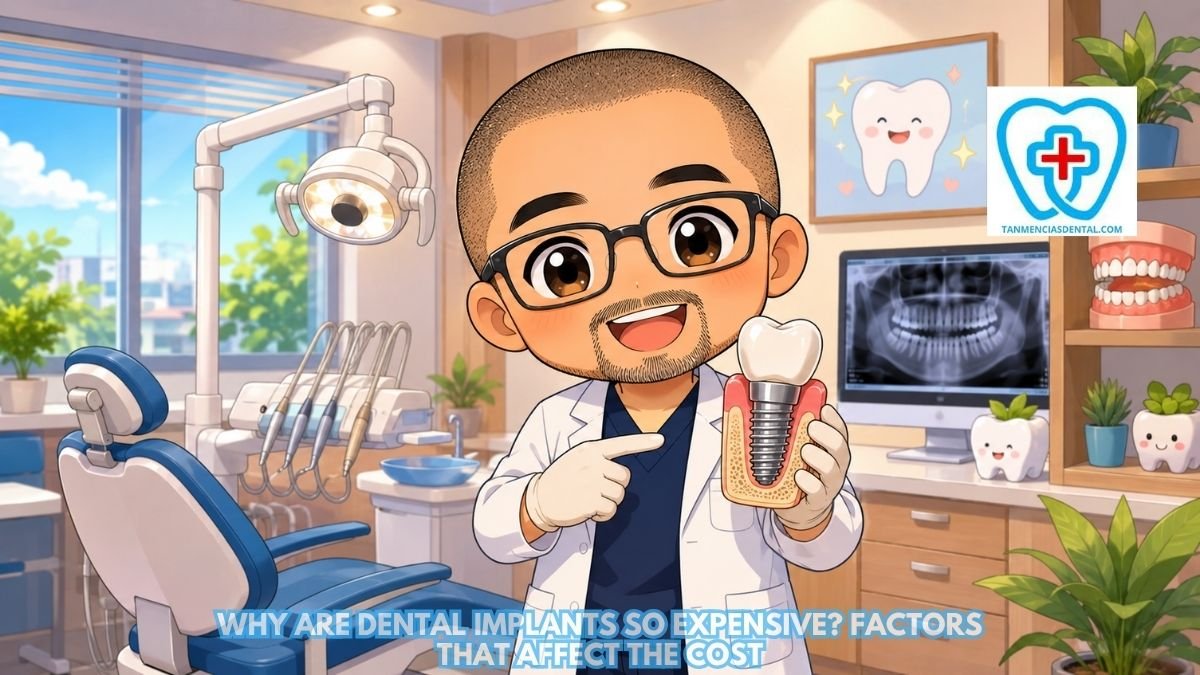
If you’ve ever asked about the price of a dental implant, you may have wondered: Why are dental implants so expensive?
It’s a reasonable question. Compared with other tooth-replacement options, such as dentures or dental bridges, implants can require a considerably larger upfront investment.
But you’re not simply paying for an artificial tooth. Dental implant treatment can involve diagnostic imaging, careful treatment planning, surgery, specialized implant components, laboratory work, a custom-made restoration, and follow-up care. In some cases, additional procedures such as bone grafting may also be necessary.
In other words, the total cost reflects the entire treatment process, not just the implant itself.
Let’s look at the main factors that affect dental implant costs, what may be included in an implant quotation, and why prices can vary considerably from one patient to another.
Key Takeaways
- A dental implant involves more than an artificial tooth. Treatment may include diagnostic imaging, surgery, the implant fixture, an abutment, a custom crown, laboratory work, and follow-up care.
- Every patient’s treatment is different. Your oral health, bone condition, number and location of missing teeth, and need for additional procedures can all affect the final cost.
- Training and expertise matter. Implant placement requires appropriate training, careful planning, clinical experience, and precision.
- Additional procedures can increase the cost. Some patients may need tooth extraction, bone grafting, or other preparatory treatment before receiving an implant.
- The lowest advertised price isn’t necessarily the lowest total cost. When comparing quotations, find out exactly what is and isn’t included.
- Dental implants can provide long-term value. With appropriate treatment and maintenance, they can provide many years of function, although no implant can be guaranteed to last a lifetime.
What Does the Cost of a Dental Implant Include?
Before discussing why dental implants can be expensive, it helps to understand what you’re actually paying for.
A single-tooth implant restoration typically has three main components:
- The implant fixture – the part surgically placed into the jawbone that serves as an artificial tooth root.
- The abutment – the component that connects the implant fixture to the restoration above it.
- The dental crown – the visible, custom-made replacement tooth.
However, the total treatment cost can involve much more than these three components.
Depending on your individual case and how a dental clinic structures its fees, your quotation may include:
- Consultation and oral examination
- X-rays or 3D imaging
- Treatment planning
- Implant components
- Surgical placement of the implant
- Local anesthesia or other appropriate forms of anesthesia or sedation
- Abutment placement
- A temporary restoration, when required
- Laboratory fees
- A custom dental crown
- Follow-up appointments
Procedures such as tooth extraction, bone grafting, or sinus augmentation may be charged separately if they’re necessary.
This is why comparing two advertised implant prices isn’t always straightforward. One quotation may include services or components that another does not.
If you’re comparing prices between dental clinics, ask for a clear breakdown of what’s included in the quoted fee.
🦷 Brushing Every Day? Here’s Why You May Still Need Professional Dental Cleaning
1. Dental Implants Use Specialized Materials and Components
One reason dental implants cost more than some other tooth-replacement options is the specialized materials and components involved.
Most dental implants are made from titanium or titanium alloys, while zirconia implants are another option in certain situations. These materials are biocompatible and suitable for use in the body.
After an implant is placed, the surrounding bone can form a stable connection with its surface through a process called osseointegration. This biological process is important for the stability and function of the implant.
The cost isn’t simply about the raw material, however.
Dental implant systems consist of precisely manufactured components designed to work together. Manufacturing standards, quality control, implant design, research, and the clinical evidence supporting a particular implant system can all contribute to its cost.
So, when you’re paying for implant treatment, you’re paying for much more than a small piece of titanium.
🦷 How Often Should You Get Oral Prophylaxis?
2. Implant Treatment Requires Training, Skill, and Precision
Placing a dental implant isn’t as simple as filling a cavity or attaching an artificial tooth.
The dentist must determine the appropriate position, depth, and angle of the implant while considering the available bone, surrounding teeth, bite, and nearby anatomical structures. Careful placement also helps create an appropriate foundation for the final restoration.
Dental implant placement therefore requires appropriate training, careful treatment planning, clinical experience, and precision.
More complex cases may also require additional expertise, procedures, or referral depending on the patient’s individual needs.
Professional expertise is an important part of the treatment cost because implant dentistry isn’t simply about placing an implant. It’s about carefully planning and carrying out the entire treatment according to the individual patient’s condition.
🦷 What to Do When You Have a Broken Tooth With an Exposed Nerve
3. Detailed Treatment Planning Is Essential
A successful dental implant procedure begins well before the actual surgery.
Your dentist first needs to determine whether an implant is an appropriate treatment option for you.
This usually involves evaluating your teeth, gums, bite, dental and medical history, and the quantity and quality of bone in the proposed implant area.
Diagnostic imaging is also an important part of treatment planning.
Depending on the case, conventional dental X-rays may provide the necessary information, while other cases may benefit from three-dimensional imaging such as a cone-beam computed tomography (CBCT) scan.
A CBCT scan can help your dentist evaluate bone dimensions and nearby anatomical structures and plan the position of the implant.
This individualized planning requires time, professional expertise, and diagnostic technology, all of which can contribute to the cost of treatment.
🦷 Signs You May Be Due for an Oral Prophylaxis
4. Implant Treatment Usually Takes Several Appointments
Dental implant treatment generally isn’t completed in a single visit.
Depending on your treatment plan, you may need appointments for examination and imaging, implant placement, postoperative checks, impressions or digital scans, restorative procedures, and placement of the final crown or other restoration.
One reason for this longer treatment process is osseointegration.
After the implant is placed, the surrounding bone generally needs time to heal and establish a stable connection with the implant before the final restoration can be completed.
The healing period isn’t identical for everyone. Your bone condition, oral health, implant location, general health, and treatment approach can all influence the timeline.
Some patients may be candidates for immediate or early restoration, while others may require a longer healing period.
These appointments aren’t simply additional visits. They allow your dental team to complete the different stages of treatment and monitor your healing along the way.
🦷 How to Keep Teeth Healthy Without Brushing: What to Do When You Can’t Brush
5. Some Patients Need Bone Grafting or Other Procedures
Not everyone has enough healthy bone to support an implant immediately.
Bone can decrease after a tooth has been missing for some time. Bone loss can also be associated with periodontal disease, infection, trauma, and other factors.
If there isn’t sufficient bone in the area where an implant needs to be placed, your dentist may recommend bone grafting to help create a suitable foundation for implant placement.
Depending on your situation, other procedures may also be necessary, such as:
- Tooth extraction
- Ridge preservation or augmentation
- Sinus augmentation
- Treatment of gum disease or other oral health problems
These procedures require additional materials, clinical time, and expertise, so they can increase the total treatment cost.
However, not every implant patient needs bone grafting or additional surgery. These procedures should only be recommended when appropriate for your individual clinical needs.
🦷 Oral Prophylaxis: What Happens During a Professional Dental Cleaning?
6. Your Final Tooth Is Custom-Made
After the implant has integrated successfully and is ready to be restored, you still need the part that everyone will actually see: the replacement tooth.
For a single-tooth implant, this is usually a dental crown.
The crown isn’t simply a generic artificial tooth. It’s designed specifically for your mouth.
Your dentist works with a dental laboratory to create a restoration that fits your implant and bite while matching the shape, size, and appearance of your surrounding teeth as closely as practical.
Depending on the restoration, materials may include ceramics such as zirconia or porcelain-based materials.
Producing a custom restoration can involve impressions or digital scans, laboratory procedures, skilled technical work, specialized equipment, restorative materials, and quality control.
These laboratory and restorative costs form an important part of the total price of implant treatment.
🦷 Dentist vs. Doctor: Which Professional Should You Consult for Your Health Concerns?
7. Follow-Up Care and Long-Term Maintenance Matter
Receiving your final crown doesn’t mean you can forget about your implant.
Although a dental implant and its crown cannot develop cavities in the same way a natural tooth can, the gums and bone surrounding the implant can still develop problems.
Good oral hygiene, regular dental examinations, and appropriate professional cleaning are important for maintaining healthy tissues around the implant.
Your dentist may also recommend particular cleaning techniques or oral hygiene aids depending on the type and location of your implant restoration.
Follow-up appointments are particularly important during treatment because they allow your dental team to monitor healing and identify potential problems.
Long-term maintenance is therefore an important part of protecting your implant restoration and the tissues supporting it.
🦷 Is It Too Late To Start Brushing My Teeth? Why It’s Never Too Late for a Brighter Smile!
8. Location and Clinic Operating Costs Can Affect Prices
Dental implant prices can vary between clinics and locations, including different areas of Metro Manila and elsewhere in the Philippines.
A dental practice has many operating expenses, including clinical equipment, sterilization systems, dental materials and supplies, laboratory fees, staff, rent, utilities, continuing professional education, and technology.
These expenses can vary considerably depending on where and how a clinic operates.
However, location and price shouldn’t be your only considerations when choosing where to have implant treatment.
You should also consider factors such as the dentist’s training and experience, treatment planning, sterilization and safety practices, the implant system being used, the quality of the final restoration, and the follow-up care provided.
🦷 Basic Dental Needs in Marikina
9. Dental Insurance and HMO Coverage May Be Limited
Another reason dental implants can feel particularly expensive is that patients may need to pay a significant portion, or sometimes all, of the treatment cost themselves.
In the Philippines, dental benefits can vary widely among insurance policies, HMOs, company health benefits, and other health plans.
Some plans may exclude dental implant treatment, while others may provide limited benefits for certain dental services or procedures. Coverage can also be subject to benefit limits, exclusions, waiting periods, or other conditions.
Rather than assuming your implant treatment will or won’t be covered, contact your insurance company, HMO, employer, or health plan provider and ask specifically about your dental benefits.
Your dental clinic may also be able to provide a treatment estimate that you can use when discussing possible coverage with your provider.
🦷 Accessible, High-Quality Dental Services in Marikina City
10. Dental Implants Can Offer Long-Term Value
Dental implants can have a high upfront cost, but price isn’t the only factor worth considering when choosing how to replace a missing tooth.
With appropriate patient selection, proper treatment, good oral hygiene, and regular professional care, dental implants can provide many years of function.
They can also offer practical advantages.
For example, a single-tooth implant can replace a missing tooth without requiring the adjacent teeth to support a conventional dental bridge. Implant-supported restorations may also provide improved stability and chewing function compared with some removable alternatives.
However, implants aren’t indestructible, and no dentist can guarantee that an implant will last for life.
Complications can occur, and the crown, abutment, or other restorative components may eventually require maintenance, repair, or replacement.
For this reason, it’s better to think of dental implants as a potential long-term investment in oral function and quality of life, rather than as a permanent treatment that will never require further care.
Why Can Two Patients Pay Different Prices for Dental Implants?
You may know someone who received an implant at one price and wonder why your quotation is different.
The answer is that implant treatment is highly individualized.
Your total cost may depend on factors such as:
- Number of implants required
- Location of the missing tooth or teeth
- Amount and quality of available bone
- Need for extractions or bone grafting
- Type of implant system and components
- Type of abutment and final restoration
- Diagnostic imaging required
- Complexity of the procedure
- Laboratory and restorative requirements
- Additional dental treatment needed before implant placement
This is why it’s difficult to give every patient an accurate implant price without first performing a proper examination.
An advertised price may also represent only one component of the treatment rather than the complete implant restoration.
So, before comparing prices, ask one important question:
“What exactly is included in this quotation?”
That can give you a much more meaningful comparison.
Are Dental Implants Worth the Cost?
For many patients, they can be, but dental implants aren’t automatically the best option for everyone.
The right treatment depends on your oral health, available bone, general health, personal preferences, budget, and the location and number of teeth that need to be replaced.
Other options, such as dental bridges or removable dentures, may be appropriate depending on your circumstances.
A proper dental examination allows you to discuss the advantages, limitations, expected costs, and alternatives before deciding which treatment is most appropriate for you.
Considering Dental Implants in Marikina?
The cost of dental implants varies because every patient’s treatment needs are different.
Rather than focusing only on an advertised price, it’s helpful to have your oral health and bone condition properly evaluated. Your dentist can then explain the treatment options available to you, whether additional procedures may be necessary, and what is included in your estimated treatment cost.
At Tan-Mencias Dental Clinic in Parang, Marikina City, we’re committed to providing personalized dental care in a professional and welcoming environment.
If you’d like to ask about dental implants or other dental treatments, you can call us at 0917-145-1074, send us a message through our Facebook page, or contact us through our website.
We’ll be happy to discuss your dental concerns and help you understand the treatment options that may be appropriate for you.
Frequently Asked Questions About Dental Implant Costs
1. Why are dental implants more expensive than dentures?
Dental implant treatment generally involves surgery, specialized implant components, diagnostic imaging, treatment planning, laboratory work, and a custom restoration.
Dentures are removable prostheses and usually don’t require the same surgical process, although their cost and complexity can also vary.
The two treatments work differently, so price shouldn’t be the only consideration when deciding between them.
2. How much does a dental implant cost in the Philippines?
There isn’t one price that applies to every patient or every dental clinic.
The total cost depends on factors such as the number and location of implants, available bone, implant system and components, type of restoration, diagnostic requirements, and whether procedures such as tooth extraction or bone grafting are necessary.
Clinics may also structure their fees differently. For this reason, a clinical examination and treatment plan are generally needed before an accurate estimate can be provided.
3. Does the quoted implant price include the crown?
Not necessarily.
Some clinics may quote the complete implant restoration, while others may quote the implant fixture, surgical procedure, abutment, crown, imaging, bone grafting, or other services separately.
Always ask for a clear breakdown of what’s included before comparing prices.
4. Do all dental implant patients need bone grafting?
No.
Bone grafting may be recommended when there isn’t sufficient bone for the planned implant or when additional bone is needed to achieve an appropriate treatment outcome.
Many patients can receive implants without bone grafting. Your dentist can assess your individual situation during treatment planning.
5. Why does dental implant treatment take several months?
After an implant is placed, the surrounding bone often needs time to heal and form a stable connection with the implant. This process is known as osseointegration.
The required healing period varies between patients and depends on factors such as bone condition, implant location, oral and general health, and the treatment approach.
6. Can dental implants last a lifetime?
Dental implants can provide many years of service, but they shouldn’t be considered guaranteed lifetime devices.
Their longevity can be influenced by oral hygiene, gum and bone health, smoking, certain health conditions, bite forces, regular dental care, and other individual factors.
The crown, abutment, or other restorative components may also require maintenance, repair, or replacement over time.
7. Are cheaper dental implants a bad idea?
Not necessarily. Price alone doesn’t tell you whether implant treatment is appropriate or of good quality.
When comparing treatment options, consider the dentist’s training and experience, diagnostic and treatment planning, implant system and components, sterilization and safety practices, restorative quality, follow-up care, and exactly what the quoted price includes.
Choosing treatment solely on the lowest advertised price may not give you a fair comparison.
8. Do Philippine HMOs or dental insurance cover dental implants?
Coverage varies considerably between providers and individual plans.
Some HMOs, insurance policies, employer-sponsored benefits, or other health plans may not include implant treatment, while others may provide benefits for certain related dental services.
Check directly with your provider and ask which parts of your proposed treatment, if any, are covered and what benefit limits or exclusions apply.
9. Are dental implants worth the investment?
They can be a worthwhile option for many people because they can provide stable tooth replacement and long-term function.
However, implants aren’t appropriate for everyone, and alternatives such as bridges or removable dentures may be preferable in some situations.
The best choice depends on your individual oral health, treatment needs, goals, preferences, and budget.
Medical Disclaimer
This article is provided for general educational and informational purposes only. It is not intended to provide dental or medical advice, diagnosis, or treatment, and it should not replace a consultation and clinical examination by a licensed dentist or other qualified healthcare professional.
Dental implant suitability, procedures, risks, healing times, outcomes, and costs vary from person to person. Information in this article may therefore not apply to your individual circumstances.
If you’re considering dental implants or have concerns about your teeth, gums, or oral health, consult a licensed dentist or other appropriate dental professional for a clinical examination, diagnosis, and personalized treatment recommendations.