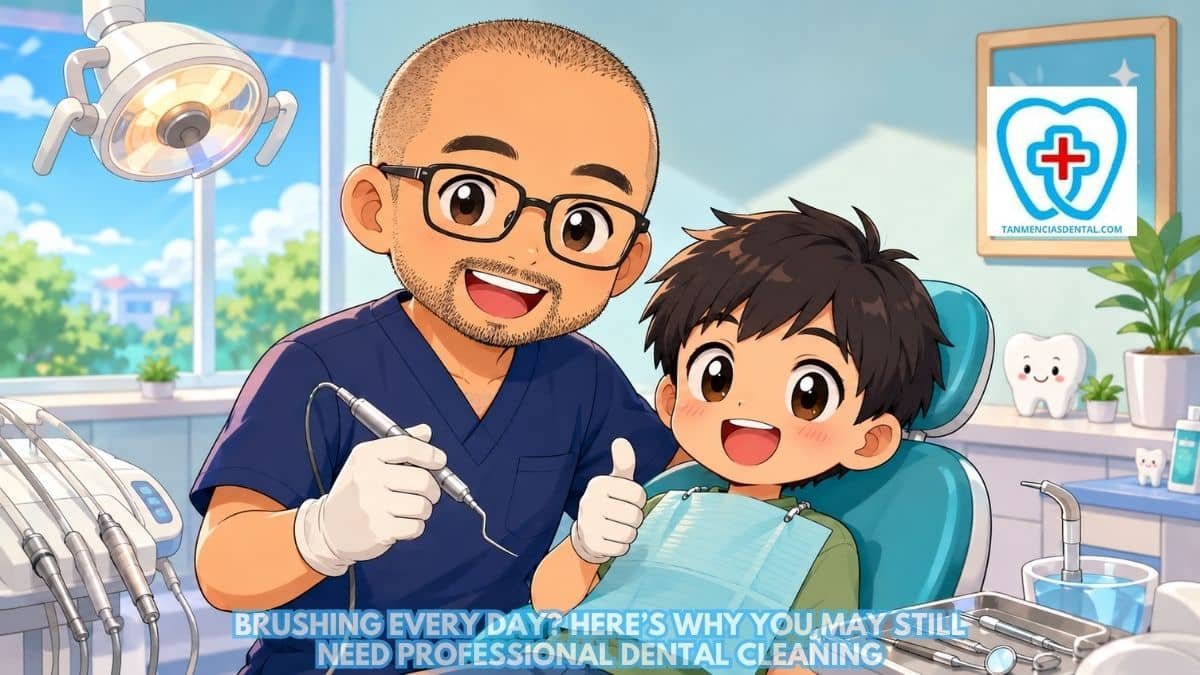
You brush your teeth every day, maybe even twice a day. You use fluoride toothpaste, try to reach every tooth, and perhaps you clean between your teeth as well.
So, do you really still need professional dental cleaning?
For many people, yes.
Daily brushing is one of the most important things you can do for your oral health, but even a good toothbrush has limitations. Plaque can remain in areas that are difficult to reach, and when plaque hardens into tartar or dental calculus, it can no longer be removed effectively with ordinary brushing.
That’s where professional dental cleaning, often called oral prophylaxis in the Philippines, comes in.
Think of home care and professional dental care as partners. Brushing and interdental cleaning help control plaque from day to day, while professional care can remove hardened deposits and give your dentist an opportunity to check your teeth and gums for problems you may not notice yourself.
Key Takeaways
- Brushing twice a day with fluoride toothpaste is an important part of maintaining good oral health, but it cannot always remove plaque from every area.
- Plaque that remains on the teeth can eventually harden into tartar or dental calculus.
- Once calculus forms, ordinary brushing and flossing cannot effectively remove it.
- Professional dental cleaning or oral prophylaxis can remove plaque, calculus, and some surface stains.
- Dental visits also allow your dentist to assess your teeth and gums for signs of tooth decay, gum disease, and other oral-health concerns.
- Not everyone needs dental cleaning at exactly the same interval. Your dentist can recommend a schedule based on your individual oral health and risk factors.
- Professional cleaning complements, not replaces, good brushing and interdental cleaning at home.
Brushing Is Essential, but It Has Its Limits
I definitely wouldn’t tell you to ease up on brushing just because professional cleaning exists.
Quite the opposite.
Regular toothbrushing with fluoride toothpaste remains one of the foundations of good oral hygiene. Cleaning between the teeth is also important because a toothbrush may not effectively reach all the surfaces where neighboring teeth meet.
Even if you’re careful, however, certain areas can be difficult to clean thoroughly, including:
- Between tightly spaced teeth
- Along the gumline
- Behind your back teeth
- Around crowded or crooked teeth
- Around braces and other orthodontic appliances
- Around crowns, bridges, and dental implants
A little plaque left behind may not seem significant. But if it stays on the teeth long enough, something important can happen.
🦷 How Often Should You Get Oral Prophylaxis?
Plaque and Tartar Are Not the Same Thing
This is one of the main reasons professional dental cleaning may still be necessary even if you brush every day.
Dental plaque is a sticky biofilm that continuously develops on your teeth. Regular brushing and cleaning between your teeth help disrupt and remove it.
If plaque isn’t adequately removed, however, minerals in your saliva can cause some of it to harden into dental calculus, commonly called tartar.
Once calculus has formed, your toothbrush won’t simply scrub it away.
And brushing harder isn’t the answer. Aggressive brushing can irritate your gums and, over time, may contribute to tooth or gum problems.
Calculus generally needs to be removed with professional dental instruments.
🦷 What to Do When You Have a Broken Tooth With an Exposed Nerve
What Happens During Professional Dental Cleaning?
In the Philippines, you may hear routine professional cleaning referred to as oral prophylaxis.
The exact procedure can vary depending on the condition of your teeth and gums. Generally, professional cleaning may involve removing plaque and calculus from the tooth surfaces and around the gumline using appropriate dental instruments. Your teeth may also be polished to remove certain surface stains and make the surfaces feel smoother.
A licensed dentist, or, where appropriate, a licensed dental hygienist working under a dentist’s supervision, may perform preventive oral-hygiene procedures in accordance with Philippine regulations.
Your dental visit may also include an examination of your teeth, gums, bite, and other oral structures depending on what your dentist considers necessary.
This matters because not every dental problem causes pain in its early stages.
You can feel perfectly fine while tooth decay, gum inflammation, or another oral-health problem is beginning to develop.
🦷 Signs You May Be Due for an Oral Prophylaxis
Professional Cleaning Can Help Maintain Healthy Gums
Your gums deserve just as much attention as your teeth.
Plaque that remains near the gumline can contribute to inflammation and gingivitis, the earliest stage of gum disease.
Possible signs include:
- Red or swollen gums
- Tender gums
- Bleeding while brushing or cleaning between the teeth
- Persistent bad breath
Plaque-related gingivitis can often improve when plaque is effectively controlled through better home care and appropriate professional treatment.
If gum disease progresses, however, it may develop into periodontitis.
Periodontitis affects the tissues and bone that support your teeth. In more advanced cases, it can lead to gum recession, periodontal pockets, bone loss, loose teeth, and eventually tooth loss.
That’s why removing plaque and calculus isn’t simply about making your teeth look or feel cleaner. It can also form part of maintaining the health of the tissues supporting your teeth.
🦷 How to Keep Teeth Healthy Without Brushing: What to Do When You Can’t Brush
Oral Prophylaxis and “Deep Cleaning” Are Not Necessarily the Same
Here’s an important distinction.
Routine oral prophylaxis for someone with generally healthy gums is not necessarily the same as treatment for periodontal disease.
If your dentist finds signs of periodontitis, you may require periodontal treatment instead of, or in addition to, a routine cleaning.
Depending on your condition, treatment may include procedures such as scaling and root planing, in which deposits are removed from the teeth and affected root surfaces below the gumline are carefully treated.
The exact treatment depends on factors such as the amount of calculus present, gum inflammation, periodontal pocket depth, bone support, and the overall severity of the condition.
In other words, asking for a “deep cleaning” doesn’t automatically mean you need one.
Your dentist should first evaluate your gums and determine the appropriate treatment.
🦷 Oral Prophylaxis: What Happens During a Professional Dental Cleaning?
My Teeth Feel Fine. Do I Still Need a Dental Visit?
Possibly.
One of the biggest misconceptions about dental care is that pain is the signal that tells you it’s time to see a dentist.
It isn’t always.
Early tooth decay and gum disease can develop with few noticeable symptoms. You may be brushing every morning and evening, eating normally, and feeling no pain while a dental problem is developing.
That’s why I wouldn’t use “nothing hurts” as your only measure of oral health.
Preventive dental visits give your dentist the opportunity to identify concerns earlier and advise you on what care, if any, is needed.
🦷 Dentist vs. Doctor: Which Professional Should You Consult for Your Health Concerns?
How Often Should You Get Professional Dental Cleaning?
You’ve probably heard the familiar advice to visit the dentist every six months.
Six-month visits may be appropriate for many people, but there is no single cleaning schedule that’s ideal for everyone.
Your dentist may recommend an interval based on factors such as:
- The condition of your teeth and gums
- How quickly you develop plaque and calculus
- Your history of tooth decay
- Your history of gingivitis or periodontitis
- Smoking or tobacco use
- Dry mouth
- Crowded teeth
- Braces or other dental appliances
- Certain medical conditions or medications
- Your ability to maintain effective oral hygiene at home
Someone with a history of periodontal disease, for example, may require more frequent professional monitoring and maintenance than someone with healthy gums and a low risk of dental disease.
So rather than deciding on a schedule yourself, ask your dentist:
“Based on my oral health, how often should I have my teeth checked and professionally cleaned?”
That’s a much more useful question.
🦷 Is It Too Late To Start Brushing My Teeth? Why It’s Never Too Late for a Brighter Smile!
Signs You Should See a Dentist Sooner
You don’t necessarily have to wait until your next planned cleaning if something changes in your mouth.
Consider scheduling a dental consultation if you notice:
- Gums that frequently bleed
- Persistent gum swelling or redness
- Gums pulling away from your teeth
- Persistent bad breath
- New or increasing tooth sensitivity
- Toothache
- Pain when biting or chewing
- Loose permanent teeth
- A chipped, cracked, or broken tooth
- A mouth sore or unusual oral lesion that doesn’t heal
- Swelling around a tooth or the gums
Severe tooth pain, rapidly increasing facial or jaw swelling, difficulty swallowing or breathing, fever associated with a dental infection, or significant facial or dental trauma may require urgent professional attention.
🦷 Dentist vs. Orthodontist: Understanding the Key Differences in Dental Care
How to Get More From Your Daily Oral-Care Routine
Professional cleaning shouldn’t be your main method of keeping your teeth clean.
What you do at home every day still matters tremendously.
For most adults, a good routine includes:
Brush twice daily with fluoride toothpaste. Take your time and clean the outer, inner, and chewing surfaces of your teeth.
Pay attention to the gumline. Use gentle pressure rather than aggressive scrubbing.
Clean between your teeth regularly. Traditional dental floss is one option, but interdental brushes, water flossers, or other interdental-cleaning devices may be appropriate depending on your teeth and gums.
Limit frequent sugary foods and drinks. Oral bacteria can use sugars to produce acids that contribute to tooth decay.
Don’t smoke or use tobacco products. Tobacco use is an important risk factor for periodontal disease and other oral-health problems.
And if you’re unsure whether you’re brushing or flossing correctly, ask your dentist to show you. A few adjustments to your technique can make a meaningful difference.
🦷 Basic Dental Needs in Marikina
The Bottom Line
If you’re brushing your teeth every day, keep it up.
It’s one of the best things you can do for your oral health.
Just remember that good brushing doesn’t necessarily eliminate the need for professional dental care.
Brushing and interdental cleaning help control plaque at home. Professional dental cleaning can remove hardened calculus that your toothbrush can’t, while a dental examination can help identify problems you might not notice on your own.
The goal isn’t to choose between brushing and professional cleaning.
It’s to make them work together.
Your daily routine handles the everyday maintenance. Your dental team can help with the things your toothbrush can’t.
🦷 Comprehensive Dental Clinic in Marikina City
Frequently Asked Questions
1. Can brushing remove tartar?
No. Once plaque has hardened into tartar or dental calculus, ordinary toothbrushing cannot effectively remove it. Professional dental instruments are generally required.
2. If I brush twice a day, do I still need to floss?
You should still clean between your teeth because toothbrush bristles don’t effectively reach every interdental surface.
Floss is one option. Depending on your teeth and gums, your dentist may recommend floss, interdental brushes, a water flosser, or another appropriate method.
3. Is oral prophylaxis the same as dental cleaning?
The terms are often used interchangeably in everyday dental practice in the Philippines. Oral prophylaxis generally refers to preventive professional cleaning aimed at removing plaque, calculus, and certain surface stains.
However, the procedure you need depends on the condition of your teeth and gums. Treatment for periodontal disease may be more extensive than routine oral prophylaxis.
4. How often should I have oral prophylaxis?
There isn’t one schedule that’s right for everybody. Some patients may be advised to return approximately every six months, while others may require different intervals.
Your dentist can recommend an appropriate schedule after evaluating your teeth, gums, oral-hygiene habits, and individual risk factors.
5. Does oral prophylaxis hurt?
Routine cleaning is generally well tolerated, but everyone’s experience is different.
You may notice temporary sensitivity or gum tenderness, particularly if you have significant calculus buildup, sensitive teeth, or inflamed gums. If you’re worried about discomfort, tell your dentist before the procedure.
6. Is bleeding during dental cleaning normal?
Some bleeding can occur when the gums are inflamed.
However, gums that frequently bleed during brushing, interdental cleaning, or professional cleaning should not simply be ignored. Persistent bleeding may be associated with gingivitis, periodontitis, or another condition that should be evaluated by a dentist.
7. Can professional dental cleaning whiten my teeth?
Professional cleaning can remove certain external or surface stains, so your teeth may look brighter afterward.
However, oral prophylaxis is not the same as teeth whitening or bleaching. Whitening treatments are specifically intended to lighten tooth color.
8. Can I scrape tartar off my teeth myself?
It’s best not to try.
Using sharp dental-style instruments on your own teeth can injure your gums or damage tooth surfaces, and you may not be able to identify which areas require treatment.
Have hardened calculus assessed and removed by an appropriately licensed dental professional instead.
9. What happens if I never get professional dental cleaning?
The answer varies from person to person because people accumulate plaque and calculus at different rates and have different levels of risk.
However, allowing plaque and calculus to accumulate can contribute to gum inflammation and periodontal disease. Advanced periodontal disease may eventually damage the tissues and bone supporting your teeth.
Regular dental assessments can help determine whether and how often professional cleaning is appropriate for you.
Medical Disclaimer
This article is provided for general educational and informational purposes only. It is not intended to replace a consultation, examination, diagnosis, or treatment by a licensed dentist or other qualified healthcare professional.
Dental needs vary from person to person. The type and frequency of professional dental cleaning or periodontal treatment should be determined after an appropriate dental assessment.
If you have persistent tooth pain, swelling, bleeding gums, loose teeth, fever associated with a dental problem, facial swelling, or other concerning oral symptoms, consult a licensed dentist. Severe swelling, difficulty breathing or swallowing, significant trauma, or other potentially serious symptoms may require urgent medical or dental attention.
Self-Promotion
Take care of your smile with a visit to Tan-Mencias Dental Clinic at 44 G. Del Pilar Street, Parang, Marikina City. Our dental team is ready to help you keep your teeth and gums healthy. If you have questions or concerns, you can call us at 0917-145-1074. You can also send us a message through our Facebook page or our website’s contact form. We look forward to welcoming you and helping you care for your smile!