Brushing and flossing are essential for keeping your teeth healthy, but even with good oral hygiene habits, some areas of your teeth can be difficult to clean. The tiny grooves and depressions on the chewing surfaces of your back teeth can trap food particles and bacteria, increasing your risk of cavities.
This is where tooth sealants come in. Also known as dental sealants or pit and fissure sealants, they provide an additional layer of protection against tooth decay. They are a simple, generally painless, and non-invasive preventive dental treatment that can benefit both children and adults.
We’ll explore what tooth sealants are, how they work, their benefits, and what you can do to maintain them.
Key Takeaways
- Tooth sealants are thin, protective coatings applied to the chewing surfaces of teeth to help prevent cavities.
- They create a physical barrier that protects deep grooves from cavity-causing bacteria and food particles.
- Children, teenagers, and adults at an increased risk of tooth decay may benefit from dental sealants.
- The application process is quick, generally painless, and typically requires no drilling or anesthesia.
- Dental sealants can last for several years but may require repair or replacement over time.
- Sealants may help prevent certain types of early tooth decay from progressing.
- Dental sealants complement, rather than replace, brushing, flossing, fluoride use, and regular dental checkups.
What Are Tooth Sealants?
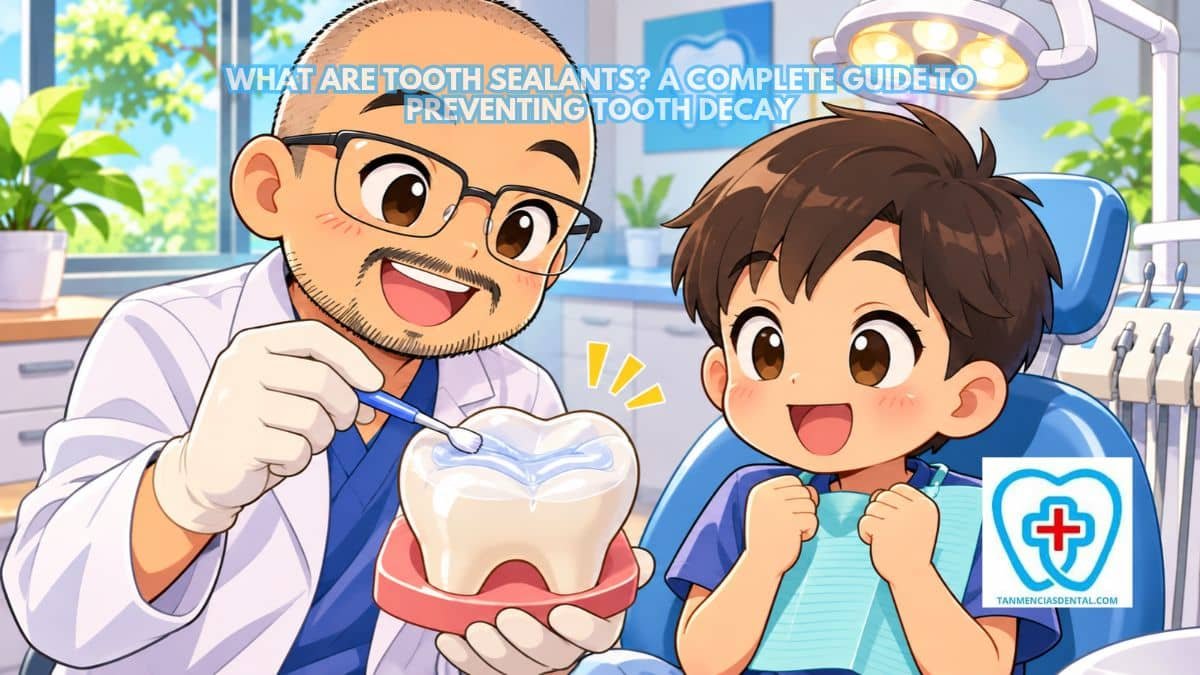
Tooth sealants are thin, protective coatings made from resin or other dental materials that are applied to the chewing surfaces of teeth. They are primarily used on molars and sometimes premolars because these teeth often have deep grooves that are difficult to clean.
Once applied, the sealant hardens and forms a protective barrier over the enamel, the hard outer layer of your teeth. Depending on the material used, sealants may be clear, white, or tooth-colored, making them relatively unnoticeable when you smile or speak.
Unlike dental fillings, which restore damaged teeth, sealants are primarily designed to prevent tooth decay. In certain cases, they may also help stop early-stage decay from getting worse.
🦷 Are Teeth Whitening Strips Bad for Your Teeth? Risks, Benefits, and Safety Tips
How Do Tooth Sealants Prevent Tooth Decay?
Your back teeth have natural pits and grooves that help you chew and grind food. Unfortunately, some of these grooves are so narrow and deep that toothbrush bristles cannot clean them effectively.
When bacteria in dental plaque break down sugars and other carbohydrates, they produce acids that weaken tooth enamel. Repeated exposure to these acids can eventually lead to cavities.
Dental sealants cover these grooves, creating a smoother surface that is easier to clean. They also help prevent food particles and bacteria from accumulating in vulnerable areas.
According to the US Centers for Disease Control and Prevention (CDC), sealants applied to children’s permanent molars soon after they erupt can prevent up to 80% of cavities in these teeth during the first two years and continue to protect against 50% of cavities for up to four years.
While sealants are highly effective, they do not protect every surface of your teeth. This is why maintaining good oral hygiene remains important.
🦷 What to Do After Fluoride Varnish Treatment: Aftercare Tips for Filipino Patients
What Are the Different Types of Tooth Sealants?
Dental sealants come in several types, each with different properties and advantages.
1. Resin-Based Sealants
Resin-based sealants are commonly used because of their durability and ability to bond well to tooth enamel. Keeping the tooth dry during application is important for achieving a strong bond.
2. Glass Ionomer Sealants
Glass ionomer sealants release fluoride, which can help protect teeth from decay. They are generally more tolerant of moisture during application, making them useful when keeping a tooth completely dry is difficult.
3. Resin-Modified Glass Ionomer Sealants
These sealants combine properties of traditional glass ionomer materials and resin. They offer fluoride release and may have improved physical properties compared with conventional glass ionomer materials.
4. Polyacid-Modified Resin Sealants
Also known as compomer sealants, these materials combine certain properties of resin and glass ionomer materials. They may also release fluoride.
There is no single type of sealant that is best for everyone. Your dentist will recommend a suitable material based on the condition of your teeth, your risk of cavities, and your individual dental needs.
🦷 How Do Dentists Clean Teeth With Braces? A Step-by-Step Guide
What Are the Benefits of Tooth Sealants?
Dental sealants offer several advantages that make them a valuable part of preventive dental care.
1. Reduce the Risk of Cavities
Sealants protect the deep grooves of your teeth, reducing the likelihood of tooth decay developing in these hard-to-clean areas.
2. Help Preserve Your Natural Teeth
Preventing cavities can reduce the need for dental treatments that involve removing damaged tooth structure, helping you preserve more of your natural teeth.
3. Help Save Money on Dental Treatments
By reducing your risk of cavities, sealants may help you avoid more costly dental procedures, such as fillings, crowns, and root canal treatment.
4. Provide Long-Lasting Protection
When properly applied and maintained, dental sealants can protect your teeth for several years.
5. Offer a Generally Painless and Non-Invasive Treatment
Applying dental sealants is a straightforward procedure that typically does not require injections, drilling, or local anesthesia.
6. Help Prevent Early Tooth Decay from Progressing
In certain cases, sealants can help slow or stop early tooth decay when the surface of the tooth is still intact. They work by limiting the supply of nutrients to bacteria within the affected area.
Your dentist must first examine the tooth to determine whether a sealant or another dental treatment is appropriate.
🦷 Fluoride Varnish vs. Fluoride Toothpaste: What’s the Difference, and Do You Need Both?
Who Should Get Tooth Sealants?
Although dental sealants are commonly recommended for children and teenagers, they are not limited to younger patients.
You or your child may benefit from dental sealants if you:
- Have teeth with deep pits and grooves.
- Have a history of frequent cavities.
- Have difficulty cleaning the chewing surfaces of your back teeth.
- Have an increased risk of developing tooth decay.
- Have newly erupted permanent molars that are vulnerable to cavities.
Children often benefit from sealants when their first permanent molars emerge around age six and their second permanent molars emerge around age 12.
However, the timing of tooth eruption varies from child to child. It is generally best to consider sealants soon after the permanent molars have erupted enough for proper application.
Dentists may also recommend sealants for baby molars that are particularly vulnerable to decay.
Adults with suitable teeth, especially those with a history of cavities, may also benefit. Although research supporting sealant use is stronger in children and teenagers, your dentist can assess whether this treatment is appropriate for you at any age.
🦷 Best and Worst Drinks for Your Teeth: What to Drink and What to Avoid
How Are Tooth Sealants Applied?
Getting dental sealants is a relatively quick and comfortable procedure. Applying a sealant usually takes only a few minutes per tooth.
Here is what you can expect during a typical resin-based sealant application:
- Dental examination: Your dentist examines your teeth to determine whether sealants are appropriate and checks for signs of tooth decay.
- Cleaning the tooth: Plaque, food particles, and other debris are removed from the chewing surface.
- Drying the tooth: The tooth is kept dry to prevent saliva from interfering with the application.
- Preparing the enamel: A special dental gel is applied to prepare the tooth surface and help the sealant bond properly.
- Applying the sealant: The gel is rinsed away, the tooth is dried again, and the liquid sealant is placed into the grooves.
- Hardening the sealant: A special curing light is typically used to harden the resin-based material.
- Checking the sealant and your bite: Your dentist checks that the sealant covers the intended areas properly and does not interfere with your bite.
The exact procedure may vary depending on the type of sealant used.
Once the treatment is complete, you can generally return to your normal daily activities immediately.
🦷 How Much Does Fluoride Varnish Cost in the Philippines? A Guide for Dental Patients
How Long Do Tooth Sealants Last?
Dental sealants can last for several years, with some lasting up to ten years. However, their actual lifespan varies from person to person.
Several factors can affect how long your sealants last, including:
- The type of sealant material used.
- The quality of the bond between the sealant and the tooth.
- Your chewing and teeth-grinding habits.
- The condition of the treated tooth.
- Normal wear and tear.
Over time, sealants may wear down, chip, or become partially detached. Some may require repair or replacement much sooner than others.
Your dentist can check the condition of your sealants during routine dental visits and repair or replace them when necessary.
🦷 Dry Mouth and Gingivitis: Causes, Symptoms, and How to Protect Your Gums
Are Tooth Sealants Safe?
Dental sealants are generally considered safe and effective for preventing tooth decay. Adverse reactions are uncommon, although people with known allergies to certain dental materials should inform their dentist before treatment.
Some people have concerns about bisphenol A (BPA), a chemical that may be released in very small amounts from certain resin-based dental materials shortly after application.
According to the American Dental Association (ADA), available scientific evidence does not indicate that the very low and temporary BPA exposure associated with dental sealants poses a health concern.
If you have concerns about the materials used in dental sealants, speak with your dentist. They can explain the available options and help you make an informed decision.
🦷 Are Dental Clinics Open on Holidays in the Philippines? What You Need to Know
What Are the Disadvantages of Tooth Sealants?
Although dental sealants offer many benefits, they also have certain limitations.
- They may wear down, chip, or require replacement over time.
- They do not protect all surfaces of your teeth, particularly the areas between teeth.
- Their effectiveness depends partly on proper application and how well they remain attached to the teeth.
- They cannot restore tooth structure that has already been destroyed by decay.
- Allergic reactions to certain sealant materials are possible but rare.
These limitations highlight the importance of professional application, regular dental examinations, and consistent oral hygiene.
Tooth Sealants vs. Dental Fillings vs. Fluoride Treatments
Although tooth sealants, dental fillings, and fluoride treatments all play a role in maintaining oral health, they serve different purposes.
| Feature | Tooth Sealants | Dental Fillings | Fluoride Treatments |
| Primary purpose | Prevent cavities and help manage certain early-stage decay | Restore damaged teeth | Strengthen enamel and help prevent tooth decay |
| Area treated | Pits and grooves of teeth | Areas of damaged tooth structure | Exposed tooth surfaces |
| Treatment type | Primarily preventive | Restorative | Preventive and early decay management |
| Drilling required | Typically no | Often required | No |
| Main benefit | Creates a physical protective barrier | Restores tooth structure and function | Helps enamel resist acid attacks and repair early mineral loss |
Dental sealants and fluoride treatments work in different ways. Your dentist may recommend both as part of a more comprehensive approach to cavity prevention.
🦷 Expert Dental Care Providers in Marikina
How Much Do Tooth Sealants Cost in the Philippines?
The cost of dental sealants in the Philippines varies depending on the dental clinic, location, type of sealant material used, and number of teeth requiring treatment.
Dental sealants are usually priced per tooth. A dental examination can help determine how many teeth would benefit from the procedure.
Under PhilHealth Circular No. 2024-0034, pit and fissure sealants are included in the preventive oral health benefit package when clinically indicated. Coverage for sealants and specified root surface protection or Class V restoration procedures is limited to a combined maximum of two teeth per year.
Access to these benefits is subject to PhilHealth eligibility requirements, benefit limits, and the availability of participating, accredited healthcare providers.
If you have a health maintenance organization (HMO) plan or private dental insurance, check whether preventive treatments such as dental sealants are included in your coverage.
Although dental sealants involve an upfront expense, they may help you save money in the long run by reducing the need for more extensive dental treatments.
Ask your dental clinic for a treatment estimate and confirm any applicable coverage before proceeding.
How to Care for Your Tooth Sealants
Getting dental sealants does not mean you can become less diligent about your oral hygiene. Maintaining healthy habits is essential for protecting both sealed and unsealed teeth.
Here are some practical ways to care for your sealants and maintain good oral health:
- Brush your teeth twice a day. Use fluoride toothpaste to help strengthen your enamel and prevent cavities.
- Clean between your teeth daily. Use dental floss or another suitable interdental cleaning tool to remove plaque and food particles.
- Limit sugary foods and beverages. Frequent sugar consumption increases your risk of tooth decay.
- Avoid chewing extremely hard objects. Chewing ice or other hard objects may damage your teeth or sealants.
- Avoid using your teeth as tools. Do not use your teeth to open packages or bottles.
- Choose water over sugary beverages. Drinking water can help wash away food particles and reduce frequent exposure to sugar.
- Visit your dentist regularly. Routine dental examinations allow your dentist to monitor the condition of your teeth and sealants.
- Have damaged sealants repaired or replaced. Maintaining your sealants helps ensure continued protection against cavities.
If you notice that a sealant has chipped, become loose, or fallen off, contact your dentist for an examination.
Remember, dental sealants provide an additional layer of protection, not complete immunity against tooth decay.
Final Thoughts
Tooth sealants are a simple, effective, and generally painless way to help protect your teeth from cavities. While they are particularly beneficial for children and teenagers, adults with an increased risk of tooth decay may also benefit from them.
Preventing dental problems is often easier, less expensive, and more comfortable than treating them once they develop. By combining dental sealants with proper oral hygiene, a balanced diet, fluoride use, and regular dental visits, you can reduce your risk of cavities and help preserve your natural teeth.
If you are unsure whether dental sealants are right for you or your child, speak with your dentist about including them in your preventive dental care routine.
Protect Your Teeth with Tan-Mencias Dental Clinic
Are you looking for a simple way to protect your teeth from cavities? At Tan-Mencias Dental Clinic, we offer dental sealants to help you and your family maintain healthy smiles. Visit us at 44 G. Del Pilar Street, Parang, Marikina City, and let us help you take better care of your teeth. If you have any questions or concerns, feel free to call us at 0917-145-1074, send us a message through our Facebook page, or use our website’s contact form. We look forward to helping you and your family enjoy healthier smiles!
Frequently Asked Questions (FAQs)
1. Can Adults Get Tooth Sealants?
Yes. Adults with suitable teeth, deep grooves, or an increased risk of cavities may benefit from dental sealants. Your dentist will examine your teeth to determine whether sealants are appropriate for you.
2. Do Tooth Sealants Hurt?
Applying dental sealants is generally painless. The procedure typically does not require drilling, injections, or local anesthesia.
3. Can You Eat Immediately After Getting Dental Sealants?
You can usually eat and drink immediately after receiving light-cured resin sealants because they harden during the procedure. However, other sealant materials may require different aftercare instructions, so follow your dentist’s advice.
4. Can You Still Get Cavities with Tooth Sealants?
Yes. Dental sealants reduce your risk of cavities but do not eliminate it. Tooth decay can still develop on unprotected surfaces or in areas where a sealant has worn down or become damaged.
5. Can Tooth Sealants Be Placed Over Existing Cavities?
Dental sealants may be appropriate for certain areas of early tooth decay where the tooth surface remains intact. If decay has already created a hole or damaged the tooth structure, a filling or another dental treatment may be necessary.
6. Are Dental Sealants Permanent?
No. Although dental sealants can last for several years, they may eventually wear down, chip, or become detached. Regular dental checkups help ensure that your sealants remain in good condition.
7. Do Tooth Sealants Contain Fluoride?
Some dental sealant materials, particularly glass ionomer sealants, release fluoride. However, not all sealants contain or release fluoride.
8. Are Tooth Sealants Necessary for Everyone?
Not necessarily. The need for sealants depends on the shape of your teeth, your oral health, and your individual risk of tooth decay. Your dentist can help determine whether you would benefit from this treatment.
9. Can Dental Sealants Replace Brushing and Flossing?
No. Dental sealants provide additional protection but cannot replace proper oral hygiene. Brushing twice daily with fluoride toothpaste, cleaning between your teeth, and attending regular dental checkups remain essential.
10. What Happens If a Tooth Sealant Falls Off?
If a sealant falls off or becomes damaged, the affected area may lose some or all of its additional protection against cavities. Your dentist can examine the tooth and repair or replace the sealant if appropriate.
11. Can Dental Sealants Be Applied to Baby Teeth?
Yes. Dentists may recommend sealants for baby molars with deep grooves or an increased risk of tooth decay. Protecting baby teeth is important because they help children chew, speak, and maintain space for their developing permanent teeth.
12. Does PhilHealth Cover Dental Sealants?
Yes. PhilHealth includes pit and fissure sealants in its preventive oral health benefit package when clinically indicated, subject to applicable benefit limits and requirements. Patients should confirm their eligibility and check whether their chosen dental provider participates in the program.
Medical Disclaimer
This article is intended for general informational and educational purposes only and should not be considered a substitute for professional dental or medical advice, diagnosis, or treatment. Individual oral health needs and treatment recommendations may vary. Always consult a licensed dentist or qualified healthcare professional regarding your oral health concerns and treatment options. Never disregard professional advice or delay seeking treatment because of information presented in this article.