
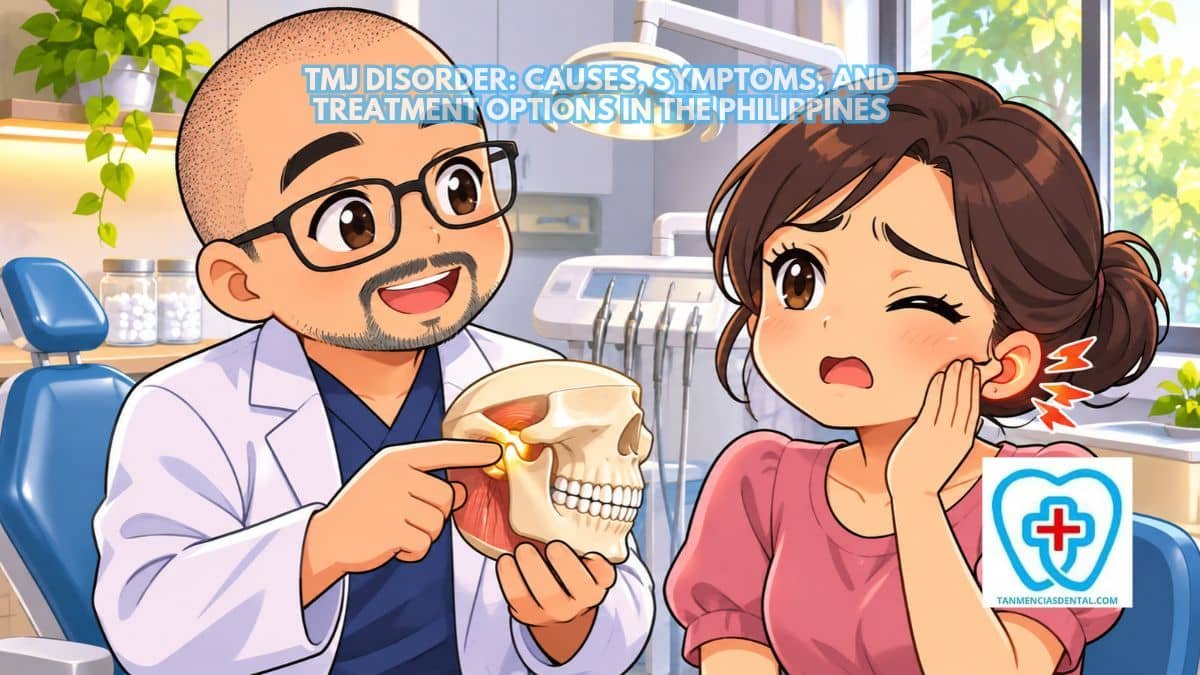
Have you ever experienced jaw pain while eating, heard a clicking sound when opening your mouth, or woken up with a sore jaw and headache? These symptoms may be associated with a condition commonly known as temporomandibular joint (TMJ) disorder.
TMJ disorder can make everyday activities such as chewing, speaking, and yawning uncomfortable. In more severe cases, persistent pain and restricted jaw movement can interfere with sleep and affect your overall quality of life.
The good news is that many cases improve with proper care, lifestyle changes, and non-surgical treatments. Understanding what causes TMJ disorder, recognizing its symptoms, and knowing your treatment options in the Philippines can help you take the right steps toward relief.
Key Takeaways
- TMJ disorder affects the jaw joints, surrounding muscles, or both.
- Teeth grinding, jaw clenching, injuries, arthritis, and stress are potential contributing factors.
- Common symptoms include jaw pain, stiffness, painful clicking, headaches, and difficulty opening the mouth.
- Painless jaw clicking without restricted movement generally does not require treatment.
- Conservative and reversible treatments are generally recommended before invasive procedures.
- A licensed dentist with relevant training in TMJ disorders can help identify the underlying problem and recommend appropriate treatment.
- Treatment costs and insurance coverage in the Philippines vary depending on the healthcare provider and procedures required.
What Is TMJ Disorder?
The temporomandibular joint (TMJ) connects your lower jaw, or mandible, to your skull. You have two of these joints, located just in front of each ear.
These joints work together with surrounding muscles and tissues to allow you to open and close your mouth, chew food, speak, and move your jaw from side to side.
When problems develop in these joints or the muscles responsible for jaw movement, they may result in a group of conditions called temporomandibular disorders (TMDs).
Although TMJ disorder is the more commonly used term, TMJ technically refers to the joint itself, while TMD refers to the disorders affecting it and its surrounding structures.
Temporomandibular disorders fall into three broad categories:
- Muscle-related disorders: Affect the muscles responsible for chewing and jaw movement.
- Joint-related disorders: Involve problems within the jaw joint, such as disc displacement, inflammation, or joint degeneration.
- Headaches associated with TMD: Headaches linked to jaw muscle or joint problems.
Some people experience more than one type of TMD at the same time.
🦷 Best Foods for Healthy Teeth and Gums: What to Eat and Avoid
What Causes TMJ Disorder?
There is no single cause of TMJ disorder. In many cases, the exact cause is difficult to determine. A combination of physical, behavioral, biological, and psychological factors may contribute to its development.
Here are some common causes and contributing factors.
1. Teeth Grinding and Jaw Clenching (Bruxism)
Repeatedly grinding or clenching your teeth can place additional pressure on your jaw joints and surrounding muscles.
Bruxism may occur while you are awake or asleep, sometimes without you realizing it. It can contribute to jaw soreness, muscle fatigue, headaches, and tooth wear.
However, not everyone who grinds their teeth develops TMJ disorder.
2. Stress and Anxiety
When you are stressed, you may unconsciously tighten your facial muscles or clench your jaw.
Persistent stress may contribute to muscle tension, increase sensitivity to pain, and worsen existing TMJ symptoms.
While stress is not the sole cause of TMD, managing it can be an important part of treatment.
3. Jaw Injuries
An injury to the jaw, face, or head from a sports accident, fall, or vehicular accident can damage the jaw joints and surrounding tissues.
Some individuals may experience persistent jaw pain or restricted movement following an injury.
4. Arthritis
Certain types of arthritis, including osteoarthritis and rheumatoid arthritis, can affect the temporomandibular joints.
These conditions may lead to inflammation, stiffness, pain, and structural changes within the joints.
5. Jaw Disc Displacement
A small cushioning disc sits inside each jaw joint and helps facilitate smooth movement.
When this disc moves out of its usual position, it may result in clicking, popping, discomfort, or jaw locking.
However, disc displacement does not always cause symptoms or require treatment.
6. Repetitive Jaw Habits
Certain everyday habits may place unnecessary strain on your jaw, particularly if you already have TMD.
These include:
- Excessive gum chewing.
- Nail biting.
- Chewing on pens or other hard objects.
- Frequently eating hard or chewy foods.
- Repeatedly opening your mouth too widely.
These habits may trigger or aggravate symptoms rather than directly cause TMD in everyone.
7. Other Contributing Factors
Genetic factors, increased pain sensitivity, and other chronic pain conditions may also influence the development or persistence of TMD.
Contrary to a common belief, current evidence does not establish crooked teeth or an uneven bite as general causes of TMJ disorder. Correcting your bite does not necessarily eliminate TMJ symptoms.
🦷 How Long Do Tooth Sealants Last? Procedure, Aftercare, and Maintenance
Common Signs and Symptoms of TMJ Disorder
TMJ symptoms can range from mild discomfort to persistent pain that affects your daily activities. They may occur on one or both sides of your face.
| Symptom | Description |
| Jaw pain | Aching or tenderness around the jaw joints or chewing muscles |
| Painful clicking or popping | Joint sounds accompanied by pain or discomfort during jaw movement |
| Jaw stiffness | Tightness or difficulty moving the jaw |
| Jaw locking | Difficulty fully opening or closing your mouth |
| Headaches | Pain commonly experienced around the temples |
| Earaches | Discomfort in or around the ears |
| Facial pain | Pain that may spread across the face |
| Neck pain | Discomfort or tension extending toward the neck |
| Difficulty chewing | Pain or fatigue when eating |
| Tinnitus | Ringing or buzzing in the ears that may accompany TMD |
| Changes in bite | A sensation that your upper and lower teeth fit together differently |
Some individuals with TMD may also experience dizziness or other ear-related symptoms. However, these symptoms can have unrelated medical causes and should not automatically be attributed to TMJ disorder.
It is important to remember that clicking or popping sounds without pain or difficulty moving the jaw are relatively common and generally do not require treatment.
🦷 How to Whiten Teeth After Braces Safely and Effectively
How Is TMJ Disorder Diagnosed?
There is no single test that can diagnose every type of TMJ disorder. Your dentist will typically begin by reviewing your medical history, discussing your symptoms, and performing a clinical examination.
During your consultation, your dentist may:
- Examine your jaw movement and range of motion.
- Check your jaw joints and chewing muscles for tenderness.
- Listen for clicking, popping, or grinding sounds.
- Evaluate your teeth for signs of excessive wear.
- Ask about your sleeping habits, stress levels, and history of jaw injuries.
- Determine whether jaw movement reproduces your usual pain.
- Evaluate other possible causes of facial pain, such as dental infections.
Depending on your symptoms and examination findings, additional diagnostic imaging may be recommended.
| Diagnostic Test | Purpose |
| Panoramic dental X-ray | Provides an overview of the teeth, jawbones, and general joint structures |
| Computed tomography (CT) or cone beam computed tomography (CBCT) | Provides detailed images of the bony structures of the jaw joints |
| Magnetic resonance imaging (MRI) | Evaluates the joint discs and surrounding soft tissues |
Not everyone with TMJ disorder requires advanced imaging. These tests are generally recommended when the results are expected to help establish a diagnosis or guide treatment decisions.
Your dentist may also refer you to another healthcare professional if your symptoms suggest an underlying medical condition.
🦷 Tooth Sealants vs. Dental Fillings: What’s the Difference?
TMJ Disorder Treatment Options in the Philippines
TMJ disorder treatment depends on the underlying condition, severity of symptoms, and how long you have been experiencing discomfort.
In most cases, treatment begins with conservative and reversible approaches that aim to relieve pain, improve jaw movement, and restore normal function without permanently altering your teeth or jaw joints.
1. Home Remedies and Lifestyle Changes
Mild TMJ symptoms may improve with simple adjustments to your daily routine.
Here are some practical ways to manage jaw discomfort at home:
- Temporarily eat soft foods such as lugaw, oatmeal, scrambled eggs, and steamed fish.
- Cut food into smaller pieces to reduce excessive jaw movement.
- Apply a warm or cold compress wrapped in a clean towel for 10 to 15 minutes at a time.
- Avoid chewing gum and eating excessively hard or chewy foods.
- Avoid opening your mouth too widely when yawning or eating.
- Keep your jaw relaxed and your teeth slightly apart when resting.
- Practice stress management and relaxation techniques.
- Maintain a comfortable posture when working or using electronic devices.
- Get adequate sleep.
A soft-food diet is generally a temporary measure. Gradually return to your normal diet as your symptoms improve.
Avoid forcefully stretching or manipulating your jaw, especially if you are experiencing severe pain or jaw locking.
2. Medications
Your dentist or physician may recommend medications to help manage pain, inflammation, or muscle tension.
Depending on your condition, these may include:
- Pain relievers: Paracetamol may be considered for short-term pain relief, although evidence supporting its effectiveness for TMD is limited.
- Nonsteroidal anti-inflammatory drugs (NSAIDs): Medications such as ibuprofen may help manage short-term pain and inflammation when appropriate.
- Muscle relaxants: Prescription medications may be considered for selected cases involving muscle spasms.
- Other prescription medications: Certain medications may be considered as part of an individualized treatment plan for persistent pain.
Medications generally help manage symptoms rather than correct the underlying condition. Their effectiveness may vary, particularly in patients with chronic TMD pain.
Consult your dentist or physician before taking medications, especially if you are pregnant, have kidney or liver disease, stomach ulcers, cardiovascular problems, or are taking other medications.
Avoid prolonged self-medication without professional guidance.
3. Physical Therapy and Jaw Exercises
Physical therapy can be an important part of managing TMJ disorder, particularly when symptoms involve muscle pain, stiffness, or limited jaw movement.
A licensed physical therapist with relevant training may recommend:
- Gentle jaw stretching exercises.
- Controlled jaw movements.
- Manual therapy.
- Muscle relaxation exercises.
- Neck and posture exercises.
- Techniques to improve jaw mobility.
Research supports the use of supervised exercises and certain forms of manual therapy for managing chronic TMD pain and improving function.
Since different types of TMD may require different exercises, it is best to seek professional guidance before starting a jaw exercise program.
4. Dental Splints and Night Guards
A dental splint, also called an occlusal splint, is a removable oral appliance worn over the teeth.
Depending on your condition, your dentist may recommend an appliance to protect your teeth from grinding or as part of a broader treatment plan.
Although some patients report improvement in TMJ symptoms when using a splint, research on its effectiveness for TMD-related pain remains limited. Dental splints are not necessary for every patient and should not be considered a guaranteed cure.
An appliance used for TMD management should not be designed to permanently change your bite.
If wearing a splint causes increased pain, discomfort, or changes in the way your teeth fit together, stop using it and consult your dentist.
Regular follow-up appointments may be necessary to assess its fit and effectiveness.
5. Stress Management and Behavioral Therapy
Stress and unconscious jaw clenching may contribute to persistent TMJ symptoms.
Learning to recognize and manage these habits can help reduce unnecessary muscle tension and improve your ability to cope with pain.
Helpful approaches may include:
- Breathing exercises.
- Meditation and mindfulness.
- Awareness of daytime jaw clenching.
- Cognitive behavioral therapy (CBT).
- Healthy sleep habits.
For individuals with chronic TMD pain, cognitive behavioral therapy may be particularly helpful alongside patient education, physical therapy, and other conservative treatments.
6. Botox Injections
Botulinum toxin, commonly known by the brand name Botox, is sometimes used to temporarily reduce activity in the jaw muscles.
Although some patients may experience relief, evidence supporting its routine use for TMJ disorder remains insufficient.
Potential side effects include muscle weakness, difficulty chewing, facial asymmetry, and possible changes to surrounding muscle or bone tissues.
Botulinum toxin injections are not recommended as a routine first-line treatment for TMD. If considered, they should only be administered by an appropriately qualified healthcare professional after evaluating the potential benefits, risks, and alternatives.
7. Arthrocentesis and Arthroscopy
For selected patients with specific joint problems, minimally invasive procedures may be considered.
Arthrocentesis involves flushing the jaw joint with fluid to help remove inflammatory substances and potentially improve jaw movement.
Arthroscopy involves inserting a small instrument equipped with a camera into the joint to examine and treat certain structural problems.
These procedures are not routinely recommended for chronic TMD pain. Their suitability depends on the underlying diagnosis and requires careful evaluation by a qualified specialist.
8. TMJ Surgery
Surgery is generally reserved for selected patients with severe structural abnormalities, significant joint damage, or other specific conditions that cannot be adequately managed through less invasive approaches.
Surgical procedures may include joint repair or, in rare cases, total joint replacement.
Because surgery carries risks and may permanently alter the jaw joint, it should only be considered after a comprehensive specialist assessment.
Seeking a second opinion before undergoing irreversible treatment is advisable.
🦷 Saltwater Rinse for Teeth and Gums: Benefits, Risks, and How to Use It
Where Can You Get TMJ Treatment in the Philippines?
TMJ assessment and treatment are available through dental clinics, hospitals, and rehabilitation facilities in the Philippines.
A dental consultation is often a practical starting point, especially if you are experiencing jaw pain, teeth grinding, painful clicking, or difficulty chewing.
Depending on your condition, your treatment may involve one or more healthcare professionals.
| Healthcare Professional | How They Can Help |
| General dentist | Initial assessment, conservative dental management, and referrals |
| Dentist with training in TMD and orofacial pain | Evaluation and management of jaw-related pain |
| Oral and maxillofacial surgeon | Assessment of complex joint conditions and surgical treatment when indicated |
| Physical therapist | Jaw rehabilitation, supervised exercises, and manual therapy |
| Rehabilitation medicine physician | Non-surgical pain management and rehabilitation |
| Ear, nose, and throat (ENT) specialist | Evaluation of ear-related symptoms and other possible medical causes |
| Rheumatologist | Evaluation and management of inflammatory arthritis affecting the jaw joints |
| Clinical psychologist | Behavioral therapy and psychological strategies for managing chronic pain |
When choosing a healthcare provider, look for a Professional Regulation Commission (PRC)-licensed professional with appropriate training and experience in managing TMD.
Not all dental clinics offer advanced TMJ treatments. Your dentist may refer you to another healthcare professional or facility when necessary.
🦷 Is Baking Soda Good for Gingivitis? Benefits, Risks, and Dental Advice
How Much Does TMJ Treatment Cost in the Philippines?
The cost of TMJ treatment in the Philippines varies depending on your diagnosis, the severity of your symptoms, the healthcare facility, and the type of treatment recommended.
Common expenses may include:
- Initial dental consultation and clinical examination.
- Dental X-rays or advanced diagnostic imaging.
- Custom-made dental splints or night guards.
- Physical therapy sessions.
- Medications.
- Follow-up consultations and appliance adjustments.
- Specialized procedures, when medically indicated.
Consultation and treatment fees may differ between private dental clinics, hospitals, and university-affiliated healthcare facilities.
Government hospitals and teaching institutions may offer more affordable options, although the availability of TMD services varies by facility.
There is no single treatment price that applies to every patient. The best way to determine your expected expenses is to undergo an assessment and request an itemized treatment quotation.
Remember that not every patient needs a dental splint, advanced imaging, or an expensive procedure. Your treatment plan should be based on your clinical needs.
Does PhilHealth Cover TMJ Treatment?
PhilHealth provides coverage for specified preventive oral health services under its primary care benefits. These include oral screening, dental cleaning, and fluoride varnish application, subject to applicable program requirements.
However, preventive dental coverage does not automatically include specialized TMJ treatments, custom dental splints, or advanced diagnostic imaging.
Certain hospital-based treatments may qualify under applicable PhilHealth benefit packages, depending on the diagnosis, procedure, facility accreditation, and eligibility requirements.
Confirm your coverage directly with PhilHealth and your healthcare provider before starting treatment.
Does HMO Cover TMJ Treatment?
Health maintenance organization (HMO) coverage for TMJ disorder in the Philippines depends on your individual or company-sponsored healthcare plan.
Some plans may cover consultations, selected diagnostic procedures, or rehabilitation services, while others may exclude specialized dental treatments and oral appliances.
You may also need a referral or a letter of authorization (LOA) before receiving covered services.
Contact your HMO provider to confirm your benefits, accredited healthcare facilities, and any applicable exclusions.
🦷 How Much Do Tooth Sealants Cost in the Philippines?
Can TMJ Disorder Be Prevented?
Not all cases of TMJ disorder can be prevented. However, certain habits may help reduce unnecessary strain on your jaw and minimize symptom flare-ups.
Consider incorporating the following habits into your daily routine:
- Avoid unnecessary jaw clenching.
- Limit excessive gum chewing.
- Avoid biting your nails or chewing on hard objects.
- Practice stress management techniques.
- Maintain a comfortable working posture.
- Get adequate and consistent sleep.
- Use appropriate protective equipment during contact sports.
- Avoid using your teeth to open packages or bottles.
- Consult your dentist if you experience persistent teeth grinding.
Being mindful of your daily habits and addressing persistent symptoms early may help maintain healthy jaw function.
🦷 TMJ Disorder Therapy in Marikina
When Should You See a Dentist for TMJ Disorder?
Occasional, mild jaw discomfort may improve with simple home care. However, persistent or recurring symptoms should not be ignored.
Consider scheduling a dental consultation if you experience:
- Persistent or worsening jaw pain.
- Painful clicking or popping sounds.
- Frequent headaches accompanied by jaw discomfort.
- Repeated episodes of jaw locking.
- Difficulty opening your mouth or chewing food.
- Jaw pain that interferes with sleep or daily activities.
- Changes in the way your teeth fit together.
- Symptoms that do not improve with conservative home care.
Seek urgent medical or dental attention if your jaw becomes stuck open or closed, you cannot eat or drink, you develop severe facial swelling or fever, or your symptoms follow a significant injury.
Jaw pain accompanied by chest discomfort, shortness of breath, cold sweating, nausea, or faintness may indicate a heart attack. Seek immediate emergency medical assistance if you experience these symptoms.
Difficulty breathing or swallowing accompanied by facial or jaw swelling also requires emergency medical attention.
🦷 Skilled Dentists Serving Marikina
Final Thoughts
Living with TMJ disorder can be frustrating, especially when something as simple as eating, speaking, or yawning becomes uncomfortable.
Fortunately, many cases can be managed through appropriate conservative treatments, lifestyle adjustments, and professional guidance.
The key is to understand what may be causing your symptoms and receive a treatment plan that addresses your individual needs. Expensive dental procedures, permanent bite adjustments, and surgery are not necessary for most patients.
If you are experiencing persistent jaw pain, painful clicking, or difficulty moving your jaw, consider scheduling a dental consultation. A thorough assessment can help determine the cause of your symptoms and identify the most appropriate treatment options for you.
Visit Tan-Mencias Dental Clinic for Your TMJ Concerns
Are you experiencing jaw pain, painful clicking, or difficulty opening your mouth? At Tan-Mencias Dental Clinic, we are here to help you understand your symptoms and explore suitable treatment options. We invite you to visit our dental clinic at 44 G. Del Pilar Street, Parang, Marikina City, for a dental consultation. If you have any questions or concerns, feel free to call us at 0917-145-1074, send us a message through our Facebook page, or use our website’s contact form. We look forward to helping you take the first step toward better jaw health and a more comfortable smile.
Frequently Asked Questions (FAQs)
1. Is TMJ disorder curable?
Many cases of TMJ disorder resolve or improve significantly with appropriate care. However, chronic or degenerative conditions may require ongoing management. Treatment outcomes depend on the underlying condition and individual circumstances.
2. Can TMJ disorder go away on its own?
Yes. Mild symptoms may improve without extensive professional treatment, particularly when they are associated with temporary muscle tension or excessive jaw activity. Persistent, recurring, or worsening symptoms should be evaluated by a healthcare professional.
3. How long does TMJ disorder last?
Mild TMJ symptoms may last a few days or several weeks. Some individuals experience recurring or persistent symptoms. TMD-related pain lasting three months or longer is generally considered chronic and may require a more comprehensive management approach.
4. Can TMJ disorder cause headaches and earaches?
Yes. TMD can be associated with headaches, particularly around the temples, as well as pain in or around the ears. However, headaches and earaches may also result from other conditions, so a proper assessment is important.
5. Can TMJ disorder cause dizziness or tinnitus?
Some individuals with TMD report dizziness or tinnitus, which is a ringing or buzzing sensation in the ears. However, these symptoms are not specific to TMD and may require evaluation by a physician or ENT specialist.
6. Can stress make TMJ disorder worse?
Yes. Stress may increase jaw clenching, muscle tension, and sensitivity to pain. Managing stress can be a helpful part of a comprehensive TMD treatment plan.
7. Can braces fix TMJ disorder?
Braces and other orthodontic treatments are not established routine treatments for TMD. While orthodontic treatment may be appropriate for separate dental concerns, it should not be undertaken solely as a treatment for TMJ pain.
8. What foods should I avoid if I have TMJ disorder?
During a flare-up, temporarily limit hard, sticky, and chewy foods such as chicharon, nuts, chewing gum, tough meat, and hard candies. Choose softer foods and gradually return to your normal diet as your symptoms improve.
9. Can TMJ disorder cause permanent damage?
Certain inflammatory or degenerative joint conditions may cause structural damage. However, many cases of TMD improve without permanent joint damage. Proper assessment can help identify conditions that require further treatment.
10. What is the best sleeping position for TMJ disorder?
Sleeping on your back may help reduce direct pressure on your jaw. If you prefer sleeping on your side, choose a supportive pillow and avoid positions that aggravate your symptoms. There is no single sleeping position proven to be best for everyone with TMD.
11. What type of doctor or dentist should I see for TMJ disorder in the Philippines?
You can start by consulting a PRC-licensed dentist, preferably one with relevant training in temporomandibular disorders and orofacial pain. Depending on your diagnosis, you may be referred to an oral and maxillofacial surgeon, rehabilitation medicine physician, physical therapist, or another healthcare professional.
12. Do I need a night guard if I have TMJ disorder?
Not necessarily. A night guard may help protect your teeth if you grind them during sleep, but its effectiveness in relieving TMD pain varies. Your dentist can determine whether an oral appliance is appropriate for your condition.
13. Is TMJ surgery necessary?
Most people with TMJ disorder do not require surgery. Surgical intervention is generally considered only for selected patients with specific or severe joint conditions following a thorough specialist assessment.
14. Is TMJ disorder life-threatening?
TMJ disorder itself is generally not life-threatening. However, some serious medical conditions can cause similar symptoms. Persistent or unusual jaw pain, especially when accompanied by other concerning symptoms, should be properly evaluated.
15. Should I be worried if my jaw clicks but does not hurt?
Painless jaw clicking is relatively common and usually does not require treatment if your jaw functions normally. However, consult your dentist if the clicking becomes painful or is accompanied by stiffness, locking, or difficulty opening your mouth.
Medical Disclaimer
This article is intended for general informational and educational purposes only and is not a substitute for professional medical or dental advice, diagnosis, or treatment. Always consult a licensed dentist, physician, or other qualified healthcare professional regarding your symptoms and treatment options. Treatment outcomes, availability, costs, and PhilHealth or HMO coverage may vary depending on individual circumstances and applicable policies. Do not disregard professional medical advice or delay seeking appropriate care because of information presented in this article.