
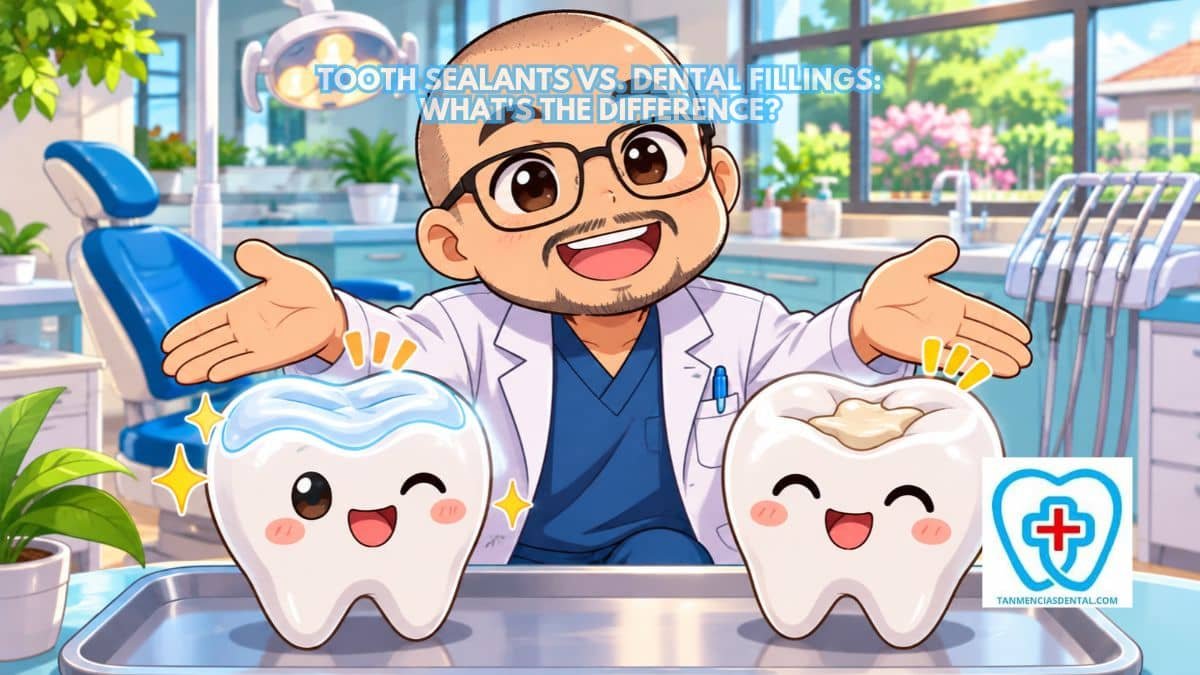
When it comes to protecting your teeth from cavities, you’ve probably heard of dental sealants and fillings. Both are common dental treatments that help maintain oral health, but they serve different purposes.
Dental sealants help prevent cavities, while dental fillings repair teeth that have already been damaged by decay.
Although these treatments may seem similar, understanding how they work can help you make better decisions about your dental health.
So, how do tooth sealants and dental fillings compare? Which one might you need, and what should you expect from each procedure?
Let’s explore their differences, benefits, costs, and when dentists typically recommend them.
Key Takeaways
- Dental sealants are preventive treatments that protect the chewing surfaces of teeth from developing cavities.
- Dental fillings are restorative treatments used to repair teeth affected by cavities or minor structural damage.
- Sealants are generally painless and don’t require drilling or anesthesia.
- Fillings often involve removing decayed tooth tissue before restoring the tooth with a suitable material.
- Children and teenagers commonly benefit from sealants, but adults may also be candidates.
- Both treatments can last for years, although their durability depends on the materials used, oral hygiene, and regular dental care.
- Sealants and fillings are not interchangeable in most situations. Your dentist will recommend the appropriate treatment based on your tooth’s condition.
What Are Dental Sealants?
Dental sealants are thin, protective coatings applied to the chewing surfaces of teeth, particularly the molars and premolars.
These back teeth naturally have deep grooves and tiny pits where food particles and bacteria can collect. Unfortunately, toothbrush bristles may struggle to reach these areas, increasing the risk of cavities.
Sealants create a protective barrier over these grooves, making it harder for food and bacteria to become trapped.
Think of dental sealants as a protective shield for your teeth. Instead of waiting for tooth decay to develop, they help prevent it from happening.
According to the Centers for Disease Control and Prevention (CDC), dental sealants can prevent approximately 80% of cavities in the back teeth during the first two years after application.
However, sealants only protect the surfaces where they’re applied. Brushing, flossing, and regular dental checkups remain essential.
How Are Dental Sealants Applied?
Getting dental sealants is usually a quick and straightforward procedure.
Here’s what typically happens:
- Cleaning: The dentist cleans the tooth to remove plaque and debris.
- Preparation: A special solution may be applied to help the sealant stick to the tooth.
- Drying: The tooth is rinsed and dried, depending on the sealant material.
- Application: The dentist applies a thin layer of sealant over the tooth’s grooves.
- Hardening: The sealant is hardened using a special curing light or allowed to set, depending on the material.
The procedure usually takes only a few minutes per tooth.
Since sealants generally don’t require drilling or removing healthy tooth structure, anesthesia is usually unnecessary.
Who Should Get Dental Sealants?
Sealants are especially beneficial for children and teenagers because their newly erupted permanent teeth can be more vulnerable to cavities.
Dentists commonly recommend considering sealants when:
- The first permanent molars emerge, usually around age 6.
- The second permanent molars emerge, usually around age 12.
- Teeth have deep grooves that are difficult to clean.
- A patient has an increased risk of developing cavities.
Adults with suitable teeth and deep grooves may also benefit from sealants.
Interestingly, sealants aren’t limited to completely healthy teeth. They may also help prevent the progression of certain early-stage tooth decay lesions that haven’t yet formed visible holes.
However, teeth with established cavities generally require a different approach.
🦷 Saltwater Rinse for Teeth and Gums: Benefits, Risks, and How to Use It
What Are Dental Fillings?
Dental fillings, commonly called pasta in the Philippines, are restorative treatments used to repair teeth damaged by cavities, small fractures, or other minor defects.
When tooth decay creates a hole in your tooth, a sealant alone cannot restore the missing tooth structure.
Instead, your dentist typically removes the decayed tissue and fills the damaged area with a suitable dental material.
This helps restore the tooth’s shape, strength, and normal function.
In simple terms, while sealants help keep teeth healthy, fillings repair teeth that have already experienced damage.
How Are Dental Fillings Done?
The filling procedure depends on the size and location of the cavity, but it generally involves these steps:
- Examination: Your dentist checks the damaged tooth and determines the extent of decay.
- Anesthesia: Local anesthesia may be given to minimize discomfort.
- Decay removal: The dentist removes the damaged or decayed tissue using appropriate dental instruments.
- Tooth preparation: The area is cleaned and prepared for the filling material.
- Filling placement: The chosen material is placed into the prepared area and hardened or allowed to set.
- Final adjustments: The dentist checks and adjusts the filling to ensure a comfortable bite.
Most routine fillings can be completed in one dental appointment.
Not every filling requires drilling or anesthesia. The exact procedure depends on the condition of the tooth and the material used.
Common Types of Dental Fillings in the Philippines
Several filling materials are used in dental care, each with advantages and limitations.
1. Composite Resin Fillings
Composite resin fillings are tooth-colored restorations made from a mixture of resin and fine filler particles.
They’re widely used because they blend naturally with surrounding teeth and can repair many small to medium-sized cavities.
These fillings are suitable for both front and back teeth, depending on the size and location of the damage.
2. Glass Ionomer Fillings
Glass ionomer fillings are made from materials that can release fluoride, which may help protect nearby tooth structure against decay.
They’re often used in selected situations, including certain cavities in children’s teeth and areas that experience relatively low chewing pressure.
However, conventional glass ionomer fillings may not be as strong as composite resin for areas exposed to heavy biting forces.
3. Dental Amalgam Fillings
Dental amalgam is a silver-colored filling material made from a mixture of metals, including mercury, silver, tin, and copper.
Although amalgam was commonly used in the past because of its durability, the Philippines has adopted policies to phase out mercury-containing dental amalgam.
Under Department of Health Administrative Order No. 2020-0020, the country established a three-year phase-out period for dental amalgam use.
For this reason, modern mercury-free filling materials, such as composite resin and glass ionomer, are particularly relevant to dental care in the Philippines.
If you have an existing amalgam filling that’s still in good condition, you shouldn’t automatically have it removed. Your dentist can assess whether replacement is necessary.
The best filling material depends on the size of the cavity, tooth location, chewing pressure, appearance, and other individual factors.
🦷 Is Baking Soda Good for Gingivitis? Benefits, Risks, and Dental Advice
Tooth Sealants vs. Dental Fillings: Key Differences
Although both procedures help maintain dental health, their purposes and methods differ considerably.
Here’s a side-by-side comparison.
| Feature | Dental Sealants | Dental Fillings |
| Primary purpose | Prevent cavities | Repair cavities or damage |
| Treatment type | Preventive | Restorative |
| Tooth condition | Healthy surfaces or selected early decay | Cavities or damaged teeth requiring repair |
| Procedure | Protective coating applied | Damaged area restored with filling material |
| Drilling required | Generally no | Often, but not always |
| Anesthesia | Usually unnecessary | May be needed |
| Discomfort | Typically painless | Usually manageable with appropriate anesthesia |
| Treatment time | A few minutes per tooth | Varies depending on complexity |
| Common materials | Resin-based or glass ionomer sealants | Composite resin and glass ionomer |
| Cost | Generally lower | Usually higher |
| Longevity | Several years with proper maintenance | Several years or longer, depending on the restoration |
The most important distinction is straightforward: sealants protect vulnerable tooth surfaces, while fillings restore tooth structure that has already been lost or damaged.
🦷 How Much Do Tooth Sealants Cost in the Philippines?
Benefits of Dental Sealants
Dental sealants offer several advantages, particularly for people whose teeth are susceptible to cavities.
1. Help Prevent Tooth Decay
Sealants reduce the buildup of food and bacteria in deep grooves, lowering the risk of cavities on treated surfaces.
2. Quick and Painless Application
Because the procedure is usually noninvasive, most patients experience little to no discomfort.
This makes sealants particularly helpful for children who may feel anxious about dental treatment.
3. Cost-Effective Prevention
Preventing cavities may help reduce the need for more expensive procedures later, such as fillings, crowns, or root canal treatment.
4. Preserve Natural Tooth Structure
Unlike fillings that may require removing damaged tooth tissue, sealants generally preserve the natural tooth structure.
5. Provide Long-Term Protection
Sealants can remain effective for years when properly maintained.
However, dentists should check them regularly because they may wear down, chip, or become partially detached.
🦷 Should You Drink Water Before Brushing Your Teeth? Benefits and Dental Tips
Benefits of Dental Fillings
While fillings cannot prevent every future cavity, they play an important role in restoring damaged teeth.
1. Repair Existing Cavities
Fillings replace lost tooth structure and help restore the tooth’s normal shape and function.
2. Help Prevent Further Damage
By treating a cavity and restoring the affected area, fillings help protect the tooth from additional damage.
However, new decay can still develop around an existing filling.
3. Restore Chewing Function
Cavities can weaken teeth and sometimes make eating uncomfortable.
A properly placed filling helps restore the tooth’s ability to handle normal chewing forces.
4. Improve Tooth Appearance
Tooth-colored composite fillings can closely match natural enamel, making them a popular choice for patients who want natural-looking results.
5. Help Preserve Natural Teeth
Treating cavities before they become severe can help prevent more extensive dental procedures.
However, fillings aren’t always enough for advanced decay. Severely damaged teeth may require crowns, root canal treatment, or extraction.
🦷 Tooth Sealants for Kids: What Every Filipino Parent Should Know
How Long Do Dental Sealants and Fillings Last?
Neither dental sealants nor fillings are guaranteed to last forever.
Their lifespan depends on several factors, including the materials used, chewing habits, oral hygiene, and the condition of the treated tooth.
Dental sealants: They can last for several years, and some remain intact for five years or longer. However, they may need repair or replacement if they become worn or damaged.
Dental fillings: Many fillings last several years, with some remaining functional for a decade or longer. Their lifespan varies depending on the material, filling size, tooth location, and chewing pressure.
For example, a small filling may last longer than a large filling on a heavily used molar.
Habits such as grinding your teeth, chewing ice, and frequently consuming sugary foods can also affect the condition of your teeth and dental restorations.
Regular dental checkups allow your dentist to monitor sealants and fillings for signs of wear, damage, or new decay.
🦷 Root Canal Treatment in Marikina: Cost, Procedure, and Benefits
Which Costs More: Sealants or Fillings?
In most cases, dental sealants cost less than fillings.
This is mainly because sealant application is relatively simple and generally doesn’t require drilling, anesthesia, or extensive tooth preparation.
Fillings usually involve more steps, materials, and clinical time.
However, actual treatment prices in the Philippines depend on several factors, including:
- The dental clinic’s location
- The number of teeth requiring treatment
- The size and location of the cavity
- The materials used
- The complexity of the procedure
- Any applicable PhilHealth or private health plan benefits
Are Dental Sealants and Fillings Covered by PhilHealth?
PhilHealth offers preventive oral health benefits that may help eligible members and qualified dependents access certain dental services.
Under its preventive oral health benefit package, covered services include oral examinations, dental cleaning, fluoride varnish application, and selected pit-and-fissure sealant procedures.
The package also provides for certain Class V restorations, which are fillings used for specific areas near the gumline.
Coverage for sealants and eligible Class V procedures is limited to a maximum of two teeth per year under the published package guidelines.
However, not all types of dental fillings are covered, and benefits depend on eligibility, accreditation, and applicable PhilHealth requirements.
It’s important to confirm whether your chosen dental clinic is a PhilHealth-accredited provider for these services before assuming coverage is available.
For other dental treatments, ask your dentist for a cost estimate before proceeding.
From a financial perspective, preventive care may be a worthwhile investment when it helps avoid cavities and more extensive dental treatment.
🦷 What Are Tooth Sealants? A Complete Guide to Preventing Tooth Decay
Can Dental Sealants Replace Fillings?
This is a common question, and the answer is generally no.
Dental sealants are primarily designed to prevent cavities, while fillings are used to restore teeth with established damage.
If a tooth already has a significant hole caused by decay, applying a sealant won’t replace the missing tooth structure.
However, there is an important exception.
Dentists may sometimes use sealants to manage very early decay that hasn’t yet formed a cavity. Properly placed and maintained sealants can help slow or stop the progression of selected early lesions.
This doesn’t mean you should delay treatment when a dentist detects tooth decay.
The appropriate treatment depends on how far the decay has progressed, whether the tooth’s surface remains intact, and your overall risk of developing cavities.
🦷 Are Teeth Whitening Strips Bad for Your Teeth? Risks, Benefits, and Safety Tips
How to Know Whether You Need a Sealant or Filling
You usually cannot determine which treatment you need simply by looking at your teeth.
Some cavities develop without noticeable pain, while certain dark spots or stained grooves may not indicate active decay.
Your dentist can assess your teeth through a clinical examination and, when necessary, dental X-rays.
As a general guide:
You may benefit from sealants if:
- Your teeth have deep pits and grooves.
- Your permanent molars have recently erupted.
- You are at increased risk of developing cavities.
- Your dentist identifies early decay that may benefit from sealing.
You may need fillings if:
- Your dentist detects a cavity that requires restoration.
- You have a small fracture or damaged area suitable for a filling.
- A tooth has lost some of its structure due to decay.
- An existing filling is damaged or has decay around it.
Remember, persistent tooth sensitivity, pain, or a visible hole should be examined by a dentist rather than treated based on guesswork.
How to Protect Your Teeth After Sealants or Fillings
Whether you’ve received sealants or fillings, maintaining good oral hygiene is essential.
Neither treatment makes your teeth completely resistant to decay.
To protect your teeth and dental work, I recommend following these basic habits:
- Brush twice daily using fluoride toothpaste.
- Clean between your teeth daily with dental floss or another suitable cleaning tool.
- Limit frequent sugary snacks and drinks, including soft drinks, candies, and other sweet treats.
- Visit your dentist regularly for examinations and professional cleaning, based on your dentist’s recommendations.
- Avoid chewing extremely hard objects, such as ice, that could damage teeth or fillings.
- Ask about a nightguard if you grind or clench your teeth during sleep.
These habits can help maintain your dental restorations while reducing the risk of new cavities.
🦷 Honest and Dependable Dental Care in Marikina
Frequently Asked Questions (FAQs)
1. Are dental sealants better than fillings?
Neither treatment is necessarily better because they serve different purposes. Sealants help prevent tooth decay, while fillings repair existing damage. The right option depends on your tooth’s condition.
2. Do dental sealants hurt?
Dental sealant application is generally painless. It usually doesn’t involve drilling, injections, or anesthesia, making it comfortable for most patients.
3. Can adults get dental sealants?
Yes. Although sealants are commonly recommended for children and teenagers, adults with suitable teeth and an increased risk of cavities may also benefit.
4. Can you get a cavity underneath a dental sealant?
Yes, although properly placed and maintained sealants significantly reduce cavity risk. If a sealant becomes damaged or loses its protective seal, decay may develop. Regular dental examinations help detect these problems.
5. Are dental fillings painful?
Most routine filling procedures cause little discomfort when appropriate local anesthesia is used. You may experience temporary sensitivity afterward, but persistent or worsening pain should be evaluated by your dentist.
6. How soon can I eat after getting sealants or fillings?
Most patients can eat shortly after receiving light-cured sealants. For fillings, eating instructions depend on the material used and whether anesthesia was given. If your mouth is numb, wait until the numbness wears off before chewing to avoid accidentally biting your cheek or tongue.
7. Do dental sealants contain BPA?
Some resin-based sealants may cause very low, temporary exposure to bisphenol A (BPA). According to the American Dental Association, current evidence does not indicate a health concern from the low levels of BPA exposure associated with dental sealants.
If you’re concerned about the materials used, discuss the available options with your dentist.
8. Can dental sealants be applied over fillings?
Sealants are mainly used to protect vulnerable grooves on tooth surfaces. In selected cases, dentists may apply sealants to remaining grooves around an existing filling. Whether this is appropriate depends on the condition of the tooth and its restoration.
9. Do fillings prevent future cavities?
Fillings restore damaged teeth and help protect treated areas, but they don’t make teeth immune to decay. New cavities can still develop around fillings or elsewhere in the mouth.
10. Can I choose between a dental sealant and a filling?
Not always. The choice depends mainly on the presence and severity of tooth decay. Your dentist can explain whether preventive treatment, monitoring, or a filling is appropriate.
Protect Your Smile at Tan-Mencias Dental Clinic
Not sure if you need dental sealants or fillings? Visit Tan-Mencias Dental Clinic at 44 G. Del Pilar Street, Parang, Marikina City, and let us help you take care of your teeth. Our dental team can check your teeth and help you choose the right treatment to keep your smile healthy. If you have any questions or concerns, you can call us at 0917-145-1074, send us a message through our Facebook page, or use the contact form on our website. We look forward to helping you and your family keep your teeth healthy and strong!
Final Thoughts
Understanding the difference between tooth sealants and dental fillings can help you make more informed decisions about protecting your smile.
The distinction is simple: dental sealants are primarily about prevention, while dental fillings are about restoration.
If your teeth are healthy but vulnerable to cavities, sealants may provide an extra layer of protection. If decay has already damaged a tooth, a filling may be necessary to restore its structure and function.
Both treatments have an important place in modern dentistry, and neither replaces good oral hygiene.
Ultimately, the best approach is to prevent cavities whenever possible and address dental problems before they become more serious.
Regular dental checkups, consistent brushing and flossing, and timely treatment can go a long way toward maintaining strong, healthy teeth.
Medical Disclaimer
This article is intended for general educational and informational purposes only and should not be considered professional dental advice, diagnosis, or treatment. The information presented does not replace a consultation with a licensed dentist or qualified oral healthcare professional.
Dental treatment recommendations vary depending on individual oral health conditions, medical history, and clinical findings. Always consult your dentist before deciding whether dental sealants, fillings, or other dental procedures are appropriate for you. If you experience persistent tooth pain, swelling, or signs of infection, seek prompt professional dental care.