
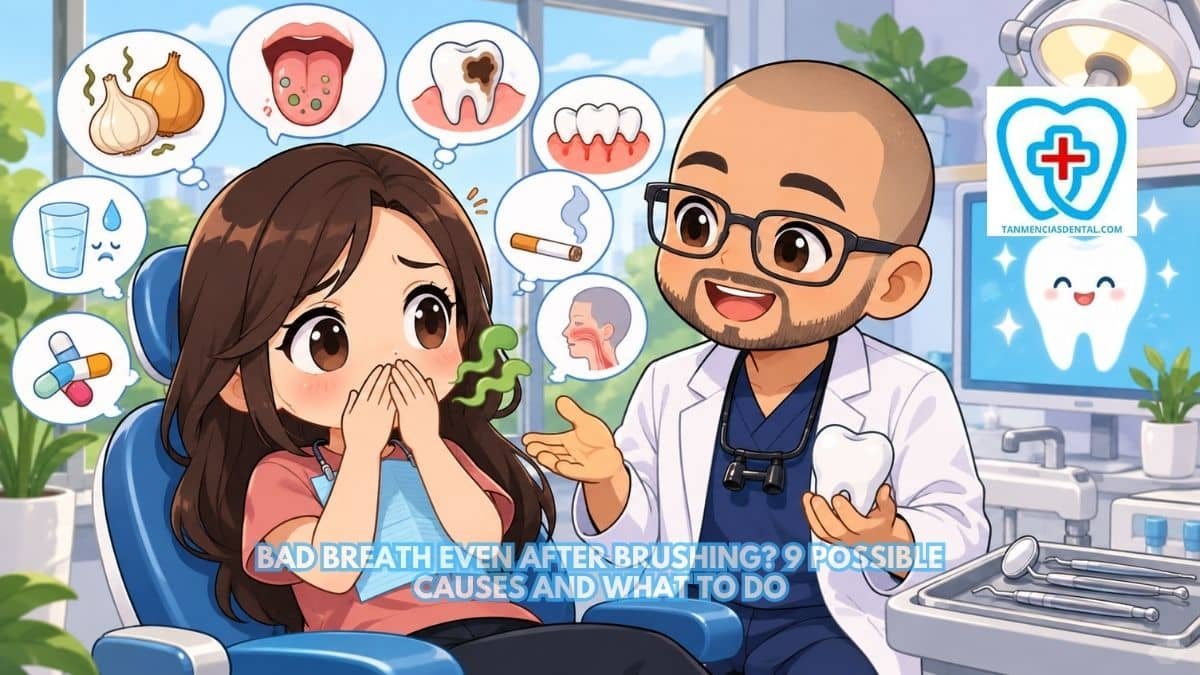
You brush your teeth, rinse your mouth, and expect your breath to feel fresh. But what if the unpleasant smell is still there?
Bad breath that persists even after brushing can be frustrating, especially when you feel like you’re doing everything right. The good news is that persistent bad breath, also known as halitosis, often has an identifiable cause.
And brushing alone may not be enough.
Most cases of persistent bad breath actually originate in the mouth. Bacteria on the tongue, between the teeth, around the gums, or in areas affected by dental problems can continue producing unpleasant odors even after you’ve brushed.
Less commonly, bad breath can be related to the tonsils, nose and sinuses, certain medications, or an underlying medical condition.
So, if you’re wondering, “Why does my breath still smell after brushing?” let’s look at some of the most likely reasons and what you can do about them.
Key Takeaways
- Brushing doesn’t clean every area where odor-causing bacteria can accumulate.
- The tongue, gums, and spaces between the teeth are common sources of persistent bad breath.
- Tooth decay, gum disease, dry mouth, tonsil stones, certain foods, and tobacco use can contribute to bad breath.
- Mouthwash and breath mints may temporarily improve breath, but they don’t necessarily address the underlying cause.
- Most persistent bad breath originates in the mouth. Medical conditions outside the mouth are less common causes.
- If bad breath continues despite good oral hygiene, a dental examination can help identify what’s causing it.
1. Bacteria and Coating on Your Tongue
Your tongue may be one of the first places to look if your breath still smells after brushing.
Unlike the relatively smooth surfaces of your teeth, your tongue has a textured surface that can trap bacteria, dead cells, saliva components, and food debris. This buildup is often more noticeable toward the back of the tongue.
As bacteria break down proteins, they can produce volatile sulfur compounds (VSCs). These compounds are an important source of the characteristic odor associated with halitosis.
Brushing your teeth doesn’t necessarily remove this buildup.
Try gently cleaning your tongue as part of your daily oral hygiene routine. You can use a tongue scraper or your toothbrush, taking care not to scrub so aggressively that you irritate your tongue.
🦷 What Happens If You Don’t Restore a Damaged or Decayed Tooth?
2. You’re Brushing, but Not Cleaning Between Your Teeth
A toothbrush does a good job of cleaning accessible tooth surfaces, but its bristles can’t effectively clean every space between your teeth.
Plaque and food debris can remain in these areas, allowing bacteria to accumulate.
That’s why brushing should be combined with daily interdental cleaning.
Dental floss works well for many people, but it isn’t the only option. Depending on the spaces between your teeth, your dental work, and the condition of your gums, your dentist may recommend floss, interdental brushes, or another appropriate cleaning method.
If you have braces, bridges, implants, or other dental appliances, you may need additional cleaning tools or techniques to reach areas where plaque and food easily accumulate.
🦷 Should You Use Mouthwash Before or After Brushing Teeth?
3. Tooth Decay and Gum Disease Can Contribute to Persistent Bad Breath
Sometimes, bad breath isn’t simply an oral hygiene problem.
Untreated tooth decay, gum inflammation, periodontal disease, dental infections, and areas where food becomes trapped can harbor odor-producing bacteria.
Gum disease deserves particular attention.
As periodontal disease progresses, deeper spaces can develop between the teeth and gums. These periodontal pockets can harbor bacteria and may be difficult to clean properly at home.
Other warning signs of dental or gum problems can include:
- Bleeding gums
- Red, swollen, or tender gums
- Receding gums
- Persistent unpleasant taste
- Loose teeth
- Toothache or sensitivity
If you have persistent bad breath along with any of these symptoms, consider scheduling a dental examination.
Treating the underlying dental problem is more important than repeatedly trying to cover the odor with mouthwash, mints, or other breath fresheners.
🦷 How Long Do Tooth Restorations Last? A Guide to Fillings, Crowns, Bonding, and Veneers
4. Dry Mouth Can Make Bad Breath Worse
Saliva does much more than keep your mouth moist. It helps wash away food debris, neutralize acids, and maintain a healthier oral environment.
When you don’t produce enough saliva, bacteria and debris can accumulate more easily.
This condition is commonly known as dry mouth, or xerostomia.
Your mouth naturally becomes drier while you sleep, which is one reason morning breath is common. Persistent dry mouth, however, may be associated with dehydration, mouth breathing, tobacco use, alcohol, certain health conditions, and many medications.
If your mouth frequently feels dry, drinking water regularly may help. Chewing sugar-free gum can also stimulate saliva production in some people.
Persistent dry mouth deserves attention, particularly if it is severe or began after starting a medication. Talk to your dentist or doctor about possible causes and appropriate management.
Do not stop or change a prescribed medication without consulting the healthcare professional who prescribed it.
🦷 Can a Cracked or Broken Tooth Be Saved? Tooth Restoration Treatments Explained
5. Tonsil Stones May Be Hiding at the Back of Your Throat
If your teeth and gums seem healthy but bad breath continues, tonsil stones are another possible cause.
Tonsil stones, or tonsilloliths, are small white or yellowish lumps that form in the crevices of the tonsils. They consist of material such as bacteria, dead cells, and other debris that becomes trapped and hardens.
Tonsil stones are usually harmless, but they can contribute to bad breath. Some people may also experience throat discomfort, coughing, difficulty swallowing, or the feeling that something is stuck in the throat.
Good oral hygiene and gargling with warm salt water may help.
Avoid aggressively scraping or digging into your tonsils, as this can cause irritation, injury, or bleeding.
If tonsil stones are large, painful, difficult to remove, or keep returning, consult a doctor or an ear, nose, and throat (ENT) specialist for appropriate advice.
🦷 How Do Holistic Dentists Treat Cavities? Prevention, Remineralization, and Fillings
6. Certain Foods Can Affect Your Breath Even After Brushing
Sometimes your toothbrush isn’t the problem; the food you ate is.
Garlic and onions are familiar examples. After certain odor-producing compounds are absorbed during digestion, they can enter the bloodstream, reach the lungs, and be released when you breathe.
This means brushing your teeth may make your mouth feel cleaner without completely eliminating the smell.
Other foods and beverages may also temporarily affect your breath or oral environment.
For food-related bad breath, time is often part of the solution. Maintaining good oral hygiene, drinking water, and chewing sugar-free gum may help in the meantime.
🦷 Baby Gingivitis: Signs, Prevention, Treatment, and When to See a Dentist
7. Smoking and Other Tobacco Products Contribute to Bad Breath
Tobacco can affect your breath in several ways.
Smoking leaves a characteristic odor in the mouth and on the breath. Tobacco use can also contribute to dry mouth and is an important risk factor for periodontal disease, which itself may cause persistent bad breath.
Mints and mouthwash may temporarily cover tobacco-related odors, but they don’t address tobacco’s effects on your mouth and gums.
Quitting tobacco provides benefits that extend far beyond fresher breath, including important benefits for your oral and overall health.
If you’re having difficulty quitting, talk to a healthcare professional about appropriate smoking-cessation support.
🦷 Dental Filling vs. Dental Crown: How Do Dentists Decide Which You Need?
8. Sinus, Nasal, and Throat Problems Can Sometimes Be Responsible
Not every case of bad breath begins with your teeth.
Certain conditions involving the nose, sinuses, tonsils, or throat can contribute to unpleasant breath.
If your bad breath occurs together with persistent nasal congestion, sinus symptoms, recurrent sore throats, tonsil problems, or other ear, nose, and throat symptoms, the underlying condition may need to be evaluated.
If persistent bad breath is your main concern, your dentist is a reasonable place to start because most cases originate in the mouth.
If no oral or dental cause is found, your dentist may suggest consulting a physician or ENT specialist.
🦷 Does Brushing Your Teeth Whiten Them? What Brushing Can, and Can’t, Do
9. Less Commonly, an Underlying Medical Condition May Be Involved
It’s easy to search for bad breath online and become worried about serious illnesses. Fortunately, most persistent bad breath originates in the mouth rather than elsewhere in the body.
Still, there are exceptions.
Certain respiratory, gastrointestinal, metabolic, kidney, and liver conditions may sometimes affect breath odor. Gastroesophageal reflux disease (GERD) has also been associated with bad breath in some people.
The important thing is not to assume that persistent bad breath means you have a systemic illness.
A practical approach is to investigate the more common oral causes first.
If good oral hygiene doesn’t solve the problem, see your dentist. If your dentist doesn’t find an oral explanation, or if you have other concerning symptoms, a medical evaluation may be appropriate.
A Special Note About Fruity-Smelling Breath
An unusual fruity or acetone-like odor on the breath can occur with diabetic ketoacidosis (DKA), a serious and potentially life-threatening complication of diabetes.
DKA usually involves more than a change in breath odor. Symptoms may include excessive thirst and urination, nausea or vomiting, abdominal pain, weakness, rapid or deep breathing, drowsiness, or confusion.
If you or someone you’re with has symptoms that could indicate DKA, particularly in a person with diabetes, seek urgent medical care.
🦷 Basic Dental Needs in Marikina
What Can You Do About Bad Breath at Home?
If your breath still smells after brushing, don’t simply brush harder. More aggressive brushing can irritate your gums without addressing the real source of the odor.
Instead, focus on cleaning your whole mouth and addressing factors that allow odor-producing bacteria to accumulate.
A good oral care routine includes:
- Brush twice a day with fluoride toothpaste, ideally for about two minutes.
- Clean between your teeth every day using floss or another interdental cleaner appropriate for you.
- Gently clean your tongue, including as far back as you can comfortably reach.
- Clean dentures, retainers, and other removable dental appliances according to your dentist’s instructions.
- Drink enough water, especially if your mouth tends to feel dry.
- Consider sugar-free gum to stimulate saliva if it is appropriate for you.
- Avoid smoking and other tobacco products.
- Limit sugary foods and drinks as part of maintaining good oral health.
- See your dentist regularly at an interval appropriate for your individual oral health needs.
Mouthwash can also be useful for some people. However, it should generally be considered an addition to, not a replacement for, brushing, interdental cleaning, tongue cleaning, and professional dental care.
Most importantly, don’t keep masking persistent bad breath without investigating why it’s happening.
🦷 Professional Dentistry Services In Marikina

When Should You See a Dentist for Bad Breath?
Occasional bad breath after waking up or eating strong-smelling food is common.
Persistent bad breath is different.
Consider making a dental appointment if your breath continues to smell unpleasant despite consistently brushing, cleaning between your teeth, cleaning your tongue, and staying adequately hydrated.
You should also have your mouth examined if bad breath occurs together with symptoms such as:
- Bleeding or swollen gums
- Persistent toothache or sensitivity
- Loose teeth
- Gum recession
- Persistent dry mouth
- An ongoing unpleasant taste
- Swelling, pus, or other signs of a possible dental infection
A dentist can examine your teeth, gums, tongue, dental restorations, and other areas of your mouth to look for possible causes.
If no dental or oral cause is found, your dentist may recommend consulting a physician or another appropriate healthcare professional for further evaluation.
The Bottom Line
If your breath still smells after brushing, it doesn’t necessarily mean you’re brushing poorly.
The source may be bacteria on your tongue, plaque and food debris between your teeth, gum disease, tooth decay, dry mouth, tonsil stones, or another factor that brushing alone cannot address.
The important thing is to find the cause instead of simply masking the smell.
Start with good oral hygiene: brush twice daily with fluoride toothpaste, clean between your teeth every day, gently clean your tongue, stay adequately hydrated, and avoid tobacco.
If the problem persists, have your dentist take a closer look. Identifying and treating the underlying cause is generally a better long-term approach than repeatedly covering the odor with mints or mouthwash.
Frequently Asked Questions About Bad Breath
1. Why does my breath still smell even after I brush my teeth?
Brushing cleans your teeth, but odor-producing bacteria may remain on your tongue, between your teeth, around or below the gumline, or in areas affected by tooth decay or dental infection.
Dry mouth, tonsil stones, certain foods, tobacco, and, less commonly, medical conditions outside the mouth can also contribute.
2. Can bad breath come from the stomach?
Yes, but gastrointestinal causes are much less common than oral causes.
Most persistent halitosis originates in the mouth. Certain gastrointestinal conditions, including GERD, may sometimes contribute to bad breath, but it’s generally sensible to investigate oral and dental causes first.
3. Does mouthwash get rid of bad breath?
It depends on the cause.
Some mouthwashes may temporarily reduce unpleasant odors, while certain therapeutic mouth rinses can help control plaque or bacteria when used appropriately.
However, mouthwash won’t repair a cavity, treat advanced gum disease, correct persistent dry mouth, or resolve many other underlying causes of halitosis.
Think of mouthwash as a possible addition to your oral hygiene routine rather than a substitute for brushing, interdental cleaning, tongue cleaning, and professional dental care.
4. Should I clean my tongue if I have bad breath?
Yes. The tongue, particularly its back surface, can harbor bacteria and debris associated with bad breath.
Gently cleaning your tongue with a toothbrush or tongue scraper can be a useful addition to your daily oral hygiene routine.
5. Can cavities make your breath smell bad?
They can.
Tooth decay and areas where bacteria and food debris become trapped may contribute to unpleasant odors. If a cavity is involved, brushing or mouthwash won’t repair the damaged tooth. It should be examined and treated appropriately by a dentist.
6. Can gum disease cause bad breath?
Yes. Gingivitis and periodontitis can be associated with bad breath.
With periodontitis, deeper pockets around the teeth may harbor bacteria that are difficult to remove through routine brushing alone.
If you have persistent bad breath together with bleeding, swollen, or receding gums, or loose teeth, schedule a dental examination.
7. Can dry mouth cause bad breath?
Yes.
Saliva helps cleanse the mouth. When saliva production is reduced, bacteria and debris can accumulate more easily.
Dry mouth may be associated with dehydration, mouth breathing, tobacco use, certain medical conditions, and many medications. If it persists, talk to your dentist or doctor about possible causes.
8. How do I know if my bad breath is coming from my mouth or somewhere else?
It can be difficult to determine the source yourself.
Because most persistent halitosis originates in the mouth, a dental examination is a sensible starting point.
Your dentist can check for tongue coating, gum disease, tooth decay, infection, dry mouth, food-trapping areas, and other possible oral causes. If these are ruled out, medical or ENT evaluation may be appropriate depending on your symptoms.
9. When should I worry about bad breath?
See your dentist if bad breath persists despite good oral hygiene, particularly if you also have bleeding or swollen gums, dental pain, loose teeth, persistent dry mouth, swelling, or an unusual taste.
Seek urgent medical care if unusual breath odor occurs with serious symptoms such as difficulty breathing, confusion, persistent vomiting, or other signs of a medical emergency.
Still Have Bad Breath Even After Brushing?
Persistent bad breath may have an underlying oral or dental cause that isn’t easy to identify at home.
At Tan-Mencias Dental Clinic in Parang, Marikina City, we can examine your teeth, gums, tongue, and other possible sources of oral odor and discuss appropriate treatment based on what we find.
To schedule a consultation, call 0917-145-1074, send us a message through our Facebook page, or contact us through our website’s contact page.
Finding the cause is the first step toward healthier teeth and gums, and fresher breath.
Medical Disclaimer
The information in this article is provided for general educational purposes only and should not be considered a substitute for professional dental or medical advice, diagnosis, or treatment.
The causes of bad breath and the appropriate treatment can vary from person to person. If you have persistent bad breath, tooth or gum problems, dry mouth, or other health concerns, consult a licensed dentist, physician, or other qualified healthcare professional.
Do not stop or change prescribed medications or delay seeking professional care based on information in this article.
If you believe you may be experiencing a medical emergency, seek immediate medical attention or go to the nearest emergency department.