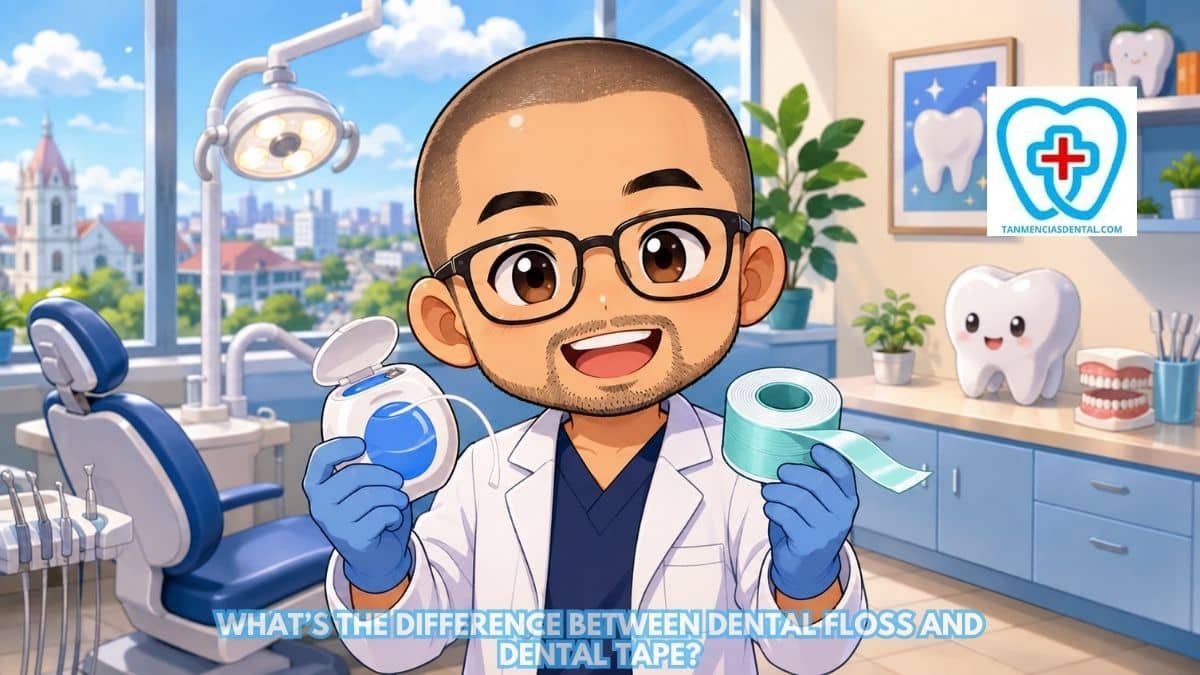
If you’ve ever wondered whether you should use dental floss or dental tape, you’re not alone. Both are designed to clean between your teeth, but differences in their shape, thickness, and feel can make one more suitable for you than the other.
The main difference is simple: dental floss is generally thin and cord-like, while dental tape is broader and flatter, more like a ribbon. Traditional floss often works well between teeth with tight contact points, while some people find dental tape more comfortable or easier to handle.
However, neither option is automatically better for everyone. The right choice depends on factors such as the spacing between your teeth, your gum health, any dental work you have, and your ability to use the product correctly and consistently.
For larger spaces between teeth or certain dental conditions, your dentist may recommend another interdental cleaning tool, such as an interdental brush.
Good preventive habits are especially important in the Philippines, where tooth decay and other oral health problems remain common. Along with regular dental checkups, brushing with fluoride toothpaste and cleaning between your teeth can help protect your teeth and gums.
Let’s take a closer look at dental floss and dental tape, how they differ, and how you can choose the right option for your oral care routine.
Key Takeaways
- Dental floss is thin and cord-like and often works well between teeth with tight contact points.
- Dental tape is broader and flatter. Some people find it more comfortable or easier to handle than traditional floss.
- Neither is automatically better. The right choice depends on your teeth, gums, dental work, comfort, and ability to use the product correctly.
- For larger spaces between teeth, an interdental brush may be more appropriate than floss or dental tape.
- If you have braces, bridges, implants, or other dental restorations, you may need specialized floss or another interdental cleaning tool.
- Clean between your teeth once a day and brush at least twice a day with fluoride toothpaste.
- If your gums frequently bleed, swell, or hurt when you clean between your teeth, consult your dentist.
What Is Dental Floss?
Dental floss is a thin strand designed to remove plaque and food debris from areas between your teeth that toothbrush bristles may not effectively reach.
Modern dental floss is commonly made from materials such as nylon filaments or plastic monofilaments. It comes in several varieties, including waxed, unwaxed, flavored, and specialized floss designed for use around braces, bridges, and other dental work.
Because traditional floss has a relatively slim profile, it can be particularly useful when the contact points between your teeth are tight.
When used correctly, floss wraps around the side of each tooth and helps remove plaque from between the teeth and near the gumline.
🦷 Tooth Extraction Aftercare: What to Do and What to Avoid for a Smooth Recovery
What Is Dental Tape?
Dental tape performs essentially the same job as traditional dental floss but has a different shape.
Instead of resembling a thin cord, dental tape is broader and flatter, similar to a narrow ribbon. Like regular floss, it may be waxed or unwaxed and is available in different varieties.
Some people prefer dental tape because its wider surface feels more comfortable or is easier to grip and control. If you find very thin floss awkward to handle, dental tape may be worth trying.
However, dental tape isn’t necessarily the best choice simply because you have large gaps between your teeth. For significantly wider spaces, an interdental brush may provide more effective cleaning.
🦷 How to Clean Teeth After Braces Removal: Tips for Maintaining Your Best Smile
Dental Floss vs. Dental Tape: What’s the Difference?
Both products have the same basic purpose: cleaning between your teeth. Their main differences involve their shape, thickness, feel, and ease of use.
| Feature | Dental Floss | Dental Tape |
| Shape | Thin strand or cord | Broad, flat ribbon |
| Tight contacts | Often works well | May be harder to insert if the contact is very tight |
| Comfort and handling | Comfortable for many people but may feel thin or difficult to grip | Wider surface may feel more comfortable or easier to control |
| Waxed options | Available | Available |
| Unwaxed options | Available | Available |
| Large gaps | May not adequately clean a wider space | Wider than floss, but an interdental brush may be more appropriate |
| Main advantage | Slim profile can fit between closely spaced teeth | Broad, flat shape can be comfortable and easy to handle |
| Best choice | Depends on your teeth and preferences | Depends on your teeth and preferences |
The important point is that there is no universal winner.
If regular floss fits comfortably between your teeth and allows you to clean both sides of each tooth effectively, there may be no reason to switch.
If you dislike the feel of thin floss or find it difficult to control, dental tape may be a good alternative.
🦷 Can a Dental Hygienist Work as a Dental Assistant in the Philippines?
Types of Dental Floss and Dental Tape
You’ll find several variations of floss and dental tape in pharmacies, supermarkets, dental clinics, and online stores. Understanding the differences can help you choose a product you’re comfortable using every day.
Waxed Floss
Waxed floss has a thin coating that can help it slide between teeth. Some people find it particularly useful when their teeth have tight contact points.
Unwaxed Floss
Unwaxed floss doesn’t have the additional wax coating. Some people prefer its feel, although certain products may be more prone to fraying.
Dental Tape
Dental tape is broader and flatter than conventional floss. Depending on the product, it may also be waxed or unwaxed.
Flavored Floss or Tape
Mint and other flavors don’t necessarily make floss more effective, but they can make cleaning between your teeth more pleasant. If choosing a flavor encourages you to clean between your teeth consistently, that’s a practical benefit.
Specialized Floss
People with braces, bridges, implants, or other dental restorations may need specialized products.
For example, some floss products have a stiffened end that can be threaded underneath orthodontic wires or bridges, while others include a thicker or spongy section designed to clean around dental appliances and restorations.
Your dentist can recommend an appropriate product and show you how to use it correctly.
🦷 Signs You May Need a Tooth Extraction
What Are the Benefits of Dental Floss?
The primary benefit of floss is its ability to clean areas between the teeth that your toothbrush may miss.
Used properly, floss can:
- Remove plaque between teeth
- Remove trapped food debris
- Clean along the sides of teeth near the gumline
- Support healthy gums
- Complement regular toothbrushing
- Help reduce problems associated with plaque accumulation
Floss can be particularly practical when the contacts between your teeth are too tight for an interdental brush.
However, technique matters.
Simply pushing floss down between your teeth and pulling it back out doesn’t thoroughly clean the tooth surfaces. For effective cleaning, the floss should gently wrap around the side of each tooth.
🦷 What Is a Dentist Uniform Called? A Guide to Dental Scrubs and PPE

What Are the Benefits of Dental Tape?
Dental tape provides many of the same benefits as conventional floss because its purpose is essentially the same.
Its main advantages relate to its shape and how it feels during use.
You may prefer dental tape if:
- Very thin floss feels uncomfortable
- You find conventional floss difficult to grip
- You prefer a broader cleaning surface
- Dental tape feels easier for you to control
- You are more likely to clean between your teeth consistently when using it
Some people find dental tape more comfortable than thin floss. However, it shouldn’t be considered a treatment for sensitive or bleeding gums.
If your gums bleed frequently when cleaning between your teeth, have them evaluated by your dentist.
🦷 Tooth Extraction: What to Expect Before, During, and After the Procedure
Dental Floss or Dental Tape: Which Should You Choose?
For most people, the answer comes down to effectiveness, comfort, and consistency.
If your teeth have tight contact points, traditional floss may be easier to slide between them.
If you find thin floss uncomfortable or difficult to handle, dental tape may be more comfortable.
You can also try both. Pay attention to how easily each one passes between your teeth, how well you can wrap it around each tooth, and whether you can use it comfortably without injuring your gums.
Ultimately, the better option is generally the one that lets you clean effectively and that you’re willing and able to use every day.
Keep in mind that different spaces in the same mouth may sometimes benefit from different cleaning tools. Your dentist may recommend floss for some areas and an interdental brush or another device for others.
🦷 Do Braces Cause Gingivitis? What You Need to Know About Braces and Gum Health
What About Larger Gaps Between Teeth?
It’s easy to assume that dental tape is automatically best for larger gaps because it’s wider than conventional floss. That’s not always the case.
When the space between two teeth is relatively large, an interdental brush may be a better option.
Interdental brushes are small brushes specifically designed to clean the spaces between teeth. They are available in different sizes so that an appropriate brush can be matched to the space being cleaned.
An interdental brush should fit comfortably. Don’t force one into a space that’s too small, as doing so may injure your gums.
If you’re unsure whether you should use floss, dental tape, or an interdental brush, or which brush size is appropriate, ask your dentist.
🦷 Oral Prophylaxis Price: What Determines the Cost of Dental Cleaning?
What If You Have Braces, Bridges, or Dental Implants?
Dental work can make cleaning between your teeth more challenging, but good home care remains important.
Braces
Traditional floss can be difficult to pass underneath orthodontic wires.
Depending on your needs, your dentist or orthodontist may recommend one or more of the following:
- Orthodontic or specialized floss
- A floss threader
- Interdental brushes
- A water flosser
- Other cleaning devices designed for braces
Dental tape by itself isn’t necessarily easier to use around brackets and wires simply because it’s wider.
Dental Bridges
A fixed dental bridge creates areas that ordinary floss cannot access in the usual way.
Specialized floss, floss threaders, interdental brushes, or other cleaning devices may help you clean underneath the replacement tooth and around the supporting teeth.
Dental Implants
Dental implants also require careful cleaning around the gumline and neighboring teeth.
The most appropriate method can depend on the type and location of the implant restoration. Your dentist can recommend suitable cleaning tools and demonstrate the correct technique.
🦷 Basic Dental Needs in Marikina
What If Your Gums Bleed When You Floss?
Seeing blood when you floss can tempt you to stop or immediately switch to a different product. However, bleeding gums shouldn’t simply be blamed on the floss.
Bleeding can occur if you use floss too aggressively, but gums can also bleed when they are inflamed because of plaque accumulation.
If you have recently started cleaning between your teeth regularly, improving your oral hygiene and technique may help. However, frequent or persistent bleeding, particularly when accompanied by swelling, tenderness, persistent bad breath, gum recession, or loose teeth, should be evaluated by a dentist.
Rather than snapping floss into your gums, guide it gently between your teeth and against the sides of each tooth.
If bleeding continues or you’re concerned about your gums, schedule a dental examination.
🦷 Professional Dentists Serving Marikina
How to Use Dental Floss or Dental Tape Correctly
Whether you choose floss or dental tape, good technique makes a big difference.
Start with a comfortable length of floss or tape and wind most of it around your fingers, leaving a short section to work with.
Gently guide it between two teeth. Don’t snap it down into your gums.
Once you reach the gumline, curve the floss around one tooth so that it forms a C shape.
Gently move the floss up and down against the side of the tooth, allowing it to reach slightly below the gumline without forcing it into the gum tissue.
Then curve the floss around the neighboring tooth and clean that surface as well.
Move to a clean section of floss as you work your way around your mouth, and don’t forget the back surface of your last tooth.
The goal isn’t to saw aggressively back and forth. You’re trying to wipe plaque gently and thoroughly from the sides of your teeth.
How Often Should You Floss?
As a general recommendation, clean between your teeth once a day using floss or another interdental cleaner appropriate for you.
You don’t necessarily have to do it at bedtime. Morning, afternoon, or evening can all work. What matters most is making interdental cleaning a consistent part of your oral care routine.
Along with daily interdental cleaning, brush your teeth at least twice a day with fluoride toothpaste.
A complete preventive dental routine also includes limiting frequent sugary foods and drinks and visiting your dentist regularly for checkups and professional care based on your individual oral health needs.
Should You Floss Before or After Brushing?
Either is acceptable.
You can clean between your teeth before or after brushing as long as you do it thoroughly.
Some people prefer to floss first and then brush, while others prefer brushing first. Instead of worrying too much about the order, choose a routine that makes it easier for you to clean your teeth thoroughly and consistently every day.
Are Floss Picks a Good Alternative?
Floss picks can be convenient, particularly for people who find it difficult to manipulate a long piece of floss with their fingers.
They can also make interdental cleaning easier when you’re away from home.
However, the shape of a floss pick can sometimes make it more difficult to wrap the floss fully around certain teeth compared with traditional string floss.
If floss picks are the method you’re most comfortable using consistently, ask your dentist about your technique. Your dentist can help you use them more effectively or suggest another option when necessary.
What About Water Flossers?
Water flossers, also known as oral irrigators, use a pressurized stream of water to help clean between teeth and around the gumline.
They can be useful for some people, particularly those who have difficulty using conventional floss. They may also be helpful for certain people with braces, bridges, implants, or other dental work.
That doesn’t mean everyone needs a water flosser.
The most appropriate interdental cleaning method depends on your teeth, gums, dental work, dexterity, and ability to use the device properly.
So, Is Dental Tape Better Than Dental Floss?
Not necessarily.
Dental floss and dental tape are different forms of interdental cleaners.
Traditional floss may be more convenient for tightly spaced teeth, while dental tape may feel more comfortable or easier to control for some people.
For larger spaces, interdental brushes may be more appropriate. If you have braces, bridges, implants, gum disease (periodontal disease), or other specific dental needs, you may benefit from specialized products and personalized instructions from your dentist.
Instead of looking for the product that’s supposedly “best” for everyone, focus on finding the one that lets you clean effectively, comfortably, and consistently.
When Should You Ask Your Dentist?
Choosing between floss and dental tape doesn’t usually require a dental appointment by itself. However, your dentist can provide valuable guidance if you’re having difficulty cleaning between your teeth.
Consider asking your dentist if:
- Your gums frequently bleed during brushing or interdental cleaning
- Your gums are swollen, tender, or receding
- Floss repeatedly shreds or gets stuck between particular teeth
- Cleaning between your teeth is painful
- You have spaces that seem too large for ordinary floss
- You have braces, bridges, implants, crowns, or other dental restorations
- You’re unsure which size interdental brush to use
- You have difficulty using floss because of limited hand dexterity
- You’re concerned about gum disease
Sometimes, a simple demonstration of the correct technique can make cleaning between your teeth much easier.
Frequently Asked Questions
1. Is dental tape better than dental floss?
Neither is universally better.
Dental floss is thin and can work particularly well between teeth with tight contact points, while dental tape is broader and may feel more comfortable or easier to control for some people.
The better choice is the one that allows you to clean effectively and consistently.
2. Can I use dental tape every day?
Yes. Dental tape can be used for daily interdental cleaning when it is appropriate for your teeth and used with proper technique.
3. Is dental tape good for tightly spaced teeth?
It depends.
Because dental tape is wider than conventional floss, some types may be more difficult to pass through very tight contact points. Thin floss may be easier to use in these areas.
4. Is dental tape better for large gaps?
Not necessarily.
Although dental tape is wider than ordinary floss, an interdental brush may be more appropriate for larger spaces between teeth. Your dentist can help determine which cleaning tool and, if applicable, which interdental brush size is suitable for you.
5. Is dental tape better for sensitive gums?
Some people find the broad, flat surface of dental tape more comfortable than thin floss. However, dental tape shouldn’t be considered a treatment for gum sensitivity.
Persistent tenderness or bleeding should be evaluated by your dentist.
6. Why do my gums bleed when I floss?
Bleeding can occur when floss is used too aggressively, but it can also be associated with inflamed gums or gum disease.
If your gums bleed frequently or the bleeding persists, particularly if you also have swelling, tenderness, gum recession, or persistent bad breath, consult your dentist.
7. Can I use dental tape with braces?
You may be able to use dental tape in certain areas, but braces can make ordinary flossing difficult because orthodontic wires interfere with normal access.
Depending on your needs, your dentist or orthodontist may recommend specialized orthodontic floss, a floss threader, interdental brushes, a water flosser, or another suitable cleaning device.
8. Should I floss before or after brushing?
Either is acceptable as long as you clean thoroughly between your teeth every day.
The best routine is one you can follow consistently.
9. How often should I floss?
As a general recommendation, clean between your teeth once a day using dental floss, dental tape, an interdental brush, or another suitable interdental cleaner.
Your dentist may recommend a specific method based on your individual oral health needs.
10. Can dental tape remove tartar?
No.
Dental floss and dental tape can help remove plaque before it hardens, but they cannot remove hardened tartar, also called dental calculus.
Once tartar has formed, professional dental cleaning is generally needed to remove it safely.
11. Can I use both dental floss and an interdental brush?
Yes, if appropriate for your teeth.
Some people have tight spaces between certain teeth and wider spaces elsewhere. In these cases, your dentist may recommend floss or dental tape for some areas and interdental brushes for others.
You don’t necessarily have to use the same interdental cleaning tool throughout your entire mouth.
The Bottom Line
The main difference between dental floss and dental tape is their shape and feel.
Dental floss is generally thinner and cord-like, which can make it useful for tight contacts between teeth. Dental tape is broader and flatter, and some people find it more comfortable or easier to handle.
But you don’t need to choose a universal winner.
The goal is to find an interdental cleaning method that works for your mouth and that you can use properly every day. Depending on your teeth, that might mean dental floss, dental tape, interdental brushes, specialized floss, a water flosser, or a combination of different tools.
Along with cleaning between your teeth daily, remember the basics: brush at least twice a day with fluoride toothpaste, limit frequent sugary foods and drinks, and visit your dentist regularly based on your individual oral health needs.
Good oral hygiene isn’t about buying the fanciest product. It’s about developing simple habits you can maintain and getting professional dental care when you need it.
Not Sure Which Interdental Cleaner Is Right for You?
If you’re unsure whether dental floss, dental tape, an interdental brush, or another cleaning tool is appropriate for you, we’re happy to help.
At Tan-Mencias Dental Clinic in Parang, Marikina City, we can assess the spacing between your teeth, check the health of your teeth and gums, consider any braces, bridges, implants, or other dental restorations you may have, and recommend an interdental cleaning method suited to your needs.
We can also show you the proper technique so you can clean between your teeth safely and effectively at home.
To schedule an appointment or ask us a question, call 0917-145-1074, send us a message through our Facebook page, or contact us through our website.
We look forward to helping you keep your teeth and gums healthy.
Medical Disclaimer
The information in this article is provided for general educational purposes and should not be considered a substitute for professional dental advice, diagnosis, or treatment.
Every patient has different oral health needs. The most appropriate method for cleaning between your teeth may depend on factors such as your tooth spacing, gum health, dental restorations, orthodontic appliances, medical history, and ability to use a particular cleaning device.
If you have persistent bleeding gums, swelling, dental pain, loose teeth, unusual sensitivity, or other oral health concerns, consult a licensed dentist for an examination and personalized advice.
If you’re unsure whether dental floss, dental tape, an interdental brush, or another cleaning device is right for you, your dentist can recommend an appropriate option and demonstrate how to use it correctly.