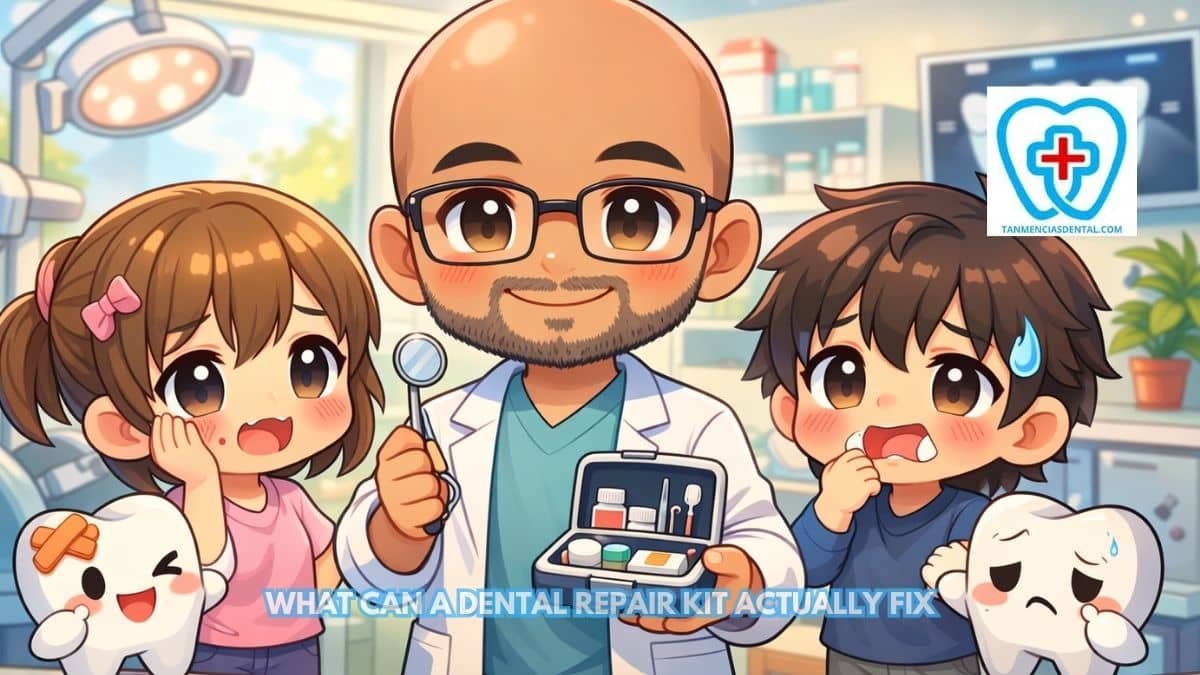
A dental repair kit can help us manage small dental problems at home when a dentist is not available right away.
It offers simple tools and materials that protect teeth and reduce discomfort for a short time.
These kits often include dental cement, wax, and small tools for careful placement.
They do not treat the root cause of dental issues, but they help prevent the problem from getting worse.
Knowing what can a dental repair kit actually fix helps us use it safely and wisely.
A clear understanding also helps us avoid relying on it for problems that need urgent care.
1. Replacing Lost Fillings
A lost filling leaves a small hole that can trap food and cause pain.
This open space can also expose the inner part of the tooth, which may lead to more sensitivity.
A repair kit can fill that space with a temporary filling to protect the tooth surface.
This temporary tooth filling acts as a barrier that helps keep out food and air.
Before placing the material, the area should be cleaned gently to remove debris.
The material should then be pressed carefully into the cavity to create a secure seal.
This helps reduce sensitivity to hot, cold, and sweet foods and makes daily eating more comfortable.
Eating on the other side of the mouth can help the temporary filling stay in place longer.
A dentist still needs to replace the filling with a stronger and longer-lasting material.
🦷 Understanding Black Plaque On Teeth: Causes and Prevention Tips
2. Reseating Loose Crowns
A loose crown can move around and make chewing difficult or painful.
This can also let food and bacteria get under the crown, which may cause more problems.
A repair kit can help us place the crown back using temporary dental cement as a temporary fix.
Before applying the cement, both the crown and the tooth should be cleaned and dried to help it stay in place.
After placing it, biting down gently helps set the crown in the correct position.
It is best to avoid sticky or hard foods so the crown does not loosen again.
This temporary fix is only meant to last until a dentist secures the crown properly.
🦷 Why Dental Cleanings Are Important
3. Smoothing Sharp Edges
A chipped tooth or a broken tooth can leave rough edges that irritate soft tissue.
These sharp areas can rub against the tongue and cheeks, which may cause small cuts and soreness.
Covering the sharp edge with dental wax or a temporary filler can help protect the inside of the mouth.
This creates a smooth surface that reduces friction during speaking and eating.
It also helps prevent further injury while the tooth is still damaged.
Checking the area often makes sure the material stays in place and continues to protect the tissue.
A dentist can later smooth or repair the chipped tooth in a more permanent way.
🦷 Why is Dental Care More Important Than Ever During Pregnancy?
4. Protecting Exposed Nerves
When the inner part of a tooth is exposed, it can cause sharp tooth pain that may come suddenly.
This pain often gets worse when eating or drinking hot, cold, or sweet foods.
A dental repair kit can place a protective layer over that sensitive area to help reduce discomfort.
This barrier limits contact with air, food, and liquids that trigger tooth pain.
Before applying the material, the area should be cleaned gently to avoid further irritation.
Choosing soft foods and avoiding extreme temperatures can also help manage the pain.
This is only a temporary shield, and professional treatment is needed to fully fix the damage.
🦷 Understanding the Causes of a Broken Tooth Crown: What You Need
5. Cushioning Irritating Braces
Braces can rub against the inside of the mouth and create sore spots that feel tender.
These areas may become worse when eating or talking throughout the day.
A tooth repair kit often includes dental wax that can be used to cover brackets or wires that cause irritation.
Pressing the wax gently over the problem area creates a smooth surface.
This reduces friction and helps protect the cheeks and lips from further injury.
It can also support healing by preventing constant rubbing on the sore spot.
Replacing the wax after meals keeps it clean and effective, while regular orthodontic care is still needed to adjust the braces properly.
🦷 Can a Smile Makeover Actually Boost Your Professional Success?
6. Blocking Out Bacteria
Open or damaged areas in teeth can allow bacteria to enter and grow, especially in cases of cracked teeth.
These small openings can trap food and make it easier for germs to stay inside the tooth.
A repair kit can seal these spaces for a short time, which helps lower the risk of infection.
Before applying the material, the area should be cleaned gently to remove any debris.
Good oral hygiene, such as brushing and rinsing, also supports this temporary protection.
This step can help prevent swelling, bad taste, or worsening pain.
A dentist must still clean and treat the area properly to fully remove bacteria and fix the damage.
7. Mending Cracked Dentures
Cracked dentures can affect how we chew and speak.
Some dental repair kits include materials that hold broken pieces together.
Applying the material carefully helps align the pieces and restore basic function.
It is important to avoid strong biting forces while using the repair.
Cleaning the denture before and after use keeps it safe.
A professional repair or replacement is needed for a lasting solution.
🦷 Is Your Child’s Mouthguard Actually Doing Its Job?
8. Buying Time Until Your Appointment
A dental repair kit is meant to help us manage problems until we can see a dentist.
It reduces discomfort and protects the affected area from further harm.
This makes daily tasks like eating and speaking easier.
It also helps prevent the issue from getting worse while waiting.
Planning a dental visit as soon as possible is still important.
The kit should never replace proper treatment.
🦷 What Are Some Common Mistakes to Avoid When Brushing Toddler Teeth?
9. Using Body-Safe Materials
Dental repair kits use materials designed to be safe for short-term use in the mouth.
These materials can handle moisture and contact with saliva.
Following instructions ensures the material works as intended.
Using clean hands and tools reduces the risk of contamination.
Avoid swallowing the material during placement.
Even safe materials should not be used longer than recommended.
🦷 Orthodontic Treatment in Marikina
10. Identifying Non-Repairable Emergencies
Some dental problems are too serious for a repair kit to handle and should be treated as dental emergencies.
Severe pain, swelling, or heavy bleeding often means there is a deeper issue that needs quick attention.
A knocked-out tooth or a deep infection can also lead to serious damage if not treated right away.
In these cases, waiting too long can increase the risk of further harm.
Trying to fix these problems at home may delay proper treatment and make the condition worse.
It is important to recognize these warning signs early so we can respond quickly.
Seeking professional dental care ensures the problem is handled safely and correctly.
Getting help from a dentist is the best way to protect your oral health in these urgent situations.
🦷 Expert Family Dental Clinic in Marikina
👨⚕️ Conclusion
What can a dental repair kit actually fix?
Understanding this helps us use it with care and confidence.
These kits are useful for small problems like lost fillings or loose crowns.
They offer short-term relief and protection in many common situations.
Still, they do not replace the need for professional dental treatment.
Seeing a dentist ensures the problem is fixed the right way.
Using a repair kit wisely helps protect our oral health until proper care is available.
❔ FAQs
1. How long can a dental repair kit last?
A dental repair kit is only meant for short-term use.
Most fixes can last a few hours to a few days, depending on how we eat and care for the area.
The material can wear down or fall out with regular use.
It is best to see a dentist as soon as possible for a proper repair.
2. Can I eat normally after using a dental repair kit?
Eating should be done with care after using a repair kit.
Soft foods are safer and help keep the repair in place longer.
Avoid hard, sticky, or very hot foods because they can loosen the material.
Chewing on the opposite side of the mouth can also help protect the repair.
3. Is it safe to use a dental repair kit more than once?
Most kits can be used more than once if there is enough material left.
Clean hands and tools are important each time to avoid infection.
Always follow the instructions provided with the kit.
Even with repeated use, the repair is still temporary and not a long-term solution.
4. What should I do if the repair falls out?
If the material falls out, clean the area gently before trying again.
Make sure the tooth or crown is free from food and debris.
Reapply the material as instructed and avoid eating right away to let it set.
If it keeps falling out, it is best to see a dentist soon.
5. Can a dental repair kit fix a broken tooth completely?
A dental repair kit cannot fully fix a broken tooth.
It can only cover or protect the damaged area for a short time.
The structure and strength of the tooth cannot be restored by the kit.
A dentist is needed to repair the tooth properly and safely.
😁 Self-Promotion
If you need safe and proper dental care, visit Tan-Mencias Dental Clinic at 44 G. Del Pilar Street, Parang, Marikina City.
Our team is ready to help you with checkups, repairs, and any dental concerns.
You can call us at 0917-145-1074 if you have questions or want to book a visit.
You may also send us a message through our Facebook page or our website’s contact form.
We look forward to helping you keep your smile healthy and strong.