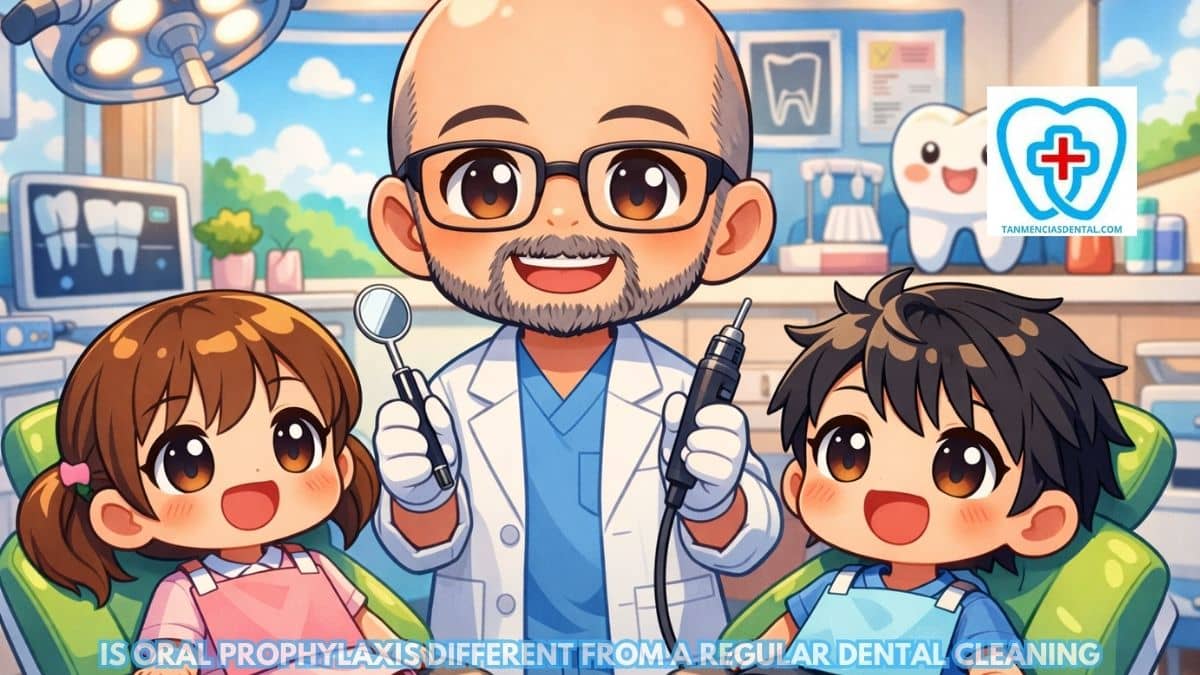
Many patients ask, is oral prophylaxis different from a regular dental cleaning, when they book an appointment.
The two terms often sound like separate services, which can cause confusion or concern.
In most dental offices, they refer to the same routine care for healthy teeth and gums.
Both focus on cleaning teeth and preventing common oral problems.
Knowing how these terms are used helps us feel more confident during dental visits.
A clear understanding also helps us follow the right care plan.
1. Professional Clinical Terminology
Dental teams rely on professional clinical terminology to keep records clear and accurate.
In dentistry, these terms help describe each dental procedure in a standard way.
Oral prophylaxis is the official term used to describe a routine dental cleaning.
This wording appears in patient charts, treatment notes, and insurance forms.
A dental association supports the use of clear terms so care stays consistent across clinics.
Dentists and hygienists use these terms to avoid confusion when sharing patient information.
Patients often hear the simpler phrase dental cleaning during office visits.
Both terms refer to the same basic service when teeth and gums are healthy.
Understanding this language helps patients feel more confident about their care.
Clear communication makes dental visits easier for everyone.
🦷 Can Electric Toothbrushes Damage Enamel?
2. Preventive Bacterial Removal
Preventive bacterial removal plays a major role in routine dental cleanings.
Bacteria naturally live in the mouth and form thin layers on teeth every day.
When these layers stay too long, they can lead to inflammation of the gums.
Swollen or red gums often bleed during brushing and flossing.
Professional cleanings remove harmful bacteria that daily care may miss.
This helps stop irritation before it turns into a bigger problem.
Regular removal also makes brushing and flossing more effective at home.
Using floss daily helps clean between teeth where bacteria hide.
Cleanings support fresher breath and a cleaner mouth feel.
Together, home care and professional cleanings help keep gums healthy.
🦷 Can a Tooth Infection Kill You? Understanding the Serious Risks
3. Plaque And Tartar Elimination
Plaque and tartar elimination protects teeth from long-term damage and supports gum health.
Plaque is a soft film that forms quickly after eating or drinking sugary or starchy foods.
When plaque stays on the teeth, it can settle along the gum line and irritate.
If plaque is not removed in time, it hardens into tartar that regular brushing cannot remove.
Dental tools are used during cleanings to safely break up and remove tartar from the teeth.
Removing this buildup lowers the risk of cavities and swollen gums.
If tartar continues to build up below the gum line, it can lead to periodontal disease.
In those cases, a deeper treatment called scaling and root planing may be needed.
Routine cleanings help prevent the need for this advanced care.
Keeping teeth free of buildup helps them stay strong and healthy longer.
🦷 What Is the Best Way to Brush Your Teeth?
4. Surface Stain Polishing
Surface stain polishing improves both comfort and appearance during a routine teeth cleaning procedure.
Over time, stains from coffee, tea, and certain foods can cling to the outer layer of the teeth.
These surface marks can make teeth look dull even when they are healthy.
After plaque and tartar are removed, polishing smooths the tooth surface to clear away these stains.
A smooth surface feels cleaner and helps the teeth reflect light better.
While polishing does not change natural tooth color, it helps teeth look brighter and fresher.
This step also makes it harder for new stains to stick to the enamel.
By lowering stain buildup, polishing supports better dental health between visits.
It also helps reduce minor dental issues linked to rough tooth surfaces.
Regular polishing plays a small but important role in keeping teeth clean and comfortable.
🦷 Can Dentists Prescribe Medication? Exploring the Limits of Dental Prescriptions
5. Above-The-Gumline Treatment
Most routine visits focus on above-the-gumline treatment.
The hygienist cleans the parts of the teeth that are easy to see and reach.
This includes the chewing surfaces and the tooth sides near the gums.
For patients with healthy gums, this level of care is enough.
Deeper cleaning may be needed if gum disease develops.
Routine care helps prevent the need for advanced treatment.
🦷 How Can I Prevent Tooth Sensitivity When Eating Hot or Cold Foods?
6. Ultrasonic Scaling Technology
Many offices now use ultrasonic scaling technology during cleanings.
This tool uses gentle vibrations to loosen hardened tartar.
Water spray helps wash debris away and keep the area cool.
Ultrasonic tools can reach tight spaces more easily than hand tools.
Some patients find this method more comfortable and faster.
It also allows for thorough cleaning with less pressure.
🦷 Discover the Benefits of Electric Toothbrushes
7. Early Disease Detection
Cleanings support early disease detection through regular exams.
Hygienists look for signs of cavities, gum swelling, and enamel wear.
Dentists may check for oral sores or changes in tissue.
Finding issues early can prevent pain and tooth loss.
Early care often costs less and takes less time.
Routine visits help us stay ahead of problems.
🦷 Can Dentists Prescribe Antibiotics? Understanding the Scope of Dental Prescriptions
8. Routine Maintenance Schedule
A routine maintenance schedule keeps oral health steady and easier to manage over time.
Most people benefit from dental cleanings every six months to remove plaque and tartar.
These visits support daily oral hygiene by handling areas that brushing and flossing cannot reach.
A regular prophylaxis appointment helps control buildup before it causes problems.
Some people may need visits more often due to gum concerns or past dental issues.
Dentists may recommend a prophy schedule that fits each patient’s needs.
Keeping a set routine prevents buildup from getting out of control.
Consistent care also makes each visit shorter and more comfortable.
Regular cleanings reduce the risk of sudden pain or infection.
Following a schedule helps protect teeth and gums long-term.
🦷 Is an Electric Toothbrush Significantly Better Than A Manual One?
9. Healthy Gum Preservation
Healthy gum preservation depends on steady cleaning and care.
Gums protect the roots of teeth and support chewing.
When gums become inflamed, they can pull away from teeth.
Cleanings remove irritants that cause gum redness and bleeding.
Healthy gums feel firm and look pink.
Ongoing care helps keep gums strong over time.
10. Systemic Health Connection
Studies suggest a systemic health connection with oral health.
Gum disease has been linked to conditions like heart disease and diabetes.
Bacteria from the mouth can enter the bloodstream through inflamed gums.
While cleanings do not treat these conditions, they reduce oral infection risk.
A healthy mouth supports overall wellness.
Good oral care becomes part of whole body health.
🦷 Your Complete Dental Care in Marikina
👨⚕️ Conclusion
Understanding dental terms helps us make informed choices.
Oral prophylaxis and a regular dental cleaning usually mean the same routine service.
Both focus on cleaning, prevention, and early detection.
Regular visits support healthy teeth and gums over time.
Clear communication with dental providers builds trust.
Staying consistent with care protects our smile and overall health.
❔ FAQs
1. Is oral prophylaxis the same for everyone?
Oral prophylaxis is meant for patients with generally healthy teeth and gums.
The steps are similar for most people, but the time and tools may change based on the buildup.
Some patients may need extra care if they have more plaque or stains.
The dentist or hygienist adjusts the cleaning to fit each patient’s needs.
2. How long does a regular dental cleaning usually take?
A regular dental cleaning often takes about thirty minutes to one hour.
The length depends on how much plaque and tartar need to be removed.
First-time visits may take longer due to exams and questions.
Routine visits are often quicker and more comfortable.
3. Does oral prophylaxis hurt?
Oral prophylaxis should not hurt for most people.
Some patients may feel mild pressure or slight sensitivity during cleaning.
Areas with more buildup may feel uncomfortable for a short time.
Letting the hygienist know about sensitivity can help make the visit easier.
4. How often should oral prophylaxis be done?
Most patients benefit from oral prophylaxis every six months.
This schedule helps control plaque and tartar before they cause problems.
Some people may need more frequent cleanings due to gum issues or health risks.
The dentist will suggest the best timing for each patient.
5. When is oral prophylaxis not enough?
Oral prophylaxis is not enough when gum disease is present.
If the infection goes below the gumline, deeper cleaning may be needed.
Signs include deep pockets, bleeding gums, or bone loss.
In these cases, the dentist will recommend a different type of treatment.
😁 Self-Promotion
Visit Tan-Mencias Dental Clinic at 44 G. Del Pilar Street, Parang, Marikina City for friendly and reliable dental care.
Our team is ready to help you feel comfortable and confident about your smile.
You may call our dental clinic or reach out if you have questions or concerns.
You can also send us a message through our Facebook page or our website’s contact form for easy inquiries.
For quick assistance, call or text us at 0917-145-1074.