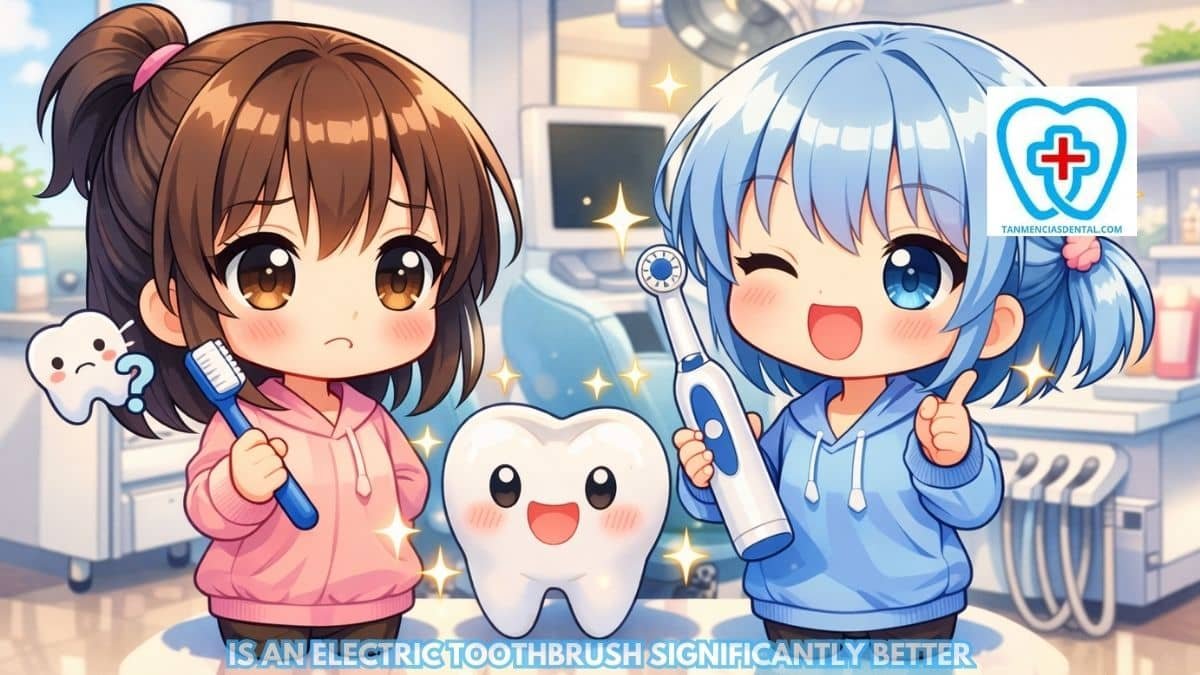
Many people wonder if changing toothbrush types can really improve oral health.
The question often comes down to daily results, comfort, and long-term value.
When asking if an electric toothbrush is significantly better, it helps to compare how each option works in real life.
Brushing habits, hand skills, and personal needs all play a role.
Looking closely at features and limits gives a clearer answer.
1. Superior Plaque Eradication
Electric toothbrushes clean teeth by moving bristles thousands of times per minute, which is hard to copy by hand.
A powered toothbrush creates a steady motion that reaches areas people often miss.
This movement helps remove plaque along the gumline and between teeth.
When plaque is loosened early, it becomes easier to reduce plaque buildup over time.
Consistent speed also lowers the chance of skipping spots during brushing.
Manual toothbrushes depend fully on the user’s hand control and focus.
Even small changes in angle or pressure can affect how well they clean.
While good technique can remove plaque, many people find it hard to repeat the same motion every day.
For this reason, powered brushes often support more reliable cleaning results.
🦷 Overcoming the Fear of Brushing Your Teeth
2. Standardized Two-Minute Timers
Dentists often suggest brushing for a full two minutes to clean teeth properly.
Many people think they brush long enough, but time often feels longer than it is.
Electric toothbrushes with standardized two-minute timers help users brush your teeth for the right amount of time.
Some models also pause every thirty seconds to guide movement to a new area of the mouth.
This steady guidance supports better oral hygiene by making sure all surfaces get attention.
Even cleaning helps lower the chance of missed plaque buildup.
When brushing ends too early, the risk of a cavity can increase over time.
Manual brushing relies on guessing the time, which can lead to rushed habits.
Using a timer supports more complete and consistent brushing.
🦷 What Are The First Signs Of A Cavity That I Should Look For
3. Smart Pressure-Sensing Technology
Brushing with too much force can slowly damage tooth enamel and harm the gums.
Over time, this habit may raise the risk of gum disease and gingivitis.
Smart pressure-sensing technology helps prevent these problems by warning users when pressure is too strong.
Many electric toothbrushes use pressure sensors that react right away to excessive force.
Some models flash a light, make a sound, or slow the brush head to signal the user.
This clear feedback helps guide gentler brushing during daily routines.
With repeated use, users learn how much pressure is safe and effective.
Manual toothbrushes do not give any alerts, so users may not realize they are brushing too hard.
Using pressure sensors can support healthier gums and better long-term brushing habits.
🦷 What to Consider When Choosing Dental Clinic Name Ideas: Avoiding Common Pitfalls
4. Enhanced Accessibility for Limited Mobility
People with arthritis, tremors, or a weak grip often find electric brushes easier to use.
Enhanced accessibility for limited mobility reduces the need for strong hand motion.
The brush head does most of the work with light guidance.
This support can make daily brushing less tiring.
Manual brushing may feel uncomfortable or difficult for some users.
🦷 Why Is Flossing Necessary If I Already Brush Twice A Day?
5. Sonic vs. Oscillating Mechanics
Electric toothbrushes mainly use sonic or oscillating movements to clean teeth.
Sonic brushes vibrate at very high speeds, often measured in strokes per minute.
These fast vibrations help move fluid and toothpaste around teeth and along the gums.
This action supports plaque removal in areas that are hard to reach with bristles alone.
Oscillating brushes work differently by rotating in small circles on each tooth.
This focused motion helps scrub plaque from the tooth surface more directly.
Both designs aim to improve plaque removal with less effort from the user.
Choosing between them often depends on comfort, sensitivity, and brushing preference.
🦷 Broken Tooth Fix At Home: Top Tips for Immediate Relief Before Seeing a Dentist
6. Long-Term Financial Investment Analysis
Electric toothbrushes often have a higher starting price than manual brushes, which can affect early spending decisions.
With time, the need to buy replacement heads every few months adds to the total cost.
Some models also require charging or battery replacement, which increases long-term expenses.
These added costs should be weighed against the possible benefits to dental health.
Manual toothbrushes cost less upfront and are easy to replace when bristles wear out.
This makes them a practical choice for people on a tight budget.
Toothpaste costs remain the same for both options and do not affect the choice between them.
A dental professional can help decide whether the extra cost of an electric toothbrush fits personal needs.
Looking at long-term value helps ensure spending supports both the budget and dental health.
🦷 Can You Get Sick From Not Brushing Your Teeth?
7. Plastic Waste vs. E-Waste Concerns
Environmental impact matters to many users today.
Manual brushes create plastic waste with each replacement.
Electric toothbrushes reduce handle waste but add electronic waste when parts fail.
Plastic waste vs. e-waste concerns depend on recycling options and product lifespan.
Responsible disposal can help reduce harm in either case.
🦷 How Often Should I Actually See A Dentist For A Cleaning?
8. Manual Portability and Travel Convenience
Manual toothbrushes are simple to pack and use anywhere.
Manual portability and travel convenience appeal to frequent travelers.
No charging or special cases are needed.
Electric brushes require chargers and sometimes voltage adapters.
Travel habits can strongly influence the better choice.
🦷 Common Causes of a Broken Tooth Filling Exposed and How to Avoid Them
9. Proper Manual Technique vs. Automation
A manual toothbrush requires the right angle, gentle pressure, and steady motion to clean well.
Keeping this proper technique takes practice and attention every day.
When technique slips, some areas may be missed, which can increase the risk of tooth decay over time.
Electric toothbrushes offer automation that helps keep movement consistent.
This steady motion supports even cleaning without relying fully on hand skill.
Because of this guidance, many people find brushing easier and more reliable.
Automation can help reduce mistakes that lead to poor cleaning results.
🦷 Orthodontic Treatment in Marikina
10. The Best Tool for Consistent Habits
Daily brushing habits matter more than the type of brush used.
The best tool for consistent habits is one that fits smoothly into daily life.
Comfort plays a big role because people are more likely to brush when it feels easy and natural.
Some people choose to use an electric toothbrush because features like timers and alerts provide helpful guidance.
These tools can make brushing feel more structured and reliable.
Other people prefer a manual brush because it feels simple and familiar.
The most important goal is to brush regularly and thoroughly every day.
🦷 Marikina’s Trusted Dental Professionals
👨⚕️ Conclusion
Electric toothbrushes offer tools that support better brushing for many people.
Manual toothbrushes remain effective when used with care and good technique.
The decision depends on comfort, budget, and daily habits.
Asking is an electric toothbrush significantly better leads to different answers for different users.
The right choice is the one that keeps brushing consistently and effectively.
❔ FAQs
1. Can a manual toothbrush clean teeth as well as an electric toothbrush?
A manual toothbrush can clean teeth well when used with proper technique.
This includes the right angle, gentle pressure, and enough brushing time.
Many people do not brush evenly or long enough with a manual brush.
Due to this, results often vary from person to person.
2. Are electric toothbrushes safe for gums and enamel?
Electric toothbrushes are generally safe when used correctly.
Many models help prevent brushing too hard through pressure alerts or slower motion.
These features protect gums and enamel from damage.
Safety still depends on gentle use and regular replacement of brush heads.
3. How often should toothbrush heads or manual brushes be replaced?
Most dentists suggest replacing a toothbrush or brush head every three months.
Worn bristles do not clean teeth as well as new ones.
If bristles bend or fray early, replacement should happen sooner.
This rule applies to both electric and manual brushes.
4. Do children benefit more from electric toothbrushes?
Some children find electric toothbrushes easier and more fun to use.
Built-in timers can help them brush for the right amount of time.
However, children can still clean well with a manual brush when guided properly.
Adult supervision remains important with either option.
5. Is an electric toothbrush significantly better for people with dental issues?
An electric toothbrush may help people with gum problems or limited hand control.
The steady motion can improve cleaning in hard-to-reach areas.
Still, brushing technique and daily habits matter most.
A dentist can help decide which option fits specific dental needs.
😁 Self-Promotion
Visit Tan-Mencias Dental Clinic for friendly and reliable dental care in a comfortable setting.
Our clinic is located at 44 G. Del Pilar Street, Parang, Marikina City, making it easy to reach for nearby families.
You may call our dental clinic directly if you have questions or need help booking a visit.
You can also send us a message through our Facebook page or through the contact form on our website.
For quick concerns, feel free to call or text us at 0917-145-1074.