
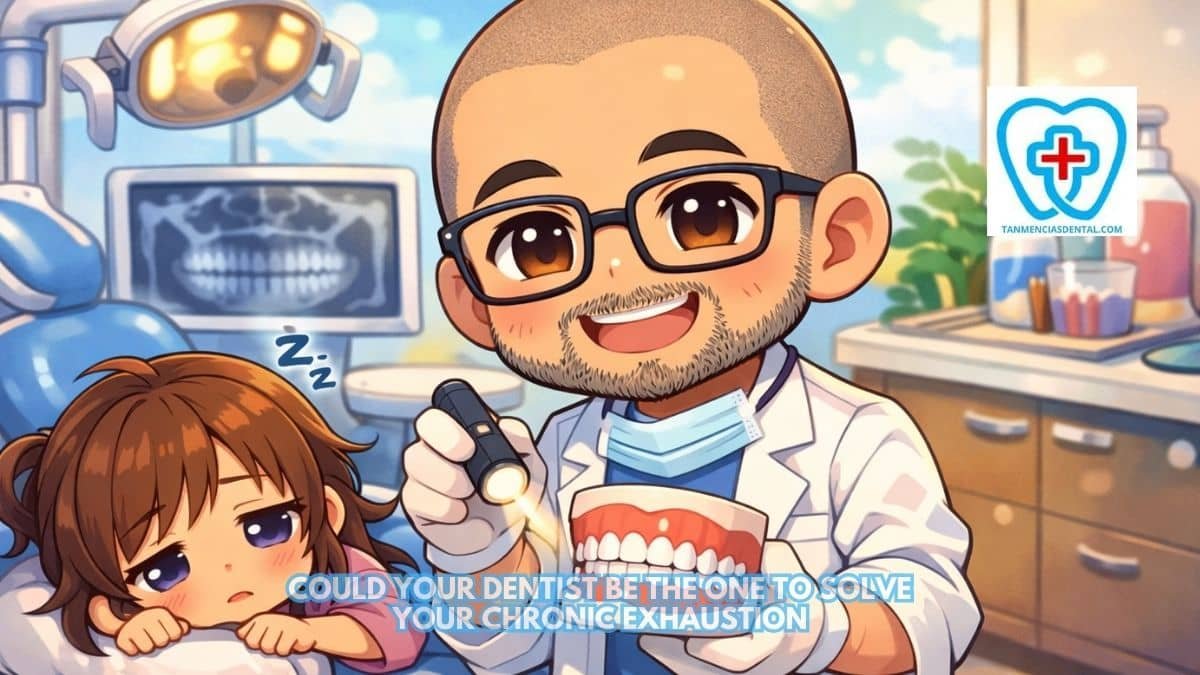
Chronic exhaustion can make simple tasks feel heavy and slow.
Many people search for answers in blood tests, diet plans, or stress levels, yet still wake up tired every day.
Sleep quality often hides at the center of this problem, and the mouth plays a larger role in sleep than most realize.
Breathing, jaw position, and oral health all affect how well the body rests at night.
Because dentists examine these structures closely, they may notice patterns others miss.
It is fair to ask, could your dentist be the one to solve your chronic exhaustion?
1. The Hidden Link Between Your Jaw and Your Energy
The jaw does more than help you chew and speak.
Its position affects the space behind it, which is where air flows into the throat.
If the lower jaw sits too far back, the airway can narrow during sleep.
Muscles then work harder to keep breathing steady, which interrupts deep sleep cycles.
Over time, repeated strain reduces the body’s ability to repair and recharge.
Better jaw alignment can improve airflow and support stronger energy during the day.
🦷 How Much Does Professional Cleaning Contribute To Long-Term Cavity Prevention?
2. When Teeth Grinding is Actually a Cry for Air
Teeth grinding, also called bruxism, often happens without you knowing.
While stress can cause grinding, blocked breathing during sleep can also trigger it.
When oxygen drops, the brain signals the jaw to clench and shift forward to open the airway.
This brief movement may help you breathe, but it also disrupts restful sleep.
Night after night, that pattern leads to sore jaws, worn teeth, and poor recovery.
A dentist who spots heavy wear may recognize that the real issue is breathing, not just stress.
🦷 The Essential Role of Dental Care Professionals in Oral Health
3. Why Your Tongue Shape Might Be Waking You Up
The tongue should rest gently against the roof of the mouth when you are awake.
During sleep, it relaxes and can fall backward if there is not enough space.
A larger tongue or a narrow upper jaw reduces airway room and increases the risk of blockage.
Even small obstructions can cause short awakenings called micro-arousals.
These events are easy to miss because you may not remember them in the morning.
However, repeated disruptions prevent deep sleep and leave you feeling drained.
🦷 Meeting Your Basic Dental Needs: Tips for Optimal Oral Health
4. Beyond the CPAP: Oral Appliances That Help You Breathe
Continuous positive airway pressure, or CPAP, is a common treatment for sleep apnea and works by pushing air through a mask to keep the airway open during sleep.
Many people benefit from CPAP, yet some struggle to use it every night because of discomfort, dryness, or mask leaks.
In the field of sleep medicine, oral appliance therapy is another recognized option for certain patients.
Dentists trained in dental sleep can design custom appliances that fit over the teeth and gently move the lower jaw forward.
This forward movement helps create more space in the airway and supports smoother breathing throughout the night.
Even small adjustments in jaw position can make a meaningful difference when the device is properly fitted and monitored.
Regular follow-up visits allow the dentist to check comfort, jaw health, and bite alignment.
For the right patient, oral appliances used within sleep medicine can reduce snoring, improve sleep quality, and support better daytime focus and energy.
🦷 Can Regular Oral Prophylaxis Sessions Actually Reverse Gingivitis?
5. Small Jaws, Big Problems: The Structural Path to Fatigue
Jaw size develops during childhood and shapes the space available for the teeth and the tongue.
When the upper jaw is narrow, teeth may crowd, and the nasal airway may also become smaller.
Reduced airway space can limit smooth airflow, especially during sleep.
As airflow drops, the body increases effort to keep breathing steady.
This extra effort keeps the nervous system alert instead of relaxed, which prevents deep rest.
With time, poor quality sleep can lead to chronic fatigue and low daytime energy.
Identifying these structural limits early allows dentists to consider options such as orthodontic treatment to improve alignment and create more space.
By addressing the underlying structure, treatment may support better breathing patterns and healthier sleep.
🦷 Everything You Need to Know About a Broken Tooth Repair Kit
6. The High Cost of Mouth Breathing on Your Brain
Nasal breathing filters and warms the air before it reaches the lungs.
Mouth breathing skips this process and often signals blocked nasal passages or jaw issues.
During sleep, mouth breathing can increase snoring and reduce stable oxygen flow.
The brain depends on steady oxygen to enter deep sleep stages.
Without those stages, memory, mood, and focus suffer the next day.
Shifting from mouth breathing to nasal breathing can protect both brain function and daily stamina.
🦷 Can Saltwater Rinse Heal Gum Infection? What You Need to Know Before Trying It
7. How Chronic Gum Inflammation Drains Your Battery
Gum disease begins when plaque builds up along the gumline and is not removed with proper brushing and flossing.
If this buildup continues, the gums can become infected, and the problem can spread deeper into the supporting tissues.
The immune system responds by sending cells to fight the bacteria, which leads to ongoing inflammation.
This chronic inflammation does not remain only in the mouth but can place stress on the body as a whole.
When the immune system stays active for a long time, it uses energy that the body would otherwise use for repair and recovery.
As a result, some people may feel more tired or run down than usual.
Consistent dental care, including cleanings and early treatment, can help control infection and reduce this hidden drain on your energy.
🦷 How Poor Oral Hygiene Leads to Serious Diseases Caused By Not Brushing Your Teeth
8. Tongue Ties: The Surprising Secret Behind Poor Sleep
A tongue tie occurs when the tissue under the tongue is too tight or short.
This restriction limits how the tongue moves and where it rests.
If the tongue cannot sit properly against the roof of the mouth, the airway may lack stable support.
During sleep, the tongue can fall backward more easily and narrow the throat.
Some people also develop speech issues or jaw tension because of this restriction.
Addressing a tongue tie in selected cases can improve tongue posture and breathing patterns.
🦷 Can Bad Teeth Kill You? The Surprising Link Between Oral Health and Life-Threatening Diseases
9. When Facial Pain and Exhaustion Go Hand-in-Hand
Temporomandibular joint problems affect the hinge that connects the jaw to the skull and helps you open and close your mouth.
When this joint becomes strained or inflamed, pain can spread to the face, head, ears, and neck.
Ongoing discomfort keeps the body in a mild stress state, which makes it harder to relax at night.
Muscle tension around the jaw can also limit normal breathing patterns during sleep.
As sleep becomes lighter and more broken, the body misses out on restorative sleep that supports healing and recovery.
Without restorative sleep, pain can feel stronger the next day, which adds to exhaustion.
Treating both the jaw pain and any related breathing issue can help break this cycle and support more balanced, refreshing rest.
10. The Dental “Screen Test” for Better Rest
During a routine visit, dentists look for more than cavities and gum disease.
In modern dentistry, the mouth is also viewed as a window into breathing and sleep health.
Worn enamel, cracked fillings, and scalloped tongue edges can hint at nighttime clenching or airway stress.
A narrow palate or crowded teeth may suggest limited space for the tongue, which can affect airflow during sleep.
Dentists often ask about snoring, dry mouth, frequent waking, and morning headaches because these are common signs of sleep disorders.
By combining what they see with what you report, they can form a simple but useful screen for possible sleep-related problems.
This screening does not replace a medical diagnosis, but it helps identify people who may need further testing.
If concerns arise, the next step may include a referral for a sleep study or a discussion about oral appliances designed to improve airflow.
Early detection through this type of dental screening can support better sleep and protect long-term health.
🦷 All-Inclusive Family Dentistry in Marikina
👨⚕️ Conclusion
Chronic exhaustion often has more than one cause, and the mouth can be part of the puzzle.
Jaw position, airway space, gum health, and tongue function all affect how well you sleep.
When sleep suffers, energy, focus, and mood decline.
Dentists trained to look at breathing and structure may uncover hidden problems that others overlook.
If you still wonder, could your dentist be the one to solve your chronic exhaustion?
Consider discussing sleep and airway health at your next visit.
A closer look at your mouth may open the door to deeper rest and steady energy.
❔ FAQs
1. Can a dentist diagnose sleep apnea?
A dentist cannot fully diagnose sleep apnea on their own.
A proper diagnosis usually requires a sleep study ordered by a physician.
However, a dentist can spot warning signs such as worn teeth, a narrow jaw, or tongue indentations.
If these signs appear, they may refer you to a doctor for further testing.
2. How do I know if my exhaustion is related to my mouth or jaw?
Certain signs may suggest a link between your mouth and your fatigue.
These include loud snoring, teeth grinding, jaw pain, dry mouth, and morning headaches.
Feeling unrefreshed even after a full night of sleep is another clue.
A dental exam that focuses on the airway and jaw structure can help uncover possible causes.
3. Are oral appliances safe and effective for sleep problems?
Oral appliances are considered safe when properly fitted by a trained dentist.
They are often used for mild to moderate sleep apnea or for people who cannot tolerate CPAP.
The device works by gently moving the lower jaw forward to keep the airway open.
Regular follow up visits are important to check fit and comfort.
4. Can treating gum disease really improve my energy?
Gum disease causes long-term inflammation in the body.
Ongoing inflammation can make the immune system work harder than normal.
When this happens, some people feel tired more often.
Treating gum disease reduces infection and may help lower this constant stress on the body.
5. Should I see a dentist or a doctor first for chronic exhaustion?
Chronic exhaustion can have many causes, so it is often best to start with your primary doctor.
They can check for common medical problems through history and basic tests.
If sleep or breathing issues are suspected, a dentist trained in airway and sleep health can become part of your care team.
Working together, both providers can help you find the root cause.
😁 Self-Promotion
Take the first step toward better oral health at Tan-Mencias Dental Clinic, conveniently located at 44 G. Del Pilar Street, Parang, Marikina City.
Our friendly team is ready to help you with your dental needs in a safe and comfortable setting.
You can call our clinic directly at 0917-145-1074 for any questions or to book an appointment.
You may also send us a message through our Facebook page or through the contact form on our website.
We look forward to caring for your smile and helping you feel your best.